Ferenc Erkel
Ferenc Erkel (Hungarian: Erkel Ferenc Hungarian pronunciation: [ˈɛrkɛl ˈfɛrɛnt͡s], German: Franz Erkel; November 7, 1810 – June 15, 1893) was a Hungarian composer, conductor and pianist. He was the father of Hungarian grand opera, written mainly on historical themes, which are still often performed in Hungary. He also composed the music of "Himnusz", the national anthem of Hungary, which was adopted in 1844. He died in Budapest. Erkel was born in Nyíregyháza to an originally Danube Swabian Erkel family, a son of Joseph Erkel who was a musician. His mother was the Hungarian Klára Ruttkay. The libretti of his first three operas were written by Béni Egressy. Beside his operas, for which he is best known, he wrote pieces for piano and chorus, and a majestic Festival Overture. He acquainted Hector Berlioz with the tune of the Rákóczi March, which Berlioz used in The Damnation of Faust. He headed the Budapest Philharmonic Orchestra (founded in 1853). He was also the director and piano teacher of the Hungarian Academy of Music until 1886. The Hungarian State Opera House in Budapest was opened in 1884, of which he was the musical director. In 1839, he married Adél Adlers. Four of his sons participated in the composing of his later operas:Nyíregyháza (July 4, 1842, Pest – March 22, 1909, Újpest), Elek (November 2, 1843, Pest – June 10, 1893, Budapest), László (April 9, 1844, Pest – December 3, 1896, Pozsony / Bratislava) and Sándor (January 2, 1846, Pest – October 14, 1900, Nyíregyháza). Erkel was an internationally acknowledged chess player as well, and a founder of Pesti Sakk-kör (Budapest Chess Club). A department of the Opera House was established in 1911 in Budapest which also performs operas, named Erkel Színház (Erkel Theatre) since 1953. He was commemorated on gold and silver coins issued by the Hungarian National Bank for the 200th anniversary of his birth. Bátori Mária (1840, two acts; Mária Bátori is the lover of István, son of Coloman of Hungary) Hunyadi László (1844, four acts) Erzsébet (1857, three acts, only the second is by Erkel) Bánk bán (1861, three acts; Bánk bán is a palatine of Andrew II) – this opera is often thought of as the national opera of Hungary Sarolta (1862, three acts) Dózsa György (1867, five acts) Brankovics György (1874, four acts) Névtelen hősök (1880, "Nameless heroes", four acts) István király (1885, "King Stephen", four acts) Kemény Simon (remained in fragments; planned to be of three acts) Duo brillant for Violin and Piano (1837) - ˙˙(Duo brillant en forme de Fantaisie sur des airs hongrois concertant pour piano et violon... par F. Erkel et H. Vieuxtemps.) IK.4. Verbunkos Fantasy for Viola and Piano (1890) IK. 47. Hungarian opera Grove's Dictionary of Music and Musicians, 5th ed., 1954, Eric Blom, ed. "Ferenc Erkel Gold and Silver Coins". Archived from the original on 2020-12-02. Retrieved 2010-11-23. Wikimedia Commons has media related to Ferenc Erkel. Works by or about Ferenc Erkel at the Internet Archive Budapest Philharmonic Orchestra (in English) Opera.hu (in English) Erkel playing chess Free scores by Ferenc Erkel at the International Music Score Library Project (IMSLP) Literature by and about Ferenc Erkel in the German National Library catalogue
Discografía en vinilo
Ordenada por relevancia (lo más escuchado primero).
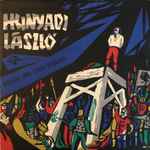

En la onda de Ferenc Erkel
Otros artistas afines, con vinilo.