Pātea Māori Club
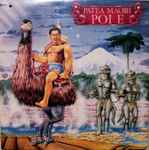
Pātea Māori Club is a New Zealand cultural group and performance act formed in the South Taranaki town of Pātea in 1967 as the Pātea Methodist Māori Club. In 1983, the group began to release Māori-language pop and hip hop music, produced by Dalvanius Prime with lyrics by Ngoi Pēwhairangi. Their first single, "Poi E", reached number one on the New Zealand top 50 singles chart in 1984. The group released further singles, such as "Aku Raukura", "Hei Konei Rā (Farewell)", and "E Papa", and toured the United Kingdom in 1984 and 1985. Prime had plans for a musical adaptation of "Poi E" and a separate children's animated film, however the death of Pēwhairangi in 1985 slowed progress for these projects. Eventually the group's album Poi E was released in 1987, and the musical was performed in 1994. Prime died in 2002. The song's popularity was revitalised in 2010 after it was featured in the Taika Waititi film Boy, and again in 2016, when director Tearepa Kahi created Poi E: The Story of Our Song, a documentary film about the song's history, creation, and enduring popularity. Pātea Māori Club was founded in 1967, when Pātea was a thriving town, largely due to its freezing works. The group was formed by members of Pariroa Pā (north of Pātea), however, after the involvement of the reverend Napi Waaka, the group became known as the Pātea Methodist Māori Club. The club held kapa haka performing tours across the country, and toured Papua New Guinea due to the reverend's Methodist-church connections. One of the largest regular events that the club would compete in was the Polynesian Festival; they competed in its inaugural year, 1972. The group released two LP records of waiata, Toia (as the Patea Methodist Club), in 1973, and Music of the Maori (as the South Taranaki Methodist Maori Cultural Group), in 1976. The group voted to remove the word Methodist from their name, due to the large number of non-Methodist members, and by the early 1980s were known as the South Taranaki Māori Club. In 1982, the Patea Freezing Works closed down, leading to severe economic problems for the town. Record producer Dalvanius Prime grew up in Pātea, however was primarily interested in rock and soul music. In the 1960s he moved to Wellington to perform as a member of the Shevelles, and in the 1970s moved to Australia, forming a band called the Fascinations with his brother Eddie and sister Barletta. In the mid-1970s, the band was a doo-wop act working as a touring and backing band for the Australian rock band Sherbet on their 1975 Life Is for Living tour. The group released a single called "Canberra, We're Watching You", a cover of The Staple Singers' song "Washington We're Watching You", however with lyrics adapted to talk about the 1975 Australian constitutional crisis. He returned to New Zealand in 1979 to see his mother as she died, and was confronted about his lack of knowledge of te reo Māori, when he was unable to understand the final words she spoke in the last days of her life. In 1980, Dalvanius toured with his sister Barletta, performing at marae across the country, and in 1982 took an intensive Māori language course at the Wellington Polytechnic. Dalvanius continued to work as a music producer in New Zealand, seeing success in 1982 when two Māori language songs he produced were some of the top selling releases of the year: "Maoris on 45" by the Consorts, which reached number four in New Zealand, and "E Ipo" by Prince Tui Teka, which reached number one. In 1982, Dalvanius toured New Zealand with Prince Tui Teka. When they were visiting the East Coast, Dalvanius visited Tokomaru Bay to meet Ngoi Pēwhairangi, the Māori language songwriter who Dalvanius had worked with to create "E Ipo", who he had not met before. There, Dalvanius learnt much Tikanga Māori from Pēwhairangi, and decided to stay longer to connect more strongly with his roots. After issuing a challenge to Dalvanius, asking him how he would make younger generations be proud of being Māori, he began to collaborate with her musically, and in a single day wrote "Poi E", "Aku Raukura" and "Hei Konei Rā". Dalvanius envisioned a 10-year plan for the project, involving the creation of a musical and an animated children's film, which the pair planned together during his stay. In 1983, Dalvanius presented "Poi E" to the Pātea Māori Club, as a song they could use to compete in the 1983 Polynesian Festival, which won them first place equal for the poi category. Dalvanius wanted to release the song as a single, however record companies did not believe the song was commercial. Because of this, Dalvanius launched an independent record label named Maui Records, envisioning it as a Māori Motown, and recorded "Poi E" in 1983, using funds that local Pātea businesses had donated. Dalvanius created a funky rhythmic backing track, using bass, LinnDrums and a synthesiser, which Pēwhairangi did not like, believing that this might upset many members of the Māori community due to its modern sound. Pēwhairangi grew to respect the song's arrangement and how strongly it resonated with Māori youth. "Poi E" was released as a single in late 1983, however most publicity was through word-of-mouth, and the track received little support through radio. Dalvanius and some members of the club travelled to Auckland for an informal grassroots promotional campaign, by going to clubs, ice skating rinks and Les Mills gyms; places which Dalvanius saw as trendsetting places. After a feature in the television programme Eyewitness, the song began climbing the charts, and eventually spent four weeks at number one in 1984. The track was so successful that by the end of the year it was the top selling release of the year, and the only song of New Zealand origin in the top 50 singles of 1984. The song had a great impact on the town of Pātea, revitalising the pride people felt in being from the town. In June 1984, the group released their second single "Aku Raukura", a top 10 single which featured Dalvanius' brother Timothy Prime on lead vocals. Later in this year this was followed by "Hei Konei Ra (Farewell)", which reached number 21 on the charts. Eight dates of the group's 1984 club tour of New Zealand were cancelled, over bad publicity alleging the band had brought cannabis on their tour bus (when in fact eight cannabis seeds were found on the support band's tour bus). Dalvanius decided to mortgage his house in Hāwera in order to finance an international tour, as requests for government funding towards a royal performance in the United Kingdom were turned down, as Māori culture was not considered "New Zealand culture". The group toured internationally in 1984 and 1985, performing at the London Palladium and the Edinburgh Festival, as well as appearances on British morning television programmes and Blue Peter. The group performed at the Midem music fair in Cannes, France, and in the United States as a part of the Te Maori exhibition, and a concert in New York where they were the supporting act for the Violent Femmes. Originally, the band planned to release their album in February 1985, however lyricist and mentor to Dalvanius, Ngoi Pēwhairangi, died in early 1985, halfway through the album's production period. Dalvanius was deeply affected by this loss, feeling creatively exhausted, unable to write songs without her and unable to record in the studio. The group returned to the United Kingdom for a Royal Command Performance for Queen Elizabeth II, Prince Philip and Princess Anne in July 1985. At the end of the year, the club released the single "E Papa", a traditional song used in tītī tōrea stick games, followed by "Ka Huri" in 1986. In late 1987, the group's full-length studio album, Poi E, was finally released. A mix of traditional songs and compositions by Prime, the album was primarily recorded in Auckland between April and December 1987. The album featured collaborations with actor Don Selwyn (who served as the narrator), The Yandall Sisters, Annie
Discografía en vinilo
Ordenada por relevancia (lo más escuchado primero).

En la onda de Pātea Māori Club
Otros artistas afines, con vinilo.