Shihad (NZ rock group, named Pacifier between 2002 and 2004-09-17)
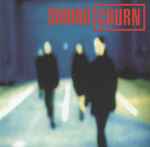
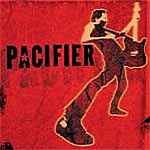
Shihad were a rock band formed in Wellington, New Zealand, in 1988. The band consisted of founders Tom Larkin (drums, backing vocals, samplers), Phil Knight (lead guitar, synthesiser, backing vocals) and Jon Toogood (lead vocals, rhythm guitar), who were joined by Karl Kippenberger (bass guitar, backing vocals) in 1991. The band were known as Pacifier between 2002 and 2004. Six of Shihad's studio albums have peaked at number one–The General Electric (October 1999), Pacifier (September 2002), Beautiful Machine (April 2008), Ignite (September 2010), FVEY (August 2014) and Old Gods (October 2021). They share the honour for most number-one records for any New Zealand artist with Hayley Westenra. As of 2014, Shihad had the most Top 40 New Zealand chart singles for any local artist, with 25; three of these reached the top ten. The singles "Home Again", "Pacifier", and "Bitter" are listed at No. 30, 60 and 83, respectively, in the APRA Top 100 New Zealand Songs of All Time. Tom Larkin and Jon Toogood formed Exit in 1985 in Wellington with various short-term fellow school members. Larkin and Toogood had met at Wellington High School, and shared an interest in heavy metal. They were generally found in the school's music room, as Toogood later recalled, "That's where we learnt to be a band – it had amps and a guitar and a drum-kit – that's what kept us at school." During their Year 11 school ball, having no one to dance with, they spray-painted graffiti in the toilets, including "AC/DC Rules", and were suspended from school. Exit were renamed Shihad in mid-1988 when Geoff Duncan on bass guitar and Phil Knight on guitar joined. The new name was a misspelling of jihad (Arabic for "striving" or "struggling") as used in Frank Herbert's science-fiction novel, Dune (1965). They had heard the term when watching David Lynch's 1984 film of the same name. Larkin later told John Grayson of Opus (University of Newcastle, Australia), "Well, see that's the biggest cock-up out. When we were 15 we were all into this sci-fi movie Dune. See, Dune uses all these Arabic words throughout the movie and the end battle is a Jihad. We were stupid and thought it'd be a great name for a band so we called ourselves Shihad cause we couldn't even spell it." The group's influences were Metallica and Slayer, and later included Pink Floyd, AC/DC and Led Zeppelin. The group began performing in local pubs, even though they were under-age, and performed cover versions of Metallica and Motörhead tracks. At Shihad's debut performance they provided a cover version of Sex Pistol's "Anarchy in the U.K." but blew out the venue's PA. Duncan left soon after and following a succession of temporary musicians they were joined in 1989 by Hamish Laing on bass guitar. In 1990, Gerald Dwyer, the former frontman of local punk band Flesh-D-Vice became their talent manager. He also managed Shihad's then-support act, Head Like a Hole (HLAH). The line-up of Knight, Larkin, Laing and Toogood recorded their debut track, "Down Dance", which was issued in August 1990 as a B-side of a split single with the A-side, "Dogs Are Talking" by Australian group, the Angels. The other B-side, "Live It Up", was by Auckland band, Nine Livez. Both Shihad and Nine Livez supported the Angels at their New Zealand shows during 1990. Shihad supported tours by international visitors, Faith No More and Motörhead. "Down Dance" also appeared on their first extended play, Devolve (1990) via Pagan Records, which was re-released in mid-1991 and reached the New Zealand singles chart top 20 in July. Another EP track, "The Wizard", was a cover version of Black Sabbath's 1970 work. Bridget Herlihy of Ambient Light described the EP as a "thrash-metal affair" with "four hard and fast tracks." In August 1991 Laing left and was replaced on bass guitar by Karl Kippenberger. Kippenberger's second gig with the group was a support slot to AC/DC at Athletic Park, Wellington in front of an audience of 20,000. During 1992 Larkin and Toogood collaborated with Nigel Regan (of HLAH) on guitar in the side-project, SML, which later issued an album, Is That It?, in 1995. Shihad signed with Wildside Records to release their debut studio album, Churn (1993), which was produced by Jaz Coleman (of Killing Joke). It reached No. 9 on the New Zealand albums chart. According to music journalist, Ed Nimmervoll, "their sound had grown more industrial under the influence of [Coleman]." Herlihy noticed their sonation "had evolved to be more mature; a fuller sound and slightly more melodic approach." The album provided their highest charting single, "I Only Said", which peaked at No. 3. They toured both New Zealand and Australia. They were described by a Woroni writer, in September 1993, as an "industrial metal band" and "despite coming out of a country only recently introduced to colour TV, this is damn close to the cutting edge of a very interesting genre." In February 1994 they performed at the Big Day Out concert in Auckland – the first time the roving festival occurred in New Zealand. The group signed with Noise Records in August for European releases and toured there for two months. Their second album, Killjoy, was released in May 1995 and was produced by Malcolm Welsford, who also engineered and mixed the record. It reached No. 4 and they followed with a tour of Western Europe supporting Faith No More for seven weeks. They remained in Europe for four months attending various festivals, Dynamo in Holland, the Phoenix Festival in Britain, and the Roskilde in Denmark. From September of that year they worked in the United States for three months including appearing at Foundations Forum alongside Motörhead, and at gigs in Los Angeles and New York City. At the 1996 New Zealand Music Awards they won four trophies, Album of the Year for Killjoy, Best Male Vocalist for Toogood, Best Group and International Achievement. Their manager at the time Gerald Dwyer died of a morphine overdose just after Shihad's performance at the 1996 Big Day Out, in Auckland. They had found Dwyer's body in his motel room after returning from the gig. The group missed the Gold Coast concert to attend Dwyer's funeral and then re-joined the Big Day Out tour in Sydney and continued to the other Australian venues. The group started work on their third studio album, Shihad, in June 1996 at Auckland's York Street Studios, co-produced by the group with Welsford. They also toured both New Zealand and Australia. The album's lead single, "La La Land" (October 1996), received "strong airplay support" on Australia's national youth radio station, Triple J. Shihad followed in the next month and peaked at No. 11 in New Zealand but did not reach in the top 50 on the ARIA Albums Chart. Nimmervoll observed, "[it] marked a shift towards a more melodic sound." Jody Scott and Iain Shedden of The Australian felt they were their country's "most popular band" and the album "is bound to earn them universal favour." They appeared on the front cover of Rip It Up Magazine, with the accompanying article by John Russell describing their support slot for AC/DC's Ballbreaker World Tour in Auckland in November 1996. Russell noticed, "[they] battled for almost half an hour against audience indifference and the most horrid guitar sound I think they've ever had." From February 1997 they supported the European release of their album with concerts in Germany, France, the Netherlands, Spain, Italy and United Kingdom. Along the way the group had briefly performed alongside Australian band Silverchair, who were on their first European tour. After that tour Shihad relocated to Melbourne as their base by 1998 and negotiated a contract with Warner Music Australasia. At Vancouver's Factory Studios in mid-1999 they recorded their fourth studio album, The General Electric (October 1999) with Canadian producer Garth Richardson (Rage Against the Machine, Chevelle, Red Hot Chili Peppers). It is their first number-one album on the New Zealand charts
Discografía en vinilo
Ordenada por relevancia (lo más escuchado primero).




En la onda de Shihad
Otros artistas afines, con vinilo.