Crvena jabuka
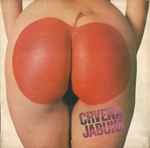
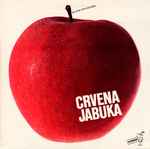
Crvena Jabuka (transl. Red Apple) is a pop rock band originally formed in Sarajevo, SR Bosnia and Herzegovina, SFR Yugoslavia in 1985, and since 1994 based in Zagreb, Croatia. The group gained nationwide popularity during its initial run, and has continued to enjoy success in former Yugoslav republics since the band's 1994 reformation. The band's forming members, vocalist and guitarist Dražen Ričl "Para" and guitarist Zlatko Arslanagić "Zlaja", were in the early 1980s involved in the Sarajevo-based New Primitivism subcultural movement. Influenced by the 1960s British rock, the two formed Crvena Jabuka with keyboardist Dražen Žerić "Žera", drummer Darko Jelčić "Cunja" and bass guitarist Aljoša Buha. The band's self-titled debut album, released in 1986, was an instant commercial success, bringing large attention of the public and the media to the band. On 18 September 1986, while on their way to Mostar to hold the first concert on the album promotional tour, the members of the group were involved in a traffic accident, in which Ričl and Buha lost their lives. After the accident, the remaining three members, Arslanagić, Žerić and Jelčić, decided to continue as Crvena Jabuka, releasing the band's second album Za sve ove godine in 1987, but without giving interviews or holding promotional performances. They made a full-scale comeback to the scene with the 1988 album Sanjati, Žerić taking over the vocal duties and Arslanagić taking over the role of the band's leader and songwriter. The album was recorded with a new member, multi-instrumentalist Nikša Bratoš, who would in the following years also be in charge of album production. The group released two more highly successful studio albums, enjoying large popularity on the late 1980s Yugoslav rock scene, before the outbreak of the Bosnian War forced them to end their activity in 1992. In 1994, Žerić, Jelčić and Bratoš reformed Crvena Jabuka in Zagreb. The group continued their career collaborating with external songwriters, most prominently Zlatan Fazlić, Saša Lošić, Miroslav Drljača "Rus" and Dino Šaran, scoring a number of hits during the following years and renewing their popularity in former Yugoslav republics. On their later releases, the band made a shift to more pop-oriented sound, recording a number of duets with prominent acts from former Yugoslav republics. Since Jelčić's departure in 2017, Žerić has remained the only original member of the band. The band's origins can be tracked back to 1981, when guitarist Zlatko "Zlaja" Arslanagić and guitarist and vocalist Dražen "Para" Ričl, both high school students at the time, formed the power pop band Ozbiljno Pitanje (Serious Question) in Sarajevo. Beside Arslanagić and Ričl, the band featured vocalist Saša Kontić, bass guitarist Benjamin Levi, drummer Radmilo "Hare" Gavrilović and keyboardist Dražen Janković. After the band split up in 1983, Ričl joined the band Elvis J. Kurtović & His Meteors, and both him and Arslanagić took an active role in the Sarajevo New Primitivism movement. Alongside the members of Elvis J. Kurtović & His Meteors and Zabranjeno Pušenje, the two took part in the humorous sketches recorded for Radio Sarajevo show Primus, and later in the satirical TV show Top lista nadrealista. Arslanagić took part in the creation of movement's humorous rock operas Kemmy (a parody of The Who's rock opera Tommy), Odisejo (a parody of Odyssey) and Bata brani Sarajevo (Bata Defends Sarajevo, a parody of the film Walter Defends Sarajevo). After Elvis J. Kurtović & His Meteors disbanded in 1985, Ričl and Arslanagić formed Crvena Jabuka in May of the same year. The original lineup of the band also featured keyboardist Dražen Žerić "Žera", drummer Darko Jelčić "Cunja" and bass guitarist Aljoša Buha, the latter formerly playing in the band Kongres. Initially, the band members considered to name the group Mačak Fric (Fritz the Cat), but eventually opted for the name Crvena Jabuka. They decided upon the name Jabuka (Apple) as a homage to the Beatles' Apple Records – the Beatles being Arslanagić's biggest idols. They opted to use the adjective Crvena (Red) in the name as two other Sarajevo bands with colors in their names, Bijelo Dugme (White Button) and Plavi Orkestar (Blue Orchestra), already enjoyed large popularity in Yugoslavia, and as the three colors (blue, white and red) were featured on the Yugoslav flag. Soon after the formation, Crvena Jabuka was spotted by the editors of the country's biggest record label Jugoton, and was offered a contract and recording conditions of high standard. Their self-titled debut album was produced by former Metak leader Željko Brodarić "Jappa", who also recorded the duet "On je poput djeteta (100 na jednoga)" ("He's Like a Child (100 to One)") with Ričl. The album cover, featuring a red apple painted on naked female buttocks, was created by designer Davor Papić, who would continue to collaborate with the band on their future releases. The album brought songs authored by Arslanagić and Ričl and inspired by the 1960s British scene – the song "Učiniću sve da te zadovoljim" ("I'll Do Anything to Satisfy You") featured the guitar riff from The Rolling Stones's "(I Can't Get No) Satisfaction", and the song "Bivše djevojčice, bivši dječaci" ("Former Girls, Former Boys") featured the verse "I volio bi' umrijeti prije nego ostarim" ("I hope I die before I get old", from The Who's "My Generation"). The album was an instant commercial success, the songs "Bježi kišo s prozora" ("Get Off the Window, Rain"), "Neka se sanja" ("May All Dream"), "Nek te on ljubi (kad ne mogu ja)" ("May He Kiss You (If I Can't)"), folk-influenced "Dirlija" and the ballad "Sa tvojih usana" ("From Your Lips") seeing large airplay and popularity across Yugoslavia. During the summer of 1986, the band held first promotional performances. They had several joint performances with other Yugoslav bands, including Đavoli and Električni Orgazam, and had several television appearances. On 6 September they performed, alongside other Yugoslav acts, on a large open-air concert at Belgrade's Marx and Engels Square. In September 1986, Crvena Jabuka announced their first Yugoslav tour, the announcement being followed by large attention of the country's media. The opening date was scheduled for Thursday, 18 September 1986 in Mostar at the Kantarevac Stadium. On the day of the concert, the band members and their small entourage left Sarajevo on their way to Mostar in three cars: Ričl, Arslanagić and Buha were in Arslanagić's Zastava 750, keyboardist Žerić and drummer Jelčić were in Žerić's Volkswagen Golf Mk1, while employees of the Zenica-based Atlas company, the organizers of the tour, were in a Zastava 1500. On a single-lane bidirectional road next to the Neretva river near the town of Jablanica, the Zastava 750 driven by Arslanagić veered into oncoming traffic colliding head-on with a truck. Buha died on the spot due to severe injuries, while Arslanagić and Ričl were transferred to Mostar city hospital, with hundreds of the city's young people gathering in front of the hospital offering to donate blood. During the following several days, Arslanagić managed to recover, while the condition of Ričl, who had suffered severe head injuries, got progressively worse. He was transferred to the Military Medical Academy in Belgrade by helicopter, but the Academy's staff could do little to help. He died on 1 October 1986, aged 24. After the tragedy, Arslanagić, Žerić and Jelčić decided to continue their activity, but away from the eyes of the public. The three recorded the band's second studio album, Za sve ove godine (For All These Years), releasing it in 1987 and dedicating it to Ričl and Buha. The album was, as the band's debut, produced by Željko Brodarić "Jappa", but with more acoustic guitar-oriented sound, with minimalist arrangements and dominated by ballads. The album featured some songs that had been composed by Ričl, and, although most of lead vocals were provided by
Discografía en vinilo
Ordenada por relevancia (lo más escuchado primero).

En la onda de Crvena jabuka
Otros artistas afines, con vinilo.