Horslips
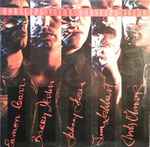
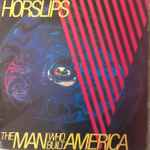
Horslips were an Irish Celtic rock band that compose, arrange and perform songs frequently inspired by traditional Irish airs, jigs and reels. The group are regarded as "founding fathers of Celtic rock" for their fusion of traditional Irish music with rock music and went on to inspire many local and international acts.[citation needed] They formed in 1970 and 'retired' in 1980 for an extended period. The name originated from a spoonerism on The Four Horsemen of the Apocalypse which became "The Four Poxmen of The Horslypse". Although Horslips had limited commercial success when the band was playing in the 1970s, there was a revival of interest in their music in the late 1990s and they came to be regarded as one of the defining bands of the Celtic rock genre. The band resumed activity between 2004 and 2012, playing a small number of shows and producing releases, both live and studio. They played their final shows in August 2012. Jim Lockhart (born 3 February 1948), from James's St in Dublin, studied Economics and Politics at University College Dublin. He fell under the influence of Seán Ó Riada, wanting to build an orchestral sound out of Irish music. He plays keyboards, pipes, whistles and flute. He did vocals on a select number of songs, mainly in Manx and Irish. Eamon Carr (born 12 November 1948), is from Kells, County Meath. He and Peter Fallon were among the founding members of a poetry and beat performance group called Tara Telephone in Dublin in the late 1960s that also published the quarterly literary journal Capella. He is the drummer in the band. Charles O'Connor, (Born 7 September 1948) from Middlesbrough in the UK plays concertina, mandolin, fiddle and both electric and slide guitar. He also shares the main vocal tasks with Barry Devlin and Johnny Fean. Barry Devlin (born 27 November 1946), from Ardboe in County Tyrone, once trained as a Columban priest. He left this to study English in University College Dublin and afterwards joined a graphics company as a screenwriter.[citation needed] He is the band's bass player, shares vocals, and is its unofficial front man. Johnny Fean (17 November 1951 – 28 April 2023) spent his childhood in the city of Limerick and in Shannon, County Clare. He soon mastered guitar, banjo, mandolin and harmonica. In his teens, he played in sessions in Limerick and County Clare. Fean developed his listening tastes from rock to blues and incorporated it into his guitar style. In his late teens he played in a group called Sweet Street, with Joe O'Donnell on electric fiddle and Eugene Wallace. He later played in Jeremiah Henry, a rock and blues band. His idols were Jimi Hendrix and Eric Clapton. He left Jeremiah Henry in 1970 to play traditional music again in Limerick. Barry Devlin, Eamon Carr and Charles O'Connor met when they worked at Arks Advertising Agency in Dublin. They were cajoled into pretending to be a band for a Harp Lager commercial but needed a keyboard player. Devlin said he knew a Jim Lockhart who would fit the bill. The four enjoyed the act so much that they decided to try being proper rock performers. They joined guitarist Declan Sinnott, a colleague of Eamon Carr's from poetry performance and musical group Tara Telephone and, briefly, Gene Mulvaney, to form Horslips (originally Horslypse) in 1970. The band went professional on St Patrick's Day 1972 having shed Mulvaney and released a single, "Johnny's Wedding", on their own record label, Oats. Declan Sinnott left soon after, primarily due to his annoyance at the group appearing in an advert for Mirinda orange drink (shot in the grounds of Ardmore Studios, Bray, in Easter 1972). Sinnott was replaced by Gus Guest, who appeared on the group's second single "Green Gravel", but departed shortly thereafter. Johnny Fean then replaced Guest, and the 'classic' Horslips line-up that would appear on all future releases was set. Horslips designed their own artwork, wrote sleeve-notes and researched the legends that they made into concept albums. They established their own record label, Oats, and licensed the recordings through Atco, RCA and DJM for release outside Ireland. They kept their base in Ireland, unlike previous Irish bands. In October 1972, Horslips went to Longfield House in County Tipperary and recorded their first album, Happy to Meet – Sorry to Part, in the Rolling Stones Mobile Studio. On this first album the melodies were mostly traditional. Jim Lockhart was on keyboards and gradually mastered other instruments including uilleann pipes. Eamon Carr was on drums, including the Irish bodhrán. Happy To Meet, Sorry To Part was the fastest-selling album for eight years in Ireland. The sleeve was an elaborate concertina-shaped fold-out design. The Abbey Theatre in Dublin asked the band to provide the background for a stage adaptation of "The Táin". They leapt at the opportunity. "Táin Bó Cúailnge" (The Cattle-Raid of Cooley) is a tenth-century story written in Old and Middle Irish. It tells of an ancient war between Ulster and Connacht. The Táin was released in 1973 and had more original material alongside the traditional tunes, and greater emphasis on rock. In the same year a single, "Dearg Doom", became popular in Germany. Dancehall Sweethearts followed in 1974, and also balanced folk with rock. Their fourth album, The Unfortunate Cup of Tea, drifted toward pop music and was generally considered less successful. RCA ended their funding deal for the group in 1975. The group funded their next venture themselves and went back to basics. Drive The Cold Winter Away (also 1975) was their most traditional album to date. They signed with DJM Records worldwide through A&R man Frank Neilson. The Book of Invasions: A Celtic Symphony (1976), like The Táin, was an adaptation of Irish legends built into a complex story. It became their only entry in the UK Albums Chart, where it peaked at No. 39 in 1977. Ever ambitious, the band now tried to make it in the United States. They brought in Jim Slye to become their manager. He later sold their publishing rights to William McBurney for £4,000. In 1977 they produced Aliens, about the experience of the Irish in nineteenth-century America. They toured Britain, Germany, Canada and the United States. The night they played the Royal Albert Hall in London was described by one critic as the loudest gig there since Jimi Hendrix. The Man Who Built America (1978), produced by Steve Katz of Blood, Sweat and Tears and Blues Project fame, concerned Irish emigration to the US and received considerable airplay but broad approval was missing. The heavier sound did bring some acceptance in America but they lost their folk base and their freshness. Short Stories, Tall Tales (1979) was their last studio album and was panned by the record company and critics alike. At a time when The Troubles were at its peak, Horslips played gigs in both Northern Ireland and the Republic of Ireland without prejudice and were accepted everywhere. Their last recordings were from live performances at the Whitla Hall in Belfast April and May 1980. A few months later, on 12 October 1980 they played their final gig in the Ulster Hall. They made no public announcement. They simply gave an encore — the Rolling Stones' song "The Last Time" (this was a reference to the recording studio of their first album) and the final act was Charles O'Connor throwing his mangled fiddle into the audience. Ten years after they formed, they disbanded. Even before Horslips ended, Johnny Fean, Eamon Carr and two others founded the Zen Alligators in 1980. They played straight rock and soul on the Irish circuit, and they recorded several singles. Another spin-off group called Host contained Fean, O'Connor and Carr. They issued one album, Tryal, in 1984, and two singles. The final album that had a Fean/Carr collaboration in the 1980s was The Last Bandits in the World (1986). Barry Devlin issued a solo album called Breaking Star Codes in 1983 with some help from Jim Lockhart. The
Discografía en vinilo
Ordenada por relevancia (lo más escuchado primero).




En la onda de Horslips
Otros artistas afines, con vinilo.