Automatic Man
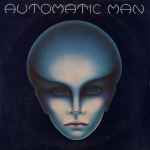
Automatic Man was an American rock band from San Francisco. Consisting of well-respected musicians of diverse backgrounds within the rock, funk, and jazz communities of the mid-1970s, Automatic Man played progressive rock and space rock. Automatic Man had one charting single with Island Records, "My Pearl", which debuted in 1976 and reached No. 97 on the Billboard Hot 100. The band's line-up, however, was not cohesive. After a second album entitled Visitors, Automatic Man disbanded in 1977. Both of the band's albums were reissued on CD in 2004, 28 years after their disbandment. Automatic Man formed in San Francisco around 1975 after Michael Shrieve left his role as drummer with the band Santana to explore other musical avenues. Following his departure, Shrieve worked with Traffic and Spencer Davis Group singer/keyboardist Steve Winwood, percussionist Stomu Yamashta, and synthesizer player Klaus Schulze on the Go album, an experimental progressive rock album that had been released by Island Records a year later. Pat Thrall was approached by Shrieve in 1975 to audition for a band he was forming with Todd Cochran. Cochran, then known under the alias of "Bayeté" (pronounced Bye-yet-tay), was a child prodigy and formally trained keyboard player who had attended the Trinity College of Music in England as a teenager. Cochran had already been part of the jazz scene for nearly a decade, playing with renowned jazz artists Bobby Hutcherson and Julian Priester. He released two jazz-funk solo albums on Prestige Records in 1972 and 1973 as well. Completing the lineup was bass guitarist Doni Harvey, who performed around the Bay Area with his brothers and in blues, jazz, and soul bands, playing both bass and guitar. According to Harvey's brother, Regi Harvey, Doni joined the band sheerly by chance: During the break we heard a band practising in the big space. We went in to see who it was. It turned out to be "Automatic Man". That night the bass man wasn't working out and stomped out of the room. They spotted Don and asked him to sit in and to finish rehearsing. He stepped up to the plate that night. When they stopped for a break we went back in the small space we were practising in to finish. During that time they asked him to join the band. One of the reasons was that he played so well that they were that impressed. The other was that Doni and I had gone to Junior College with the keyboard player and main writer "Bayeté" at the newly opened "Skyline College". Impressing Chris Blackwell, the president of Island Records, he signed the band to a two-record deal. Rather than continue to build on their following in the San Francisco Bay Area, Automatic Man headed for London. Automatic Man made Chelsea's King's Road in London their base of operations recording at Basing Street Studios, now Sarm West Studios, in Notting Hill and Olympic Studios with renowned recording engineer Keith Harwood. The self-titled debut album, Automatic Man, featured hard guitars and layered synthesizers. Allusions to space travel, Atlantis, astral projection, karma, angels, aliens, belly dancers and other subjects are covered on the majority of tracks on the album. Cochran wrote the tracks "Atlantis Rising-Fanfare", "Coming Through", "One and One", "Newspapers", "Geni-Geni" and "Turning of the Axis [Theme from Atlantis Rising]". He shares co-writing credits with band manager Lou CasaBianca on "Automatic Man", "Interstellar Tracking Devices" and "Right Back Down." The entire band and CasaBianca share writing credits on "There's A Way." In the United Kingdom, the album was promoted on BBC Radio 1 by Alan Freeman, who provided a voiceover for adverts for the album transmitted on the UK's commercial radio stations. All songs written and composed by Todd Cochran (as "Bayeté"), except as noted. Side one "Atlantis Rising-Fanfare" – 1:37 "Comin' Through" – 3:35 "My Pearl" – 3:34 (Automatic Man) "One and One" – 5:57 "Newspapers" – 3:57 "Geni Geni" – 5:32 Side two "Right Back Down" – 5:55 (Bayeté/CasaBianca) "There's a Way" - 5:14 (Automatic Man/CasaBianca) "I.T.D. (Interstellar Tracking Devices)" – 5:14 (Bayeté/CasaBianca) "Automatic Man" – 3:55 (Bayeté/CasaBianca) "Atlantis Rising Theme (Turning of the Axis)" – 3:16 (My Pearl was released with a B-side entitled "Wallflower") Pat Thrall - Guitar, vocals; lead vocals on "Geni-Geni", "There's a Way" and "Automatic Man." Todd Cochran - Keyboards, vocals; lead vocals on "Comin' Through", "My Pearl", "One and One", "Newspapers", "Right Back Down", "There's a Way", "I.T.D. Interstellar Tracking Devices." Doni Harvey - Bass guitar, vocals; lead vocals on "There's a Way" and "Automatic Man." Michael Shrieve - Drums Produced by Automatic Man and Lou CasaBianca Mixed by Keith Harwood and Chris Kimsey Painted by Bay Area artist Dwain Zerio (1950–1995), both front covers of each Automatic Man album feature a luminously painted blue alienlike face staring out from space. The alienlike face was meant to be representative of a human without a body, with the spiritual energy providing the visual shape.[citation needed] The debut album is blue on blue, while the follow-up features the blue face on a shocking pink and magenta background. The inside liner art of the first album includes the blue face with Egyptian wings, floating above a pyramid, and Atlantis rising out of a raging ocean with a maelstrom in the background. The artwork for the "My Pearl" single featured a woman's face suspended over a misty crevice crowned with wings and a self-consuming serpentine rainbow. The artwork for both Automatic Man LP covers was entirely original, and an early example of an alien face being depicted in a mass market medium. After their album debut, Automatic Man promoted the disc with appearances at a number of European music festivals, including the Montreux Jazz Festival in Switzerland. According to a later interview with Thrall, the band had trouble pulling off their material live. Part of the problem was that the technology of the era was too difficult to use for a live audience. Shrieve also alleged that the band had not had enough chances to play live.[citation needed] The band was also feted by fellow artists and luminaries of the day including the Rolling Stones and Hunter S. Thompson, who wrote a concert review. Though they would make a few more live appearances in the Bay Area, infighting, clashes over music, and disagreements over how the band's finances led to Automatic Man's first lineup dissolving after returning to the United States in 1976. The second Automatic Man album was entitled Visitors and released in 1977 with a more accessible sound than their debut. Bayeté solely wrote each track. Guitarist Pat Thrall was still a member, but Shrieve and Harvey were now replaced by bassist Jerome Rimson (also from the "Go" project) and drummer Glenn Symmonds. Originally from Detroit, Rimson played bass on the track "Man from Manhattan" by Eddie Howell with Freddie Mercury on piano and vocals, and Brian May on Guitar. From 1974 he had been musical director for Van Morrison, playing on several tours and in 1976, he played on the Al Jarreau's Grammy-winning jazz album Glow. Glenn Symmonds had been Eddie Money's drummer since 1974, departing to record and tour with ex-Santana percussionist Coke Escovedo. Pat Thrall - Guitar, vocals Todd Cochrane - Keyboards, vocals Glenn Symmonds - Drums Jerome Rimson - Bass Produced by Michael Lloyd Lionel Conway - executive producer Bruce Robb - engineer Lou CasaBianca/Glyphics - art direction & album design All songs written and composed by Todd Cochran as "Bayeté". Side one "Give it to me" - 3:49 "Live Wire" - 4:45 "So You Wanna Be Me" – 4:00 "Y-2-Me" – 4:18 Side two "Visitors" – 3:50 "Here I Am Now" – 5:14 "There's a Way" -4:26 "Daughter of Neptune" – 4:13 "What's Done" – 6:22 Fans of the band did not receive the second album as warmly. Music reviewer Doug Watson's description is that Visitors is "just a mediocre shot at mesh
Discografía en vinilo
Ordenada por relevancia (lo más escuchado primero).

En la onda de Automatic Man
Otros artistas afines, con vinilo.