Tourniquet
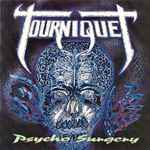
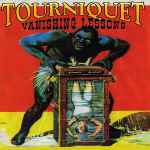
Tourniquet is an American heavy metal band that formed in Los Angeles in 1987. It was founded by Ted Kirkpatrick, Guy Ritter, and Gary Lenaire. Tourniquet primarily played a mixture of thrash and progressive metal and was influenced by additional, non-rock forms of music such as classical and world music. The band earned six GMA Dove Award nominations and won multiple recognitions from the readers of HM Magazine, including "Favorite Band of the 1990s" and "Favorite Album of the 1990s" for Pathogenic Ocular Dissonance (1992). They released ten studio albums, two live albums, four compilation albums, one EP, and several video releases. The last Tourniquet lineup consisted of Ted Kirkpatrick (drums) and Aaron Guerra (guitar, vocals, bass). The band disbanded after Kirkpatrick's death in 2022. Lenaire reformed the band in 2025 with Ritter, former vocalist Luke Easter, and bassist Anna Sentina. Ritter stepped down the following year. Tourniquet has sold more than 300,000 albums. In addition to their use of classical music, the band is known for frequently using medical terminology in their album and song titles and lyrics. The band's 2003 release, Where Moth and Rust Destroy, features special guests Marty Friedman (formerly of Megadeth) and Bruce Franklin (of Trouble), both on lead guitar. Tourniquet's members spoke out against animal abuse and appeared in publications such as The Vegetarian Times, United Animal Nations, and Animal Agenda. The band is named for the tourniquet, "a surgical device for arresting hemorrhage by compression of a blood vessel." According to the band, a tourniquet is a metaphor for "a lifelong spiritual process by which a personal God, through the atoning blood, death, and resurrection of His only Son—Jesus Christ—can begin to stop the flow of going through life without knowing and serving our Creator. He is our Tourniquet." "Ark of Suffering" Sample of "Ark of Suffering" by Tourniquet, from Stop the Bleeding (1990). A video was made for the song, containing footage of animal abuse, and it received some airplay on MTV before it was banned for being too graphic. Problems playing this file? See media help. "A Dog's Breakfast" Sample of "A Dog's Breakfast" by Tourniquet, from Psycho Surgery (1991). Representing their more modern-sounding thrash metal style, the song criticizes heretical sects and beliefs. Problems playing this file? See media help. "Incommensurate" Sample of "Incommensurate" by Tourniquet, from Pathogenic Ocular Dissonance (1992). Showcasing the band at its heaviest and darkest, the song deals with the power that good has over evil. Problems playing this file? See media help. Tourniquet formed in 1987 with drummer Ted Kirkpatrick, vocalist Guy Ritter, and guitarist/vocalist Gary Lenaire. Kirkpatrick previously played in the Chicago doom metal group Trouble on their Run to the Light tour. The group was one of many bands who were, at the time, affiliated with a church group called Sanctuary - the rock and roll refuge in Los Angeles. Tourniquet released its first studio album, Stop the Bleeding, in 1990. It was produced by Bill Metoyer of Metal Blade Records and released by Intense Records. While it was mostly distributed to Christian bookstores, Stop the Bleeding gained some notoriety in the mainstream metal scene and is considered a notable thrash metal album. Tourniquet's style broke new ground and quickly gained them fans all over the world. Musically, the album showcased elements of 1980s speed metal with its Mercyful Fate/King Diamond influences, notably the falsetto vocals. In this lineup, Guy Ritter sang the melodic vocal parts while Gary Lenaire did the aggressive, thrash metal shouts. Session guitarist Mark Lewis played lead guitars on the album. The band was later rounded out with the addition of bassist Victor Macias and lead guitarist Erik Mendez. This version of the group is commonly known as the "classic" lineup of Tourniquet. The band, including Macias and Mendez, filmed a music video for the song "Ark of Suffering". The video had some limited airplay on MTV, but the network quickly pulled it due to violent content portraying animal abuse.[citation needed] Because of the song and its subsequent video, the band became known for its stance on animal rights. In 1991, Tourniquet abandoned most of its 1980s metal influences and recorded a more modern-sounding album titled Psycho Surgery. Psycho Surgery showcased Kirkpatrick's classical music influences more prominently than Stop the Bleeding, and his background in the pharmaceutical industry became apparent with many of the song's lyrics utilizing medical terminology as metaphors for social/spiritual issues. Some critics described it as if "Slayer plays Beethoven in a slightly rewritten way". On Psycho Surgery Tourniquet continued to work with producer Bill Metoyer and signed a distribution agreement with Metal Blade Records. Metal Blade released Psycho Surgery to a wider general market audience than the band had been able to reach with Stop the Bleeding. Intense Records released Psycho Surgery to Christian retail. Tourniquet released a home video (VHS) titled Video Biopsy the following year. In 1992, Tourniquet released what is considered their most technical and dark album, Pathogenic Ocular Dissonance. Vocalist Guy Ritter had grown increasingly dissatisfied with the band's musical direction and didn't care for the more aggressive material the rest of the band was writing. He subsequently left the band after the recording of Pathogenic Ocular Dissonance due to these musical differences. Upon its release, Pathogenic Ocular Dissonance quickly became one of the most popular of the band's albums among Tourniquet fans. It went on to be voted Favorite Album of the 1990s by the readers of HM Magazine. As with the previous album, Metal Blade Records released Pathogenic Ocular Dissonance to the general market, with Intense Records marketing it to Christian retail. Luke Easter replaced Ritter, joining Tourniquet for the Pathogenic Ocular Dissonance tour. Prior to this Tourniquet was scheduled to play the Milwaukee Metalfest in 1993, but professed satanist Glen Benton of Deicide, the festival headliner, refused to play with a Christian band. The festival was forced to cancel Tourniquet's performance. This brought more publicity and notoriety to Tourniquet. That same year, Intense Records released Intense Live Series, Vol. 2, which includes Tourniquet's cover of the Trouble song "The Tempter". It was recorded between Ritter's departure and Luke Easter's joining of the band with the melodic vocals being handled by Bloodgood vocalist, Les Carlsen. In 1994, Tourniquet abandoned most of the medical terminology in their lyrics, altered their style to a more accessible heavy metal/hard rock sound, and released Vanishing Lessons. Erik Mendez had left the band in 1993 after the tour for Pathogenic Ocular Dissonance, and so Vanishing Lessons was recorded by Tourniquet as a four-piece band. Soon after the album's completion, Aaron Guerra joined Tourniquet as Mendez's replacement in 1994. Metal Blade Records opted to not distribute Vanishing Lessons, and Tourniquet continued to work exclusively with Intense Records until 1997. The album spawned the single "Twilight", which became the band's first CCM radio hit.[citation needed] A music video was shot for the song "Bearing Gruesome Cargo", and was later released on the 1995 home video Pushin' Broom. Shortly after the release of Vanishing Lessons, the band released an EP, Carry the Wounded, in 1995. Some Tourniquet fans had mixed feelings toward the EP's softer sound and the inclusion of a ballad. The band later released a compilation album, The Collected Works of Tourniquet, in 1996, which included two new songs "Perfect Night for a Hanging" and "The Hand Trembler". Many fans regard these as the heaviest songs Tourniquet has ever written. In 1996, Victor Macias left the band of his own accord due to theological differences.
Discografía en vinilo
Ordenada por relevancia (lo más escuchado primero).

En la onda de Tourniquet
Otros artistas afines, con vinilo.