Lime Spiders
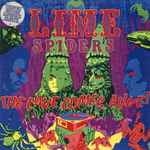
Lime Spiders were an Australian punk rock band who formed in 1979 with Mick Blood on lead vocals. He was later joined by Richard Lawson on drums, and David Sparks on guitar. Their debut studio album, The Cave Comes Alive! was released in June 1987 and reached the top 60 on the Kent Music Report Albums Chart. Their most successful single, "Weirdo Libido", was released in January that year and reached the top 50 on the related Kent Music Report Singles Chart. In April its music video was the first ever shown on Australian Broadcasting Corporation TV music series rage. The track was used on the 1988 feature film Young Einstein's soundtrack. The group disbanded in 1990 and in 1999 Australian musicologist, Ian McFarlane, noted they had provided "raucous sound mixed screaming vocals and wild, fuzz-tone guitar riffs to arrive at a mutant strain of acid punk that bordered on heavy metal". The Lime Spiders were formed in 1979 by Michael Patrick "Mick" Blood on lead vocals, who cites their influences as being 1960s garage bands with psychedelic rock. Early fellow members included Eric Roman Grothe on guitar, Dave Guest on bass guitar, and Darryl John Mather on guitar. The band's name relates to a non-alcoholic cocktail – a combination of vanilla ice cream and lime soft drink (soda). The group's first show was supporting The Lonely Hearts on Christmas Eve 1979, which Mather later recalled: "We were absolutely horrible. So horrible that people didn't get it. I don't think I got it, either. We came back properly in late 1980". By February 1981 the line-up had stabilised with Blood, Guest and Mather joined by Geoff Cleary on drums. In August that year the group added Richard Jakimyszyn on lead guitar, with Bill Gibson (later bassist for The Eastern Dark) often acting as MC and adding backing vocals and tambourine. The band played regularly, mostly around Sydney's inner city venues, but by February the following year they had split up. During September that year they reconvened with a new drummer, Stephen Rawle (ex-Room 101), replacing Cleary. The group entered a Battle of the Bands competition at the Southern Cross Hotel, the major prize being the recording and release of a single on Green records. The competition ran over three months and included 64 bands: The Lime Spiders won the competition, with one of their opponents in the final being The Most, who would later come to figure significantly in their story. "I didn't cope well that night. We'd moved from hobbyists to being on the verge of becoming serious – we were rewarded with a record deal, like Radio Birdman had six years earlier. We got up and didn't miss a beat – a 40-minute set. We were in tune – which is something that The Lime Spiders weren't famous for – and we won. I vaguely remembered Bill Gibson standing at the back of the stage, constantly retuning all the guitars". – Mather The recording sessions resulted in a four-track double single, "25th Hour", released on Green Records in June 1983. "25th Hour" was produced by Rob Younger (ex-Radio Birdman), and included covers of The Haunted's "1-2-5" (1966) and Liberty Bell's "That's How It Will Be". The title track was co-written by Blood and Mather, while the final track, "Can't Wait Long", was co-written by Blood and Jakimyszyn. Warwick Gilbert (ex-Radio Birdman, Hitmen) played bass guitar for the sessions, because Guest was not confident in his playing. The keyboards were provided by Bruce Tatham (later played with Decline of the Reptiles) who is also heard on The Celibate Rifles' debut album, Sideroxylon (April 1983). Bill Gibson provided backing vocals on two of the tracks. American punk rockers, Dead Kennedys' lead singer, Jello Biafra, heard the group while touring in Sydney and he told Murray Engelheart of Juke Magazine: "This could be the best time-warp style '60s garage revival I've ever heard. [They] seem to be more interested in re-creating Sixties garage mania than updating it. I never thought I'd hear a psychedelic slime band more hard core than Green Fuzz, but here they are". – Jello Biafra (2 June 1984) However Lime Spiders fell apart again with Mather leaving before the single had appeared: "I didn't like The Lime Spiders towards the end. I felt we had become heavy and were usurped by what was happening around us. In my eyes we were very much a covers band. I didn't see the band going anywhere and I was yearning to become more involved with seriously constructed pop music". – Mather The group reformed again by August 1983 with Blood and Jakimyszyn joined by Tony Bambach on bass guitar and Richard Lawson on drums. Both were from The Most, one of their rivals in the Battle of the Bands competition. In March 1984 the new line-up recorded the band's second single, "Slave Girl", which was released in October on Citadel Records. It was co-produced by the band with Tom Misner, who Blood described as "an older dude who owned the School of Audio business (Central Recorders). He warmed immediately to the vibe of the song". It was co-written by Blood and Jakimyszyn. Blood later told TheDwarf website about writing the track: "[it] come from a throwaway riff that [Jakimyszyn] used to peel off automatically at rehearsals every time he plugged his guitar into his amp, to check his sound ... I asked [him] to keep playin' the riff, as I thought we could construct a song around it. He looked at me as if I was crazy ... but obligingly cranked his amp & played it with venom, as the band jammed on it for the first time ... I went away with the riff in my head without any lyrics. I woke up one Sat morning at a house I was staying at in [Chippendale] and the lyrics flooded my head and I wrote them down as fast as I was thinking of them ... [later] I came armed with the last verse. I suggested to Jacko that he play something he's never done before for the second guitar solo, to take the song to another level. ... [He] blew us away with a searing metal edged freakout before turning around & shyly seeking approval. It was difficult to speak with our mouths agape". "Slave Girl" was the number-one independent single in Australia for 1984, it reached the Top 100 Kent Music Report Singles Chart, with over 5,000 copies shipped. The track received airplay in Europe including France, Germany, Spain and Sweden: "where fans in those territories became hooked on its wild acid-punk sound". In September 1984 the band added Gerard Corben on rhythm guitar (also ex-The Most). The success of "Slave Girl" led to the overseas release of a 12" mini-LP that compiled all six of their recorded tracks as Slave Girl. Allmusic's Stephen Cook praised the group for "[e]schewing some of the overtly psychedelic '60s touches and concocting an updated blend of crunching guitars, snarled vocals, and bottom-heavy bass and drums, the band come up with a surprisingly original sound". In January 1985 Jakimyszyn left the band (after being diagnosed with schizophrenia), and they continued without a replacement. As a four-piece they recorded another single with Younger producing, "Out of Control", which was released on Citadel in December 1985. Towards the middle of 1985 Lime Spiders split up again with Blood travelling to Europe as a tourist. Whilst Blood was in Europe, he performed as a guest singer with Swedish band the Pushtwangers (for a single release) and also with a Greek group, Last Drive. The remaining members – Bambach, Corben and Lawson – performed as Adolphus using Mark Green as lead singer. Prior to Blood's departure for Europe, the band had an offer to create a track for an in-production feature film, Young Einstein (1988). Its producers originally wanted "Slave Girl", but the song's rights were already assigned internationally; so they asked if the group could provide a track that matched its feel. Blood returned to Australian in September 1986 and Lime Spiders reconvened. They released "Weirdo Libido", which was co-written by Blood and original guitarist Mather and produced by
Discografía en vinilo
Ordenada por relevancia (lo más escuchado primero).
En la onda de Lime Spiders
Otros artistas afines, con vinilo.