The Ozark Mountain Daredevils
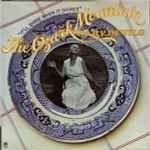
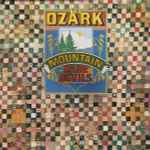
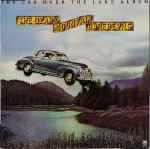
The Ozark Mountain Daredevils are an American rock band formed in 1972 in Springfield, Missouri. They are most widely known for their singles "If You Wanna Get to Heaven" in 1974 and "Jackie Blue" in 1975. Bassist Michael "Supe" Granda has written a book about the band, It Shined. According to the book It Shined by Michael Granda, the band name was derived from "Cosmic Corn Cob & His Amazing Ozark Mountain Daredevils", a name that John Dillon came up with at a Kansas City "naming party" after the band was told that the name they had previously been using, "Family Tree", was already taken ("Burlap Socks" and "Buffalo Chips" were two other monikers that had been considered). The band shortened the name because none of the band members at the time wanted to be called "Cosmic Corn Cob", and they did not want the name to sound similar to the Amazing Rhythm Aces. In 1971, Randle Chowning formed a band with Steve Cash, John Dillon, Elizabeth Anderson, Larry Lee, Rick Campanelli, Bill Jones and Michael Granda. The band recorded a demo at Springfield's Top Talent Studios (soon to be renamed as American Artists) and that demo, containing such early songs as "Rhythm of Joy", found its way to New York music executive John Hammond via the hands of band friend Steve Canaday, co–owner of the New Bijou Theater. In July 1972, Hammond sent a producer, Michael Sunday, to the band's Ruedi-Valley Ranch in Aldrich, Missouri, the house rented from Randle Chowning's Southwest Missouri State University teacher Mrs. Ruedi, where the band rehearsed and where Chowning and his brother Rusty lived. Sunday offered the group $500 to make another demo tape at American Artists but ultimately decided to pass on offering them a contract. Many of the songs on this demo appeared thirteen years later as the record The Lost Cabin Sessions. The band later sent a tape to the team who managed fellow Missourians Brewer & Shipley, Kansas City's Paul Peterson and Stan Plesser (who also owned the Vanguard, a popular coffee house, and ran their own Good Karma Productions). The pair gave the band a chance and became their managers as well in October 1972. The band then changed their name to the Ozark Mountain Daredevils (see "Name") and saw the departure of Campanelli and Jones along with the addition of Buddy Brayfield, a friend of Granda's, as the piano player. Anderson, though still romantically involved with Dillon, retired from the stage. Campanelli left on his own to pursue a master's degree in music; Jones rejoined the Daredevils briefly later (in 1974-1977) and would continue to appear as a guest player on some of their shows and recording sessions. He returned to the stage as a permanent member in 2010. The band began playing out in 1972 and 1973. On February 8, 1973, they played at Cowtown Ballroom in Kansas City, Missouri. Later that month, on February 21, they played a concert at Shawnee Mission Northwest High School in Shawnee, Kansas. Two weeks after that, on March 9 and 10, they played at Kiel Opera House in St. Louis and Cowtown Ballroom again, this time with Brewer & Shipley, accompanied by Loudon Wainwright III. Performances from both those March shows later turned up on a CD called Archive Alive in 1997. The group's demo tape eventually caught the attention of A&M Records staff producer David Anderle, who was looking for an Eagles country rock type of band to place on the label. Anderle and the Eagles' first producer, Glyn Johns, flew to Missouri to catch the band's aforementioned performance at Cowtown Ballroom on March 10, 1973. But the band, nervous about Johns and Anderle being in the audience, did not play their best. Later on, Paul Peterson invited the two men back to his place to hear the band give an unplugged performance by candlelight. This time Anderle and Johns were blown away and they were signed to A&M on May 1, 1973, and sent to England to record their first record at Olympic Studios in London with Johns at the helm during that June and July. The first record, The Ozark Mountain Daredevils (also referred to as "The Quilt Album"), was released in December 1973 and spawned the Top 30 hit "If You Wanna Get to Heaven" in the summer of 1974. The album introduced the band's unique mixture of rock, country, bluegrass and pop to the world and is still the favorite of many of the group's fans. Bluegrass song "Standing on the Rock" and hillbilly-influenced "Chicken Train" are recurring live performance fan favorites. For the second album, It'll Shine When It Shines (October 1974), Johns and Anderle came to Missouri to record, utilizing a mobile recording truck set up outside of the band's rehearsal home. During the sessions, Johns overheard Larry Lee sitting at a piano playing and singing a song about a mysterious friend of his who sometimes dealt drugs on the side. Johns loved the melody and thought it could be a smash hit if the lyrics were altered to be about a girl and the drug references downplayed. Lee and Cash did as Johns asked and the song, Jackie Blue, became the Daredevils' signature song and a huge hit (No. 3) in the spring of 1975. The Ozark's third release, The Car Over the Lake Album (September 1975), recorded in Nashville, Tennessee, and produced by Anderle alone, featured their old compatriot Bill Jones joining them to play and arrange their songs. He also toured with them in late 1974 thru early 1977. The album sold fairly well but produced no hits. In 1976, Dillon, Brayfield, Lee and Chowning also appeared on Hoyt Axton's A&M LP Fearless, contributing back-up vocals on the album's opening song, "Idol of The Band." One reason why the band's fortunes began to falter might have been their reluctance to relocate to Southern California after being asked to do so by A&M co-head Jerry Moss. Another was their reluctance to embark on the constant touring that many of their contemporaries were doing at the time. A further sticking point was the band's unwillingness to try and duplicate their biggest hit, "Jackie Blue", or copy what other groups were doing. As a result, A&M began to lose a bit of its enthusiasm for the act. Personnel shifts within the group also began to change the chemistry. In the spring of 1976, the band embarked on a tour of Europe. But by the time the exhausted troupe hit Copenhagen, Denmark, in early May, for their final show at Daddy's Dance Hall, they were confounded by a horrible sound mix at the venue. An angry Randle Chowning responded by turning up his amplifier all the way, which upset the other band members and resulted in a huge shouting match at the end of the night. Upon their return home, Chowning refused to speak to the others or take their calls. Norwegian musician Rune Walle, whom the band had met while on tour in Europe with his band the Flying Norwegians, was then contacted in June to replace him. Walle's first show with the group was at Arrowhead Stadium in Kansas City on July 23, 1976, on a bill that also included the Beach Boys, the Doobie Brothers, Jeff Beck and Firefall. Chowning went on to form his own Randle Chowning Band That same year, the Daredevils headed west to the Rockies, to Caribou Ranch near Nederland, Colorado, to record their fourth album, which they had originally titled Nuclear Fishing but then changed to Men From Earth after A&M objected. The Nuclear Fishing title was later used up in Canada for a greatest hits album release. Anderle was once again in the producer's chair and Evergreen, Colorado resident Jerry Mills joined the band on mandolin and also served as the group's advance publicist. Another face from the past, Steve Canaday, also came back into the group's life in 1975 as road manager and opening act before joining the band during the making of Men From Earth. In the fall of 1976, Buddy Brayfield departed to study medicine and Ruell Chappell (vocals, keyboards), from the popular Springfield group Spillwater Junction, came in. But the band's next several releases – Men From Earth (September
Discografía en vinilo
Ordenada por relevancia (lo más escuchado primero).

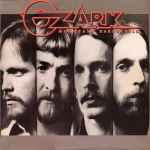

En la onda de The Ozark Mountain Daredevils
Otros artistas afines, con vinilo.