Ambrosia (L.A. prog rock band)
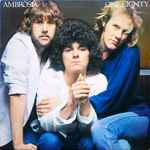
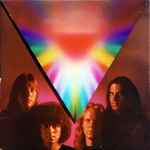
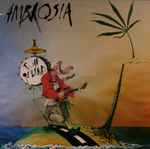
Ambrosia is an American rock band formed in Los Angeles in 1970. Ambrosia had five top 40 hit singles released between 1975 and 1980, including the top 5 hits "How Much I Feel" and "Biggest Part of Me", and top 20 hits "You're the Only Woman (You & I)" and "Holdin' on to Yesterday". Most of the original band members have been active with the group continuously since their 1989 reformation to the present day, with the notable exceptions of original guitarist and lead vocalist David Pack (who left in 2000) and original keyboardist Christopher North (who died in 2026). Ambrosia currently tours internationally and has worked in the past and present with Alan Parsons, Bruce Hornsby, Bill Champlin, Michael McDonald and Peter Beckett, among other notable artists. The group was founded as a quartet with guitarist/vocalist David Pack, bassist/vocalist Joe Puerta, keyboardist Christopher North and drummer Burleigh Drummond. According to Joe Puerta, their original name was "Ambergris Mite," but after doing some touring they discovered there was already a band using the name "Ambergris," so they turned to the dictionary and picked the name "Ambrosia" because a name meaning "nectar of the gods" seemed fitting. While Ambrosia had several radio hits in the 1970s, much of the material on their five albums is progressive in nature. The founding constituents of Ambrosia were reared in Southern California's South Bay, later adopting San Pedro as their hometown. Their initial musical influences, like many of their generation, came from the Beach Boys, Jimmy Reed, King Crimson and the Beatles. Ambrosia fused symphonic art rock with a slickly produced pop sound, resulting in a "melodic prog" style. Early on, the band was infatuated with Crosby, Stills, Nash, & Young and began to experiment with vocal harmonies. The musicians, inspired by the music and artists of the progressive rock era, acquired a significant regional admiration. In 1971, a friend who was doing sound for the Hollywood Bowl, invited them to play there on stage to test a new sound system that had been installed. The head engineer in charge at the Bowl was so impressed with the group that he invited them back to attend performances by the Los Angeles Philharmonic. He introduced them to conductor Zubin Mehta, who featured Ambrosia as part of a so-called All-American Dream Concert. Ambrosia auditioned for Herb Alpert and A&M Records early in their history, but were signed by 20th Century Fox Records in 1975, who released two albums by the group. Their first album, Ambrosia, produced by Freddie Piro, was released in February 1975. It spawned the top 20 chart single "Holdin' On to Yesterday", as well as "Nice, Nice, Very Nice". The latter sets to music a poem in Kurt Vonnegut's Cat's Cradle. The album was nominated for a Grammy Award for Best Engineered Recording (other than Classical). Alan Parsons was the engineer for Ambrosia's first album and the producer for their second. All four members of Ambrosia played on the first Alan Parsons Project album, Tales of Mystery and Imagination, which was recorded soon after Ambrosia's first album. David Pack later appeared on the Alan Parsons album Try Anything Once (1993), co-writing, playing, and providing vocals on three songs. After lengthy touring, the band recorded Somewhere I've Never Travelled, produced by Alan Parsons and released in September 1976. The album yielded the title song and the single "Can't Let a Woman", which both became FM favorites and feature lush orchestration and vocal arrangements. The record sleeve folded into a large pyramid. Somewhere I've Never Travelled received a Grammy nomination and set the stage for the band's signing to Warner Bros. Records. In 1976 the group recorded the Beatles song "Magical Mystery Tour", for the transitory musical documentary, All This and World War II (November 1976). The film's soundtrack consisted of different artists providing arrangements of Beatles songs. Their version of "Magical Mystery Tour" scored a top 40 hit, and has since been a staple of their live shows. In August 1978 Life Beyond L.A. was released. It marked a move away from their lush arrangements and introduced a more raw, aggressive jazz/R&B influence. Christopher North, who had family obligations and was not totally happy with the group's shift away from the sound of the first two albums, had left the group in 1977 during the album's recording. The year 1978 marked their biggest pop breakthrough with their first Gold single "How Much I Feel" from the album, which was a No. 3 hit on the Billboard Hot 100. Warner Bros advertised the title cut for radio and Life Beyond L.A. started to get significant airplay on radio stations a few months after the album's release. Extensive touring with Fleetwood Mac, Heart and the Doobie Brothers, in addition to major headlining shows, cemented Ambrosia's reputation as a live act. For the band's 1978-79 tour, North returned and the group added a second keyboardist, David C. Lewis, as well as an additional singer, Royce Jones, who joined in late 1978. In April 1980 Warner Bros. released One Eighty, which produced two of the year's biggest hits. The first, "Biggest Part of Me", reached number three for three weeks on the Billboard Hot 100, and crossed over to the soul chart, where it peaked at number thirty-five. The second, another blue-eyed soul hit, "You're the Only Woman (You & I)", reached No. 13 on the Billboard Hot 100. One Eighty earned the band three Grammy nominations, including Best Pop Vocal Group. A headlining world tour followed. For the Japanese leg of the tour, the group was joined by their longtime friend Cliff Woolley (formerly of The Association, who had also guested on Life Beyond L.A.) on guitar, harmonica and backup vocals. The title of the album One Eighty was believed by fans to signal the group's "180-degree" change in direction. Also in 1980, the band contributed the song "Outside" to the film Inside Moves, and "Feels So Good to Win" appeared in the film Coast to Coast later that same year. The following year they placed another track, "Poor Rich Boy" (written by Burt Bacharach), on the soundtrack of the film, Arthur. In 1982 David C. Lewis briefly left the touring group to be replaced by Bruce Hornsby, four years before his own rise to stardom. The same year, Ambrosia released their fifth and final studio album, Road Island (May 1982), their first effort without the assistance of Freddie Piro's production company. Produced by James Guthrie, the album consisted of intense, driving hard rock (outside of the soft ballad "Feeling Alive Again" and the progressive rock closer "Endings"). Though it received some airplay with "How Can You Love Me", the album was a commercial disappointment. The band then broke up afterwards, ending their run of chart success. After Ambrosia, David Pack pursued a solo career and produced or worked with many top artists. Pack's 1985 solo album, Anywhere You Go, included the song "Prove Me Wrong", which also appeared on the soundtrack of the 1985 film White Nights. Joe Puerta became a founding member of Bruce Hornsby and the Range. In 1989 Ambrosia reunited with all four original members and began playing live shows again, mostly on the West Coast. They expanded their touring ranks once again with Tollak Ollestad (vocals, keyboards, harmonica) and Shem von Schroeck (vocals, keyboards, percussion, bass, guitar). In 1995 the band expanded their annual touring schedule. Pack had a conflict and guitarist John DeFaria filled in for him. Bernie Chiaravalle likewise stepped-in in the summer of 1997 and Mike Keneally did the honors in 1998 and 2000 for the concerts Pack was unable to play. Brian Stiemke subbed for an ill Burleigh Drummond for a few shows in 1997. In May 1997 Warner Bros. released Ambrosia's greatest hits CD Anthology, which contained tracks from all five albums plus three new tracks. In addition to Anthology, the entire Ambrosia catalog was
Discografía en vinilo
Ordenada por relevancia (lo más escuchado primero).

En la onda de Ambrosia
Otros artistas afines, con vinilo.