McGuinn, Clark & Hillman
McGuinn, Clark & Hillman were an American rock group consisting of Roger McGuinn, Gene Clark, and Chris Hillman, who were all former members of the band the Byrds. The group formed in 1977 and was partly modeled after Crosby, Stills, Nash & Young and, to a lesser extent, the Eagles. They were reasonably successful commercially in the United States, with their debut album reaching number 39 on the Billboard Top LPs & Tape chart and the single "Don't You Write Her Off" reaching number 33 on the Billboard Hot 100. Clark left the band in late 1979, due to his increasing drug abuse and deteriorating mental state, and therefore only participated in the recording of two albums with the group. A third album was released in late 1980 and credited to McGuinn & Hillman alone, after which the duo split up in early 1981. The Byrds had formed in 1964, with lead guitarist Roger McGuinn, bassist Chris Hillman, and principal songwriter Gene Clark all being founding members. The band pioneered the musical genre of folk rock with their cover of Bob Dylan's "Mr. Tambourine Man", which became a transatlantic number 1 hit single in 1965. The song was the first folk rock smash hit and ushered in a period of tremendous commercial success for the band. The albums Mr. Tambourine Man and Turn! Turn! Turn! followed, along with the hit singles "All I Really Want to Do" and "Turn! Turn! Turn!" (the latter of which reached the number 1 position in the U.S. charts). In early 1966, Clark left the Byrds due to problems associated with anxiety, his increasing isolation within the band, and his fear of flying, which made it difficult for him to keep up with the band's itinerary. There was also resentment from the other band members that Clark's songwriting income had made him the wealthiest member of the group. Following Clark's departure, the Byrds helped to pioneer the musical sub-genres of psychedelic rock and country rock, although their popularity began to wane with mainstream pop audiences. Nevertheless, they were considered by many critics to be forefathers of the late 1960s rock underground. The Byrds underwent many personnel changes in the late 1960s and early 1970s, with Hillman leaving the band in late 1968 and McGuinn remaining the only constant member of the group. The band finally dissolved in mid-1973, following a reunion of the original line-up. Between 1973 and 1977, McGuinn established his own solo career, releasing a number of solo albums and participating in Dylan's Rolling Thunder Revue. Hillman had been a member of the Flying Burrito Brothers and Manassas after leaving the Byrds the first time; following the 1973 reunion, he became a member of the Souther–Hillman–Furay Band and released the solo albums Slippin' Away (1976) and Clear Sailin' (1977). Clark had embarked on a critically acclaimed but commercially unsuccessful solo career after leaving the Byrds in 1966, and after the 1973 reunion he released the albums No Other (1974) and Two Sides to Every Story (1977), which were again met with enthusiastic reviews, but low sales. In March 1977, a twenty-one date European tour was announced in which Clark, Hillman, and McGuinn would perform as solo artists. Although speculation in the press was rife from the start about a possible on-stage reunion of the three ex-Byrds, the publicity for the tour made it clear that each artist would be fronting their own bands and not sharing the stage with the others. However, in reality, all three musicians had signed a contract with the tour promoter which stated that an on-stage mini-Byrds reunion was required at the close of each show, although this was ignored for all but one of the performances. The tour, which began in Dublin on April 27, 1977, featured Clark backed by his KC Southern Band, Hillman fronting the Chris Hillman Band, and McGuinn playing with his touring group Thunderbyrd. From the beginning the tour was dogged with sound and logistical problems, and a show on April 29 in Birmingham, England had to be cancelled due to the musicians being unable to appear as a result of customs difficulties. In addition, relations were frosty between the three headline musicians, with the ex-Byrds barely speaking to each other backstage. On April 30, during the first of two sold-out nights at London's Hammersmith Odeon, the much speculated upon reunion occurred when McGuinn invited Clark and Hillman onto the stage to perform the Byrds' songs "So You Want to Be a Rock 'n' Roll Star", "I'll Feel a Whole Lot Better", "Mr. Tambourine Man", and "Eight Miles High". The BBC recorded both of the Hammersmith Odeon concerts and broadcast an hour's worth of highlights almost a year later on April 8, 1978, as part of their In Concert program. In 1997, a double CD compilation of tracks from the two nights was released by Strange Fruit Records as 3 Byrds Land in London. The on-stage reunion failed to take place at the second London show and was also absent from the next two gigs in Manchester and Leeds. The day after the Leeds show, Hillman unexpectedly quit the tour, citing breaches of contract by the tour agency Cream International Artists. Although McGuinn and Clark completed one further concert together in Glasgow, Scotland, the tour was cancelled. The reaction of the press to the tour was mixed; some UK publications covered the shows with double-page spreads, while other publications were critical of both the quality of the performances and the solo material that the three ex-Byrds chose to perform. The Byrds' biographer Johnny Rogan has remarked on a general sense of ambivalence towards the three musicians in the UK press coverage, due to most critics being more interested in the punk bands that had appeared on the British music scene in 1977. "There is definitely a cycle happening. The fact that both of us feel comfortable performing a folkier show at this point and actually doing a concert set involving the audience in singing and participating in the show with us, without electric instruments—not that we have any prejudice against electric instruments—it's just that it's time to do this again, to stand up in front of people and sing and play and entertain people. And they're ready for it now." — Gene Clark explains the rationale behind his and McGuinn's 1977 acoustic tour Despite the European tour's backstage politics and eventual cancellation, the shows served to rekindle the three musicians' desire to work together again. Upon returning to the United States, arrangements were made for McGuinn and Clark to tour together as an acoustic duo in October 1977. The songs that the duo chose to perform on the tour included material from their respective solo careers, a smattering of Dylan covers, and such Byrds hits as "So You Want to Be a Rock 'n' Roll Star", "Chestnut Mare", and "Eight Miles High". As the McGuinn and Clark tour continued from October into November, arrangements were made to add Hillman to the line-up by the end of the year and form a permanent trio named McGuinn, Clark & Hillman (styled, according to McGuinn, after Crosby, Stills, Nash & Young and the Eagles). Rogan has speculated that this decision was motivated by the lack of commercial success that the three musicians' recent solo work had achieved and the realization that their market standing would be greatly improved by working together. On December 7, 1977, ex-Byrd David Crosby joined McGuinn and Clark on stage at the Boarding House in San Francisco for a set of Byrds hits. By the start of 1978, Hillman had become a full member of the trio and the three ex-Byrds, playing acoustic guitars, appeared as the opening act on the Canadian leg of Eric Clapton's Slowhand tour. On February 2, 1978, the trio were again joined on stage at the Boarding House by Crosby for a set of that was recorded and subsequently bootlegged as the album Doin' Alright for Old People. The media picked up on Crosby's appearance with the trio and although rumours of a full Byrds reunion were
Discografía en vinilo
Ordenada por relevancia (lo más escuchado primero).

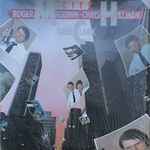
En la onda de McGuinn, Clark & Hillman
Otros artistas afines, con vinilo.