The Rave-Ups
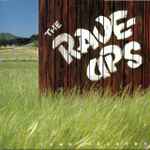
The Rave-Ups are an American rock group founded in 1979 in Pittsburgh, Pennsylvania who gained greater attention after relocating to Los Angeles, California. They are best known for their alternative rock hit songs "Respectfully King of Rain" and "Positively Lost Me" as well as their appearances in Pretty in Pink and Beverly Hills, 90210. The group's music has been diverse, touching on singer-songwriter, pop-rock, power-pop, roots rock, alternative rock, and alt-country, well before the alt-country movement. Critic Ira Robbins described the Rave-Ups as having been "touted as the next big thing to erupt from the LA club scene" of the 1980s, but also dogged by legal and personal problems that hampered the band's success. The Rave-Ups were founded at Carnegie Mellon University in the fall of 1979 by Jimmer Podrasky (guitar/vocals), with Michael Kaniecki (guitar/vocals), George Carter (bass, violin, vocals), and T.J. Junco (drums). The original group lasted only through that fall when T.J. Junco left the band. Richard Slevin (drums) joined the group in January 1980 and helped the band develop through the year, and though the group was considered part of Pittsburgh's early punk/new wave scene, along with its sister group The Shakes/Combo Tactic. With a somewhat more polished style than many of their peers, The Rave-Ups were considered less an example of the Punk genre and more of a musical stew of punk, pop, country, blues and folk. The band performed mostly original songs written by Podrasky and Kaniecki, with some songs contributed by Carter, and a few covers. Early performances in Pittsburgh were at The Electric Banana, The Decade Lounge, functions at Carnegie Mellon, as well as regular gigs at Fat City in Swissvale. During the summer of 1980 the band made 4-track and 16-track studio recordings, including the later popular "Class Tramp" and "In My Gremlin," along with the usual live recordings of club dates. Slevin left the band in the summer of 1980 to return to his native New York City and was replaced by Victor McPoland, a fellow Pittsburgher and Carnegie/Mellon grad. Meanwhile, the band left Pittsburgh and relocated briefly to Los Angeles, California. Appearing as the "band" in a John Wells (later of E.R. and The West Wing fame) production of Sam Shepard's "The Tooth of Crime" the group spent eight weeks in the sun of Los Angeles before returning home to Pittsburgh. A later return to LA by the band didn't gel and the original members broke up soon afterward. Podrasky returned briefly to Pittsburgh, but eventually booked a flight back to Los Angeles in order to further the musical agenda already established by the Pittsburgh group. The second incarnation of the band followed after Podrasky met drummer Tim Jimenez in the San Fernando Valley in 1982. Podrasky and Jimenez quickly became close friends and enlisted a bass player, Colleen Campbell, to join the band. Danny Zippi, already established as an actor, joined the group soon after and the band gigged around Los Angeles, almost always for free. Within the year, Campbell and Zippi were replaced by guitarist Chuck Wada & bassist Douglas Leonard. That line-up signed an indie deal and released a six-song EP entitled Class Tramp on Fun Stuff Records in 1983. The EP sold all 3,000 copies produced. But the Podrasky-Jimenez-Wada-Leonard line-up didn't last long. Late in 1984, Terry Wilson (guitar) and Tommy Blatnik (bass guitar) joined the band on a permanent basis. Ironically, all four members of the band now worked in the mailroom/shipping department of A&M Records, and it was in the basement of the A&M lot that the band rehearsed nightly, honing their craft amongst stacks of posters, album flats and music merchandising. In 1985, the band released their first full-length album, Town + Country, which was met with widespread critical acclaim and sold more than 40,000 copies. The album's only single, "Positively Lost Me," became a college radio hit and cemented the band as thoughtful alt-rockers with an extremely accessible sound, smart songs, and a considerable fondness for country, blues and folk. Teen actress Molly Ringwald, who had become a friend and fan of the band through her sister Beth's relationship with Podrasky, introduced the band to moviegoers in the John Hughes' classic Sixteen Candles when her character's three-ring binder featured the name "The Rave-Ups" scratched on it with a ball point pen. Ringwald later invited director John Hughes to see the band at a club date where the band informally and successfully auditioned for an appearance in the movie Pretty in Pink. In the movie, the Rave-Ups play their song "Rave-Up, Shut-Up" on stage while Duckie (Jon Cryer) talks with Iona (Annie Potts) at a nearby table, just before Andie (Ringwald) and Blane (Andrew McCarthy) join them. The next song played by the Rave-Ups in this scene is "Positively Lost Me." The band also appeared on the MTV "Pretty In Pink" Movie Premiere Special performing "Positively Lost Me". That song became a cult hit big enough that Rhino Records included the song on Rhino's Just Can't Get Enough: New Wave Hits of The 80's - Vol. 12. During this time the band was getting major acclaim from critics including Robert Christgau, Robert Hilburn, J.D. Considine, Todd Everett and Roy Trakin and entered into talks with several major record labels. During their still-evolving musical peak, the band was locked in legal battles, all in the hope of moving on to a major label; from 1986 to 1987, little music was released, with the exception of a 12-inch single, "These Wishes" (later covered by Pittsburgh band, The Clarks). The poignant ballad "Big Wide River" was the B-side of the single, which was produced by Los Lobos' Steve Berlin and engineer Mark Linnett. The band recorded a full-length album with Berlin and Linnett producing, but the record was never released. In 1987, the band signed to Epic Records and released in 1988 their major label debut The Book of Your Regrets to high critical expectations, despite being only promoted to the college radio scene (albeit a burgeoning one). The album failed to sell many copies, due to Epic's corporate restructuring with Sony and lack of promotion. The label almost dropped the band but a few believers from Epic insisted that the band get another opportunity. That same year, their song "Class Tramp" appeared in the cult horror anthology film From a Whisper to a Scream. 1990 saw the release of the album Chance (named after Podrasky's son with Beth Ringwald) to slightly more commercial success. The single "Respectfully King of Rain" became a modest alternative rock hit, garnering some video airplay on MTV and peaking at No. 12 on the Modern Rock Tracks chart. The second single, a radio-friendly pop anthem called "(She Says) Come Around" was readied for distribution (including a music video) by Epic who then decided that they would not promote the single or video and, soon after, dropped the band from the label. The band continued working for a few months, including an appearance on an episode of Beverly Hills, 90210 ("Spring Dance") and an opening slot on an Indigo Girls tour. Podrasky soon found himself in a brief relationship/engagement with 90210's star, Shannen Doherty; however, Podrasky's single-father status (he and Ringwald had split up many months earlier) didn't gel with a Hollywood lifestyle and the relationship soon ended. Within months, after much frustration, The Rave-Ups unofficially broke up in 1992. In 1996–1997, Podrasky briefly formed the band The Lovin' Miserys with Concrete Blonde drummer Harry Rushakoff, producing the limited pressing CD Happy as Hell, which was released only to radio stations. During live shows, they were joined by bass player Sam Bolle from Agent Orange, though in the LA Times interview Jimmer said “On the album, it's just me and Harry Rushakoff.”In 2000, members of The Rave-Ups (Podrasky and Wilson) reformed, recording a CD entitled The Salmon in the
Discografía en vinilo
Ordenada por relevancia (lo más escuchado primero).


En la onda de The Rave-Ups
Otros artistas afines, con vinilo.