BOØWY
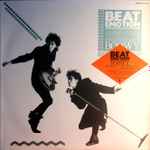
Boøwy (/ˈboʊi/ BOH-ee; stylized as BOØWY) was a Japanese rock band formed in Takasaki, Gunma in 1981. The classic lineup of vocalist Kyosuke Himuro, guitarist Tomoyasu Hotei, bassist Tsunematsu Matsui, and drummer Makoto Takahashi reached legendary status in Japan during the 1980s. In 1988, the year they broke up, they became the first male artists to have three number-one albums within a single year on the Oricon chart. They were named Artist of the Year at the 3rd annual Japan Gold Disc Awards in 1989. The late 1980s "Band Boom" in Japan is credited to Boøwy as they popularized the formation of musical groups. In 2003, HMV Japan ranked Boøwy at number 22 on their list of the "100 Most Important Japanese Pop Acts". In 1979, Kyosuke Himuro was in a band called Death Penalty which won Yamaha's East West '79 music contest held in his hometown of Takasaki, Gunma. In that same contest was Tomoyasu Hotei's band Blue Film, which came in second place. After the contest, Death Penalty signed with the record company Being Inc. and went to Tokyo. Things did not go as well as expected and they broke up. Himuro then joined Spinach Power, but he had problems with them as well. After attending an RC Succession concert at Hibiya Open-Air Concert Hall in the summer of 1980, Himuro resolved to form a new band. Around the same time, Hotei was also in Tokyo after being expelled from high school for saying "Jesus had long hair" when his teacher warned him about his hair being too long. He received a phone call from Himuro and, even though they did not really know each other, they decided to start a band. In September, they recruited Tsunematsu Matsui on bass, Atsushi Moroboshi from Death Penalty on guitar, and Kazuaki Fukazawa from Blue Film on saxophone. Mamoru Kimura from Spinach Power agreed to drum for them in 1981. Their staff at Being Inc. originally conceived of naming the band "Boy", as a play on the British band Girl, but feeling it lacked visual impact, it was decided to write the name in kanji as Bōi (暴威), which was found on costumes that Kansai Yamamoto had designed for David Bowie. To earn a living they started working part-time jobs and sent demo tapes to various record companies. They finally signed with the record company Victor and began recording their first album. In May 1981, Kimura left, as he originally joined the band on a temporary basis. He would later collaborate with the group again when he co-produced their second album. Makoto Takahashi was brought by a friend to watch Bōi perform their first concert at Shinjuku Loft on May 11, 1981. He was impressed and tried out for the band when he heard they needed a new drummer. During the summer of that year he replaced Kimura on drums and Bōi went on to become the most popular bands at the Loft. In January 1982, they changed their name to "BOØWY". The use of the "Ø" or "empty set" character, signifies the band's originality in that they "Belong nowhere, and resemble no one" (どこにも属さない、誰にも似ていない, Doko ni mo zokusanai, darenimo nite inai). On March 21, they released their first album, Moral. Because it was largely recorded during Kimura's tenure on drums, Takahashi only appears on two tracks. At this time they were a punk rock band. For their concert in Shibuya on September 9, Hotei wanted to take a different approach to their music and become more pop sounding, but the fans did not like the change. Fukazawa and Moroboshi mirrored the opinions of the fans and on October 9, after their performance at the Loft, they left the band and Boøwy became a quartet. In 1983, Boøwy formed their own company φ-con'nection with Mamoru Tsuchiya, a former member of Blue Film, as their manager. At the time, this was unheard of and frowned upon in the music industry, so their record company stopped promoting them, leaving Boøwy with no other means of promotion but performing live. Tsuchiya faced an uphill battle in promoting them; with no funds, he gathered hand-made flyers, posters, character goods, the musical instruments and the band in an old Toyota HiAce with no AC and went on a trip around Japan looking for places to perform. The band was lax with allowing fan recordings of their performances, particularly in their early years, leading to many bootleg recordings being in circulation. Around the time of φ-con'nection's formation, the band coined the term "afrockabilly" to describe their music. On September 25, they released their second album, Instant Love, on Tokuma Japan. At the end of May 1984, Boøwy relocated their base of operations from Shinjuku Loft to the larger Shibuya Live Inn with the first installment of their Beat Emotion concert series, which would continue monthly throughout the year. In July, they began a tour, also titled Beat Emotion, which lasted until December. Not wanting to go through the same hardship they faced in 1983, they decided to sign with the production company Yui in November, and signed to Toshiba EMI. On December 6, Himuro changed the spelling of his given name from "狂介" to "京介". The band then took a six-month break from touring. Boøwy performed in London, England, at the Marquee Club on March 12, 1985. Their self-titled third album was recorded at Hansa Tonstudio in West Berlin, Germany, produced by Masahide Sakuma, and released on June 21. Sakuma was chosen because Hotei was a big fan of his band the Plastics, and Sakuma's sole condition for agreeing was that it be recorded at Hansa. According to music critic Takashi Honda, Boøwy's June 25 concert at Shibuya Public Hall marked a turning point in their popularity, where the "punk spirit that defined their early years, glamorous theatricality, and an energy that sought to forge a new era while drawing upon the history of international rock" perfectly converged. The band started the Boøwy's Be Ambitious Tour in September, and it ran until December 1985. 1986 saw the band release two studio albums, Just a Hero in March and Beat Emotion in November. The former includes "1994 -Label of Complex-", which features Kōji Kikkawa as guest vocalist. Gota Nishidera later compared the magnitude of this collaboration to Bowie working with Queen on "Under Pressure". The Just a Hero Tour began in March and finished on July 2, with the band's first concert at the Nippon Budokan. Beat Emotion was recorded in a single month, in-between concert dates. It became Boøwy's first release to reach number one on the music charts. The 37-date Rock'n Roll Circus Tour, which began on November 11, 1986, was initially intended to feature a circus tent, but this was scrapped when the circus troupe mentioned a need for elephants. The single "Marionette" was released on July 22, 1987, took the number one position and sold 230,000 copies, making it the 20th best-selling single of the year. The band held two concerts called Case of Boøwy at the World Memorial Hall on July 31 and at the Yokohama Cultural Gymnasium on August 7, where they played most of their songs from their debut to the present for four hours straight. They released what would be their final studio album, Psychopath, on September 5. It was followed by the Dr. Feelman's Psychopathic Hearts Club Band Tour, which would be their final tour. At its final concert, Shibuya Public Hall on December 24, 1987, Boøwy announced that they would be breaking up. There are many rumors concerning the breakup, but the most popular is the rift between Hotei and Himuro. An indication of the band's stature at the time, is that at their farewell concerts, appropriately titled Last Gigs; two nights at the newly-opened Tokyo Dome on April 4 and 5, 1988; they sold out all 95,000 tickets in ten minutes. A live album of the two shows was released just one month later on May 3. In 1989, Boøwy were named Artist of the Year at the 3rd annual Japan Gold Disc Awards. The band has had several number ones since disbanding, including; their 1988 Singles collection, 1998's This Boøwy which sold over 1.6 million copies to be certified 4×
Discografía en vinilo
Ordenada por relevancia (lo más escuchado primero).




En la onda de BOØWY
Otros artistas afines, con vinilo.