The Smothers Brothers
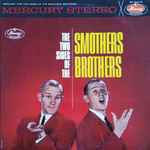
The Smothers Brothers were the American duo of brothers Tom and Dick Smothers, who performed music and comedy. The brothers' trademark double act was performing folk songs (Tommy on acoustic guitar, Dick on double bass), with Tommy (the elder of the two) acting clueless and Dick as his straight man, which usually led to arguments. Tommy's signature line was "Mom always liked you best!" In the late 1950s and early 1960s, the brothers frequently appeared on television variety shows and issued several popular record albums of their stage performances. Their own television variety show, The Smothers Brothers Comedy Hour, became one of the most controversial American TV programs of the Vietnam War era. Despite popular success, the brothers' (especially Tom's) penchant for material that was critical of the political mainstream and sympathetic to the emerging counterculture led to their firing by the CBS network in 1969. The brothers continued to work, both independently and as a team, on stage, television, and in films until the pair's retirement in 2010. The brothers were both born on Governors Island in New York Harbor, where their father, Thomas B. Smothers Jr., a West Point graduate and U.S. Army officer, was stationed. Tom was born on February 2, 1937, and Dick was born on November 20, 1938. Major Smothers served in the 45th Infantry Regiment and died during World War II, while being transported from a Japanese prisoner of war camp in Fukuoka, Japan, to a POW camp in Mukden, Manchukuo. They were raised by their mother in the Los Angeles area. They graduated from Redondo Union High School in Redondo Beach, California, and attended San Jose State University. After a brief time in a folk group called the Casual Quintet, the brothers made their first professional appearance as a duo in February 1959 at The Purple Onion in San Francisco. They were a popular act in clubs and released several successful top 40 albums for Mercury Records, the most successful being Curb Your Tongue, Knave! in 1964. Their first national television appearance was on The Jack Paar Show on January 28, 1961. On October 6, 1963, the Smothers Brothers made an appearance on the CBS variety series The Judy Garland Show which also showcased Barbra Streisand. Tom and Dick inherited Garland's time slot when their own variety series began in early 1967. The brothers appeared in a segment of the television series Burke's Law, in 1964, in which they played two compulsive hoarders. Their first television series was a situation comedy, The Smothers Brothers Show (1965–1966), produced by Four Star Television. Tom played an angel come back to earth to oversee his brother Dick, who played a swinging bachelor. It did not do well in the ratings and had little of the music that was identified with the brothers. Tom said in 1969 that "Four Star gave me ulcers." The Smothers Brothers Comedy Hour started out as an only slightly "hip" version of the typical comedy-variety show of its era, but rapidly evolved into a show that extended the boundaries of what was considered permissible in television satire at that time. While the Smothers themselves were at the forefront of these efforts, credit also goes to the roster of writers and regular performers they brought to the show, including Steve Martin, Don Novello, Rob Reiner, presidential candidate Pat Paulsen, Bob Einstein, Albert Brooks, and resident hippie Leigh French. The show also introduced audiences to pop singer Jennifer Warnes (originally billed as Jennifer Warren or simply Jennifer), who was a regular on the series. The television premiere of Mason Williams' hit record, "Classical Gas", took place on the show; Williams was also the head writer for the series. The series showcased new musical artists to whom other comedy-variety shows rarely gave airtime, due to the nature of their music or their political affiliations. George Harrison, Ringo Starr, Joan Baez, Buffalo Springfield, Cass Elliot, Harry Belafonte, Cream, Donovan, The Doors, Glen Campbell, Janis Ian, Jefferson Airplane, The Happenings, Peter, Paul and Mary, Spanky and Our Gang, Steppenwolf, Simon & Garfunkel, The Hollies, The Who, the original broadway cast of Hair and even Pete Seeger were showcased on the show, despite the advertiser-sensitive nature of their music. Seeger's appearance was his first appearance on network television since being blacklisted in the 1950s. It became controversial because of his song choice, "Waist Deep in the Big Muddy", an anti-war song that the network considered to be an insult to President Lyndon Johnson and his Vietnam War policy. The song was censored on Seeger's first appearance but permitted on a later appearance. In September 1968, the show broadcast in successive weeks "music videos" (called "promotional films" at the time) for The Beatles' double A-side single "Hey Jude" and "Revolution". Before a rowdy crowd at the Los Angeles Forum, Jimi Hendrix dedicated "I Don't Live Today" to the Smothers Brothers, as heard on The Jimi Hendrix Box Set. The performance by the Who in 1967 was another defining moment in the series. As the group often did during that period, the Who destroyed their instruments at the conclusion of their performance of "My Generation", with the usual addition of mild explosives for light pyrotechnic effect. The piece ended with guitarist Pete Townshend grabbing Tommy's guitar and smashing it. On the Smothers Brothers show that night, a small amount of explosive was put into the small cannon that Keith Moon kept in his bass drum, but it did not go off during the rehearsal. Unbeknownst to Moon, a stage hand had added another explosive before the taping, and later Moon added another charge so that now there were three explosive charges in the cannon instead of one. When Moon detonated it, the explosion was so intense that a piece of cymbal shrapnel cut into Moon's arm; Moon is heard moaning in pain toward the end of the piece. Townshend, who had been in front of Moon's drums at the time, had his hair singed by the blast; he is seen putting out sparks in his hair before finishing the sketch with a visibly shocked Tommy Smothers. The blast contributed heavily to Townshend's long-term hearing loss. With its focus having evolved toward a more youth-oriented one, the show became both popular and controversial. Three specific targets of satire – racism, the President of the United States, and the Vietnam War – wound up defining the show's content for the remainder of its run, eventually leading to its demise. However, contrary to popular belief, the brothers did not agree politically, with Tom being the one having more intention to challenge the political establishment; he even later described his younger brother as "more conservative politically." The brothers soon found themselves in regular conflict with CBS's network censors. At the start of the 1968–69 season, the network ordered that the Smothers Brothers deliver their shows finished and ready to air 10 days before air date so that the censors could edit the shows as necessary. In the season premiere, CBS deleted the entire segment of Belafonte singing "Lord, Don't Stop the Carnival" against a backdrop of the havoc during the 1968 Democratic National Convention, along with two lines from a satire of their main competitor, Bonanza. As the year progressed, battles over content continued, including a David Steinberg sermon about Moses and the Burning Bush. With some local stations making their own deletions of controversial skits or comments, the continuing problems over the show came to a head after CBS broadcast a rerun on March 9, 1969. The network explained the decision by stating that, because that week's episode did not arrive in time to be previewed, it would not be shown. In that program, Joan Baez paid tribute to her then-husband, David Harris, who was entering prison after refusing military service, while comedian Jackie Mason made a joke about children "playing
Discografía en vinilo
Ordenada por relevancia (lo más escuchado primero).


En la onda de The Smothers Brothers
Otros artistas afines, con vinilo.