Vinilogy Explorar Por vibra ✦
Rheostatics

Rheostatics

band CA

De Rheostatics no hay ningún disco en vinilo a la venta ahora mismo en las 6 tiendas independientes de España que seguimos.

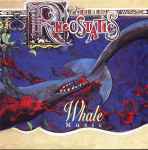
Rheostatics are a Canadian indie rock band. They were formed in 1978, and actively performed from 1980 until disbanding in 2007. After a number of reunion performances at special events, Rheostatics reformed in late 2016, introducing new songs and performing semi-regularly. Although they had only one Top 40 hit, "Claire" in 1995, they were simultaneously one of Canada's most influential and unconventional rock bands, a band whose eclectic take on pop and rock music has been described both as iconic and iconoclastic. In particular, two of the band's albums, Whale Music and Melville, have been cited in numerous critical and listener polls as among the best Canadian albums ever recorded. Formed in Etobicoke, Ontario in 1978, the band played their first gig at a club called The Edge in February 1980. The band originally consisted of guitarist Dave Bidini, bassist Tim Vesely, drummer Rod Westlake and keyboard player Dave Crosby. Westlake left the band almost immediately, however, and was replaced by Dave Clark. Crosby left the band in 1981. In their earliest years, the band members were all still teenagers, and required special permits to play in most music venues. The band's early sound was more R&B and funk-oriented than their later, more famous, music. A large horn section, known as The Trans-Canada Soul Patrol, accompanied the group from 1983 to 1985; Clark had met the horn players while taking a jazz class at a summer music school. After the departure of the horn section, Martin Tielli was brought in. Tielli and Clark had previously been bandmates in the group Water Tower. In the early 1980s the Rheostatics released a number of independent singles, and the three song demo Canadian Dream. The best-known of these early singles was "The Ballad of Wendel Clark, Parts 1 & 2", an ode to the Toronto Maple Leafs player Wendel Clark, which became the band's first hit on college radio and CFNY. In 1987, these songs were collected as the band's debut album, Greatest Hits. Only 1,000 copies of this album were pressed and released originally, and quickly sold out. The album was eventually re-released in 1996. The band also played a role in drawing Canadian country music icon Stompin' Tom Connors out of retirement, after Bidini and Vesely crashed Connors' birthday party in 1986 and wrote an article about it for a Toronto newspaper. Martin Tielli left the band at the end of 1988, and shortly thereafter the Rheostatics broke up. During the hiatus, Bidini and Clark played a number of shows as supporting musicians for the recently reunited Three O'Clock Train. However, by 1990 the band reunited with exactly the same line-up they had in mid-1988: Bidini, Clark, Tielli and Vesely. In 1991, the band signed to the independent label Intrepid Records, and released Melville that year. The single "Record Body Count" garnered them significant airplay on radio and MuchMusic. The album also featured an enigmatic cover of Gordon Lightfoot's "The Wreck of the Edmund Fitzgerald". The following year, the band signed to Sire Records and released Whale Music, which was inspired by Paul Quarrington's award-winning novel Whale Music. Quarrington himself was so impressed by Whale Music's quirky pop—which was perfectly suited to a novel about a quirky, reclusive pop genius liberally based on Brian Wilson—that he chose the band to compose the soundtrack to the film version of his novel. Music from the Motion Picture Whale Music was released in 1994, putting the band in the odd position of having two almost identically-titled albums in its catalogue. The centrepiece of the soundtrack was "Claire", a love song from the main character in the movie to a woman who'd moved into his house, which became Rheostatics' first and only Top 40 hit and earned the band a Genie Award for Best Original Song in 1994. "Claire" was also featured on the band's album Introducing Happiness, released the same year. That album proved to be the end of the Rheostatics' association with Sire, however, as the label found the band difficult to market. It was also Clark's last album with the band, as he left to concentrate on his own band, The Dinner Is Ruined. The resignation came very shortly before a cross-Canada tour. Clark has stated in interviews that he left because he was uncomfortable with the chart success of "Claire" and feared that the rest of the band would be persuaded to evolve in a mainstream direction. Tielli's perspective on "Claire", however, was very different: Dave Clark hated it, but we were totally successful at what the assignment was. Nobody’s picked up on how funny that is: the assignment was to write Desmond Howell’s hit song, and we did it – and it’s our only charting hit, except maybe for "Bad Time to be Poor". It’s funny as hell that we can do it if we want to. I don’t want to, particularly. Clark was replaced by Don Kerr, whose first performance with the Rheostatics was an unannounced show at the Horseshoe Tavern in March of 1995. Also in 1995, the band first toured with The Tragically Hip as part of the Another Roadside Attraction festival. Later in 1995, the band attracted the attention of the National Gallery of Canada, who commissioned the band to write music to accompany a retrospective celebrating the 75th anniversary of another group of artists whose distinctive-yet-accessible artistic outlook had redefined Canadian art, the Group of Seven. That year, working with pianist Kevin Hearn (later of the Barenaked Ladies) and the experimental hip hop group Farm Fresh, they released Music Inspired by the Group of Seven on the independent label DROG Records. Bob Wiseman would sit in for Hearn at the Art Gallery of Ontario show due to Hearn's illness. The band also opened for the Tragically Hip on that band's tour to support the album Trouble at the Henhouse; this tour culminated in the release of the Tragically Hip’s live album Live Between Us in May 1997, wherein front man Gordon Downie opens the album – and show – by saying, over the beginning of the first track “Grace Too”, “This is for the Rheostatics – we are all richer for having seen them tonight”. Rheostatics then returned to the studio, and released The Blue Hysteria in 1996. This album garnered airplay for the single "Bad Time to Be Poor," a scathing indictment of life in Ontario during the government of Mike Harris. In 1997, the band released Double Live, a live album documenting the band in a variety of settings, from small in-store sessions to the large arenas of their tour with The Tragically Hip. The album was very successful on the campus radio charts and is amongst fans' favorites discs. On August 31, 1997 the group performed a live session for the last episode of Night Lines, a music show on CBC Radio Two. Performances from this session were released on 1998's The Nightlines Sessions. In 1999, the band released The Story of Harmelodia, an album based on a children's story written by Bidini. The album, which featured the band's songs interspersed with narration by Bidini's wife, Janet Morassutti, detailed the adventures of Dot and Bug, two children from the land of Harmelodia who fell through a hole into the land of Popopolis. The album was packaged with a book featuring Tielli's illustrated text of Bidini's story. Hearn and the band's frequent producer, Michael Phillip Wojewoda, contributed significantly to the recording and are listed as members of the band. In 2001, Rheostatics released Night of the Shooting Stars on Perimeter Records. Though Kerr plays on the album, it was announced prior to its release that he would be departing from the band. The reasons given were his desire to focus on his work at Gas Station Recording Studios in Toronto, as well as his role in Ron Sexsmith's group. Kerr was replaced by Wojewoda. In late 2001, the band revived their tradition of a week's club residency, formerly known as "Green Sprouts Music Week", and played 11 straight evenings at Toronto's Horseshoe Tavern. Performances from

Escuchar en Spotify

Discografía en vinilo

Ordenada por relevancia (lo más escuchado primero).
En la onda de Rheostatics

Otros artistas afines, con vinilo.