Romeo Void
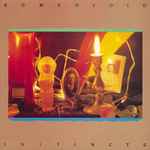
Romeo Void was an American new wave and post-punk band from San Francisco, California, formed in 1979. The band primarily consisted of saxophonist Benjamin Bossi, vocalist Debora Iyall, guitarist Peter Woods, and bassist Frank Zincavage. The band went through four drummers, starting with Jay Derrah and ending with Aaron Smith. The band released three albums, It's a Condition, Benefactor and Instincts, along with one EP. They are best known for the songs "Never Say Never" and "A Girl in Trouble (Is a Temporary Thing)"; the latter became a top 40 pop single. The band was started at the San Francisco Art Institute by Iyall and Zincavage. They released a single on the recently formed 415 Records before recording their debut album, which has been deemed a "masterpiece of American post-punk". The success of their second release, a four-song EP titled Never Say Never resulted in a distribution deal with Columbia Records. The band continued to release music and tour until they broke up in 1985. The members have reunited briefly over the years. Iyall has continued to pursue music as a side project. Iyall has garnered acclaim as a skilled lyricist who explores themes like sexuality and alienation from a female perspective with "searing imagery". Romeo Void formed at the San Francisco Art Institute in February 1979. Vocalist Debora Iyall occasionally visited the Bay Area to see Patti Smith perform. She decided to pursue an art education after reading a fortune cookie. "It was in the late '70s at the Indochina Friendship Booth at the annual Fourth of July streetfair in Eureka, California," she said. "I got a fortune cookie that said 'Art is your fate, don't debate.' That next January, I was enrolled in an art school in San Francisco." She began frequenting the Mabuhay Gardens, a popular nightclub, to see local alternative rock groups like The Nuns, the Mutants, Crime, and the Avengers. She also formed the Mummers and Poppers, a punk parody band that covered 1960s tunes with guitarist Peter Woods, Charles Hagan and drummer Jay Derrah, . Iyall was originally hesitant to perform because she was overweight: "After seeing Patti Smith, I still had it in my mind that you had to be skinny to be up there [on stage], but after going to the Mabuhay [...] you just do whatever you want, be whoever you want, just make it happen." Bassist Frank Zincavage met Iyall at the SF Art Institute; the two hit it off and discussed putting a band together. They formed one with Woods and Derrah a few weeks later, drawing inspiration from the "burgeoning local punk and post-punk scenes". Iyall recruited Woods because she enjoyed playing with him in the Mummers and Poppers. "[It] seemed only natural that we invite Peter Woods to join us [... He] played clean and was a natural on rhythm guitar." Romeo Void officially formed on Valentine's Day in 1979. According to Iyall, the name Romeo Void referred to "a lack of romance" and came to mind after they saw a local magazine with the headline "Why single women can't get laid in San Francisco." The name "means there are not romantic notions here — and there shouldn't be," Iyall told an interviewer: "We are about reality, not the myths created by other artists." The band practiced in Iyall's flat in the Mission District. It was decided that the group would embrace punk ideals despite the possibility that they become associated with the new wave movement. "Even though I was going to the [Mabuhay Gardens] so much, I also had criticisms: Everyone was leaning against the wall wearing black," Iyall said. "I guess we were considered new wave, but for me Romeo Void was a reaction against the regimentation of everyone having to be bleached blond and everything being about despair and no future, when I thought the do-it-yourself thing should encompass all the different kinds of emotions, and all the different colors. [...] I was proud of being American Indian, so I purposely never bleached my hair blond." The band became busy playing shows at clubs and warehouses around San Francisco, and quickly became popular. Saxophonist Benjamin Bossi was added to the lineup as an "accident" when Iyall met him while he worked in the New York City Deli on Market Street in San Francisco. The group released their first single, "White Sweater", which consisted of the title track and a cover of Jerry Lordan's popular instrumental composition "Apache", in February 1981 on a recently founded local label called 415 Records. They worked on the recording of their debut album, It's a Condition, with producer David Kahne. Before recording began, Derrah left the band and was replaced by John "Stench" Hanes, who had previously played with Pearl Harbor and the Explosions. Romeo Void's debut was critically acclaimed upon its release through 415 in July 1981, and introduced Romeo Void's "unique blend of jazz, funk, rock and confrontational poetry". AllMusic writer Stewart Mason later heralded it as one of the "masterpieces of American post-punk". Indie labels were enthusiastic with promotions and the band embarked on several nationwide tours. Eventually Hanes left the band, leaving Larry Carter to fill the drummer position. The sudden surge in popularity was disorienting to Iyall. "It was frightening: we played a college in Santa Barbara, and there were all these blond people crowding the stage, and I thought 'These are the people who hated me in high school!' When you grow up being 'outside' – because I wasn't white, and I was fat, and always a bit of a free thinker – it was strange. It was like, 'uh-oh, I must be doing something wrong – they like me!'" Highly successful mainstream artists like Ann Wilson and Ric Ocasek were eager to meet the band. Ocasek extended an invitation to collaborate at his Syncro Sound recording studio in Boston. The recording sessions in Boston resulted in the Never Say Never EP in January 1982. The title track became (arguably) their best-known song and has remained synonymous with the band ever since. The song was also featured in the 1984 romantic teen drama Reckless. Additionally, the success of the single directly led to 415 Records signing a deal with Columbia Records, which elevated the indie label's roster to major-label status. Romeo Void released their second album, entitled Benefactor, in November 1982. The album appeared at No. 119 on the Billboard 200. Benefactor was noticeably more commercial sounding than previous endeavors; the music was made more danceable and swearing was removed on the song "Never Say Never". The different approach in the sound resulted in comparisons to Blondie, which AllMusic writer William Ruhlmann suggested was a deliberate attempt by Columbia. Iyall stated that there was more pressure to write sexually laced lyrics for Benefactor: "I do like to be provocative, and I definitely have access to my sexuality, and as a topic I find it ripe, but I wasn't ever going to be a sex-pot diva, so that was kind of odd." She also said there was pressure to produce more singles. A third and final album was again helmed by David Kahne, which AllMusic writer Stewart Mason speculated was a "reaction against the more commercial sound of Benefactor. By this time, Carter had been replaced by veteran session drummer Aaron Smith. Instincts was released in October 1984, debuted at No. 68 on the Billboard 200, and proved to be the band's best-selling album. It also launched their most successful single, "A Girl in Trouble (Is a Temporary Thing)," which broke the Billboard Top 40 and peaked at No. 35. Critical reactions were positive. Despite being the band's most successful effort to date, Columbia pulled the band's promotional support while on a nationwide tour. "The very next town we got to after they made that decision, there wasn't an A&R person there," said Iyall. "[There] was no local person there, there were no interviews and in-stores arranged as they had been. All that just ground to a halt." The band returned to San Francisco and
Discografía en vinilo
Ordenada por relevancia (lo más escuchado primero).

En la onda de Romeo Void
Otros artistas afines, con vinilo.