
Floh de Cologne
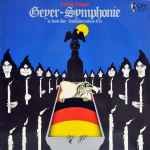
Floh de Cologne (a wordplay on Eau de Cologne, 'floh' meaning 'flea') were a German band, active from 1966 to 1983, regarded as a pioneer of krautrock and Political Satire Music. After some success at the beginning of the 70s, the band separated finally in 1983. Jürgen Allef (managing director) until 1967 Udo Weinberger (vocals, speaker) until 1968 Britta Baltruschat (vocals) until 1968 Markus Schmid (bass guitar, guitar, vocals, keyboards) until 1974 Gerd Wollschon (vocals, keyboards) until 1976 Hans-Jörg "Hansi" Frank (drums, keyboards, vocals) since 1966 Dieter Klemm (percussion, speaker, management) since 1967 Dick Städtler (bass guitar, guitar, vocals) since 1969 Theo König (saxophone, clarinet, harmonica, vocals) since 1972 Vridolin Enxing (keyboards, bass guitar, guitar, cello, vocals) since 1973 The group was formed in 1966 by a group of radical theatre students from the University of Cologne. The band originated from the Cologne APO (Extra-Parliamentary Opposition) around the SDS (Socialist German Student Union), and their political orientation shifted over the years towards a dialectical-Marxist position. Independently of one another, the band members joined the DKP (German Communist Party) between 1970 and 1973. Their first album, Vietnam, released in 1968, is a fierce criticism of the war in Vietnam. The profits made from this album was donated to a Vietnamese charity. They satirised consumer society and sought to take their message to young workers and apprentices. Impressed by their music and especially their lyrics, Rolf-Ulrich Kaiser decided to produce their next two albums: Rockoper Profitgeier (1971) and Lucky Streik (1972). On September 6, 1970, the group performed at the Fehmarn Festival, following Jimi Hendrix. In 1973, Floh de Cologne performed as part of a West German delegation at the 10th World Festival of Youth and Students in East Berlin. After Gerd Wollschon's departure (1976), the group increasingly collaborated with the lyricist Peter Maiwald, who contributed important songs for their stage shows and LPs. From 1980 onwards, members of the band (Vridolin Enxing as chairman) were active in Rock gegen Rechts; in the same year, the group received the German Cabaret Prize together with Gerhard Polt. After more than 3,000 concerts in Germany and Europe, Floh de Cologne disbanded in May 1983 following a farewell tour. The farewell concert at the Cologne Sports Hall had 6,000 spectators and lasted 14 hours, featuring numerous musicians such as Hannes Wader, Dieter Süverkrüp, Franz-Josef Degenhardt, Hanns-Dieter Hüsch, Die 3 Tornados, Wolfgang Niedecken (BAP), and Ina Deter. In 2023, the band received the Holger Czukay Honorary Award from the City of Cologne for their lifetime artistic achievements. Their musical style is considered to be krautrock. After the originally conventional cabaret group Floh de Cologne experienced underground bands like the Mothers of Invention, the Fugs, and the Edgar Broughton Band at the Essen Song Days in 1968 – where the group itself performed two special programs – they stylistically reoriented themselves with their 7. Programm, combining agitational texts with beat music and a stage show to create so-called "agitation revues" and developing into one of the leading political rock bands. In 1970, Floh de Cologne signed an exclusive record deal with the label Ohr/Metronome for the production Fließbandbabys-Beatshow and other releases. Metronome producer Rolf-Ulrich Kaiser was instrumental in the development of the so-called Krautrock scene of those years. In 1971, Floh de Cologne created Profitgeier, the first German-language rock opera. In the three-movement Geyer Symphony of 1973, the band incorporated original excerpts from political speeches given at the funeral of the German industrialist Friedrich Flick into their music. With the cantata for rock band Mumien" (Mummies), the band responded to the 1973 coup in Chile, including a musical setting of the last speech by the ousted president Salvador Allende. That same year, the group collaborated with Hans Werner Henze on alternative settings of the Chilean anthem (Dieser chilenische Sommer war süß; 1974), with lyrics by Rudi Bergmann (born 1950). The premiere took place on May 31, 1974, in Essen (Grugahalle: memorial concert for Víctor Jara, also a solidarity event for the resistance in Chile). Their collaboration with Mauricio Kagel at the "Cologne Courses for Political Music" (1975) also transcended national borders. In the rock opera Koslowsky, for which the band had researched on location for a year, Floh de Cologne traced the fate of a worker from the Ruhr area who comes to Bavaria to work at the Maxhütte steelworks in 1980. Less well-known, but essential for the band's development, were their works for the theater. These included collaborations with Roberto Ciulli at the Cologne Schauspielhaus: Ein Neuer Florentinerhut (A New Florentine Hat) after Eugène Labiche (published by Hartmann & Stauffacher, Cologne); with the Markgrafen-Theater Erlangen and the Staatstheater Wiesbaden: Rotkäppchen – ein Märchen mit viel Rock und Pop und Rumtata(Little Red Riding Hood – A Fairy Tale with Much Rock and Pop and Rumtata) after Yevgeny Schwartz (published by Hartmann & Stauffacher, Cologne). Further works followed with a smaller lineup after the band's dissolution (Dick Städtler, Theo König, Vridolin Enxing): at the Grillo-Theater Essen, together with David Esrig, a new version of Carlo Goldoni's Der Krieg (The War) (1984, Sessler-Verlag, Vienna); Babette oder peu à peu with Helmut Ruge at the Markgrafen-Theater Erlangen (Babette or Little by Little) (1986); and also there: Das Mädchen mit den Schwefelhölzern (The Little Match Girl) (1986). Each Floh de Cologne stage program was accompanied by a programmatic poster. The back contained the complete text of the program and, where applicable, "instructions" for action and references to literature for further "private revolutionary activity." The front was designed by friends such as HR Giger, Dieter Süverkrüp, Stefan Siegert, and Wolfgang Niedecken. These posters and the LPs were sold by the group themselves after the performances, just as they did everything else themselves; there were no professional roadies. It was part of the group's code of honor to do their own work whenever possible, thereby keeping ticket prices low so that their target audiences (apprentices, young workers, students, and schoolchildren) could access the shows as easily as possible. A quote from a 1983 program booklet: Floh de Cologne, that's no gold record and no easy money, no place in the charts or prime-time television, no art or cultural prize, and no subsidies. That's just bad luck. Vor Gebrauch Kopf schütteln 1966 Tra-Ri-Tra-Ra, die Pest ist da 1966 SimSAlabimbambambaSAladUSAladim 1967 Zwingt Mensch Raus 1968 7. Programm 1969 Fließbandbabys Beat Show 1969 Rockoper Profitgeier 1970 Rock-Jazz-Rakete Lucky Streik 1972 Geier-Symphonie in Rock-Dur 1973 Mumien, Kantate für Rockband 1974 Rock-Show TILT 1975 Rock-Revue Profitgeier & Co. 1976 Prima Freiheit 1978 Rockoper Koslowsky 1979 Faaterland 1982 In 1977, DEFA filmed a two-part documentary about the group (directed by Rainer Ackermann, cinematography by Thomas Plenert). In 2019, Part 1 of the US DVD series Krautrock, titled Romantic Warrior IV, was released. The series presents extensive videos and interviews with representatives of the German Krautrock scene. Part 1 covers the Düsseldorf and Cologne groups, including CAN, Kraftwerk, and Floh de Cologne. In 2023, OK Projekt Berlin produced a visualization of the Chilean cantata Mumien and in 2025 of Fließbandbaby's Beat-Show. That same year, Caro Gubig created a video for the ballad Ballade von Samstag auf Sonntag from the rock revue Faaterland. The 2025 film Köln 75 uses the song Sei Ruhig Fließbandbaby from Fließbandbaby's Beat-Show in its entirety. Floh de Cologne produced their LPs during their contract with OHR/Metronome
Discografía en vinilo
Ordenada por relevancia (lo más escuchado primero).


En la onda de Floh de Cologne
Otros artistas afines, con vinilo.