Australian Crawl
Australian Crawl (often called Aussie Crawl or The Crawl by fans) are an Australian rock band founded by James Reyne (lead vocals/piano/harmonica), Brad Robinson (rhythm guitar), Paul Williams (bass), Simon Binks (lead guitar) and David Reyne (drums) in Melbourne in 1978. David Reyne soon left and was replaced by Bill McDonough (drums, percussion). They were later joined by his brother Guy McDonough (vocals, rhythm guitar). The band was named after the front crawl swimming style also known as the Australian crawl. Australian Crawl was associated with surf music and sponsored a surfing competition in 1984. However, the band also handled broader social issues such as shallow materialism, alcoholism, car accidents, and cautionary tales of romance. After its 1980 debut album, The Boys Light Up, reached No. 4, Australian Crawl had two No. 1 albums; 1981's Sirocco and 1982's Sons of Beaches. The early singles reached the top 25 but none broke into the Top Ten; the best performing single was No. 1 hit "Reckless" which came from the 1983 Semantics EP. Upheaval within the band occurred from 1983 onwards. First, Bill McDonough left in 1983, then his brother Guy McDonough died in 1984, and finally, Paul Williams departed in 1985. The 1985 release Between a Rock and a Hard Place was produced at an exceptionally high cost of $400,000 AUD, but sales were disappointing. They disbanded in early 1986. The band's status as an icon on the Australian music scene was acknowledged by induction into the 1996 Australian Recording Industry Association (ARIA) Hall of Fame. Hospitalised with lymphoma, founding guitarist Brad Robinson was unable to attend the Hall of Fame induction in person. He died two weeks later. The band Spiff Rouch formed in 1976 in the Mornington Peninsula suburb of Mount Eliza on the outskirts of Melbourne. The group lineup featured James Reyne, brothers Bill and Guy McDonough, Paul Williams, Robert Walker and Simon Binks. Reyne had previously played drums for Archie Slammit and the Doors. By early 1978 Spiff Rouch had separated into two groups: The Flatheads (including the McDonough brothers and Walker, along with Sean Higgins and Nigel Spencer) and Australian Crawl. The original lineup for the latter was Reyne as vocalist, Binks on lead guitar, Williams on bass guitar, along with Reyne's younger brother David Reyne on drums and schoolmate Brad Robinson on rhythm guitar. Australian Crawl performed their first live gig in October 1978 and toured the pub circuit. David Reyne left the group in 1979 to finish his acting course, later becoming an actor and TV presenter as well as drumming for Cats Under Pressure and the Chantoozies (1986–1990). He was replaced in Australian Crawl by Bill McDonough. The group's popularity in the Mornington Peninsula area increased with further pub gigs, then they gained audiences with university students and inner city residents. Once the band's escalating popularity brought them into Melbourne they caught the attention of Little River Band's guitarist David Briggs, who helped them gain a recording contract with EMI and he produced their first single. "Beautiful People" (1979) reached No. 22 on the national charts. Reyne had co-written the song with guitarist Mark Hudson in 1975. The track included references to the shallow materialism of residents of Toorak and to the Bombay Rock night club in Brunswick. Just days before recording "Beautiful People" Reyne had been hit by a car on Swanston Street, Melbourne, breaking bones in both wrists, an episode later chronicled in the track "Indisposed". Australian Crawl made one of the most memorable debuts on Australian Broadcasting Corporation (ABC) TV series Countdown performing "Beautiful People" as Reyne still had both arms encased in plaster. "Beautiful People" remains one of their most popular songs according to listeners of Triple M in 2007. Australian Crawl's debut album, The Boys Light Up (1980), also produced by Briggs for EMI, had a number of hit singles with songwriting shared around the group and beyond. Tracks from this album included the previously released single "Beautiful People", the title track (written by Reyne and Mark Hudson); "Indisposed" (Brad Robinson, James Robinson, Reyne, Bill McDonough) and "Downhearted" (Sean Higgins, Guy McDonough, Bill McDonough) (from The Flatheads). "The Boys Light Up", their second single, was almost banned from radio play due to its explicit lyrics. Many listeners believed the chorus lyrics were about smoking marijuana but Reyne has stated that it was about smoking tobacco cigarettes at school. It also reached No. 22 on the National charts and became their signature song and their most popular track especially live. Their third single "Downhearted" charted higher at #12 and was a cautionary tale of romance gone wrong. The Boys Light Up reached No. 4 on the Australian album charts and remained in the charts for an unbroken 101 weeks. It sold five times platinum: over 280,000 copies, and became one of the biggest Australian albums of the 1980s. Singer/guitarist/songwriter Guy McDonough (ex-The Flatheads and Bill's younger brother) joined the group in October 1980. Rock journalist and commentator Glenn A. Baker compared Australian Crawl with various fellow Australian bands: Australian Crawl seemed to step out of a tourism poster... Spruce, lean, tanned and young... They swam, they surfed, they radiated a healthy, wholly Australian aura... If Skyhooks has personified the bodgie larrikin and Cold Chisel the hard drinking working class man, Australian Crawl turned the bronzed lifesaver into a pop idol... Crawl songs seemed to eulogise hedonism, adventure and the great outdoors for an audience that couldn't be bothered with Midnight Oil's politics. — Glenn A. Baker, 1983 However, according to James Reyne some people accused them of being demonic. He said whenever you bumped into the member of Little River Band who had found God, he'd tell him "you shouldn't be playing that, it's demonic". In 1981, Australian Crawl recorded their second album, Sirocco, with producer Peter Dawkins in Sydney. Named for Errol Flynn's yacht, the album peaked at No. 1 on the Australian album chart on 3 August and remained there for six weeks. At about this time Robinson was married to actress Kerry Armstrong, later an Australian Film Institute Award winner, who co-wrote a track "Easy on Your Own" for the album. Sirocco spawned the hit singles "Things Don't Seem" (May, No. 11 National charts) and "Errol" (August, #18). It also included "Oh No Not You Again" (November). Of these, "Errol" about womanising Tasmanian-born actor Flynn is the band's third most popular song of all. Another track from the album, "Lakeside", became a popular radio inclusion. 1981 Australian End of Year Album Charts has Sirocco at No. 2 behind Double Fantasy by John Lennon and ahead of AC/DC's Back in Black making it the best charting album by an Australian act. Another track on this album, "Unpublished Critics" has been compared several times to the later song "Sweet Child o' Mine" by US band Guns N' Roses, as acknowledged by the writer of "Unpublished Critics", James Reyne. He was responding to media comments in May 2015 about the possibility of plagiarism by the American band. Duff McKagan, who was bass player with Guns N' Roses when "Sweet Child o' Mine" was written and recorded, found the similarities between the songs "stunning," but said he had not previously heard "Unpublished Critics." On the wave of popularity the band toured extensively playing to huge crowds at Melbourne's Myer Music Bowl (10,000), Sydney's Domain (90,000), the Narara Rock festival (70,000), smashing attendance records at indoor venues in Brisbane and Perth. They were voted Countdown 1981 Most Popular Group, and James Reyne was voted 1980 and 1981 Most Popular Male Performer. Sons of Beaches (1982) was recorded in Hawaii with expatriate Australian Mike Chapman producing. The album had a rougher, rock 'n'
Discografía en vinilo
Ordenada por relevancia (lo más escuchado primero).


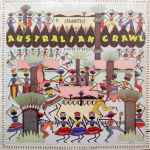


En la onda de Australian Crawl
Otros artistas afines, con vinilo.