Potliquor (southern rock)
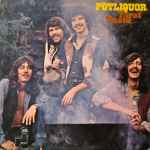
Potliquor (sometimes erroneously spelled Pot Liquor) was a 1970s rock group from Baton Rouge, Louisiana. The band was formed by George Ratzlaff and Guy Schaeffer after the breakup of a successful cover band named the Basement Wall. Like several other bands of the American South, their musical style was a synthesis of influences such as Little Richard, Ray Charles, Jimmy Reed, and more, making Potliquor a part of the nascent Southern rock genre. Potliquor released four albums plus a compilation album but had only one hit single written and sung by George Ratzlaff. Potliquor was a top regional touring band during the early 1970s, and although they made several national tours with prominent rock groups of the time, they never became the headliner of their own tour, but did headline specific shows with some surprising opening acts, like ZZ Top, Aerosmith, and Billy Joel. The group suffered through internal conflicts after the death of their manager in 1973, and after several personnel changes, they were never able to recover the momentum built up through 1970–1973 to reach national prominence like some of the big name bands and individuals they performed with: the Allman Brothers, Billy Joel, REO Speedwagon, Ray Charles, Lou Rawls, Aerosmith, Cactus, ZZ Top, B.B. King, Faces, and many more. Potliquor held the dubious distinction of being the only band booked to play the Fillmore West just before it closed forever. The promotional posters still exist. Potliquor took its name from the term "pot liquor" which is the broth that is left after cooking vegetables and meats. In the South, it is commonly drunk or otherwise used rather than being thrown away. While many argue that the traditional spelling of "potlikker" is correct, "pot liquor" has become the acceptable form. This was only one of many references to their region and state of origin that Potliquor made in their work. Potliquor played a south Louisiana-tinged version of Southern rock. Combining references to their native Louisiana in many of their album and song titles and lyrics ("Down the River Boogie", "Ol’ Man River", "Riverboat", "Levee Blues", "Waiting for Me at the River", "Louisiana Rock & Roll", "Red Stick", "Louisiana Lady") with lead singer George Ratzlaff's powerful, gospel/soul voice, Potliquor became a part of the Southern rock wave of the early 1970s. Much of their music was blues-based as revealed in song titles such as "Levee Blues", "Rooster Blues", "Taj and Jimmy’s Blues", "St. Jude’s Blues", and several songs were gospel-based ("When God Dips His Love in My Heart", "Beyond the River Jordan", "H", "St. Jude’s Blues"). Martin Popoff wrote a review printed in the book Southern Rock Review of Potliquor's first album. His comments though were particularly aimed toward the music of the first album. The band's sound is a hotbed of cool southern traditions crossed with the psych stylings of the Guess Who and the Hammond hard rock of Deep Purple. Many attractions along the way: the band's cover of "You're No Good" is bruisingly power-chorded almost to Sabbatherian levels (in the mean time kicking Van Halen's dopey take outta bed), or at least hard Fireball-era Purple. Edgar Allan Poe's "The Raven" gets a damp and creaky House Of The Rising Sun-type treatment, all creeped out toward Steppenwolf and Iron Butterfly with harsh electric guitar soloing. "Old Man River" swings right round the other way, reverential, deep-seated although slightly affected. Originals are just as diverse, pioneering and often heavy. Opener "Down The River Boogie" is a proto-southern rocker built on a gentle riff but a riff nonetheless. "Riverboat" and "Price 20 Cents A Copy" are fast James Brown-type showy tunes buoyed by the band's patented harmonies and raucous arrangements. And wiggin' right out is "Toballby", a committed Deep Purple jam complete with an eclectic Paicey-style drum solo. Bit of a roll call there, but the point is, this thing is sequenced for driving pleasure. Potliquor finding fortune at the crossroads between late 60's hard rock, the newly emerging southern sound combining gospel, boogie and the blues, and the last vestiges of foggy proggy psyche. Formed in 1969 in Baton Rouge, Louisiana, Potliquor was originally composed of George Ratzlaff (keyboards, rhythm guitar, vocals), and Guy Schaeffer (bass, vocals). The group auditioned drummers and guitarist and chose Jerry Amoroso (drums, percussion, vocals) and Les Wallace (guitar, vocals). Each of the members was a veteran of the Baton Rouge music scene. Ratzlaff, and Schaeffer in fact, had been members of the Basement Wall, the highest-paid cover band in the South during the late 60s, according to the Louisiana Entertainment Association. Jim Brown, a local promoter and owner of a Baton Rouge club, the Speakeasy, was uniquely instrumental in the formation of the band and arranged the "name-the-band-contest" that resulted in Potliquor's naming. When the New Orleans Pop Festival was being planned Jim Brown offered to coordinate acts and times on stage. This enabled him to place his act, Potliquor, in a prime time slot on Saturday night of the festival. The New Orleans Pop Festival, held August 30 - September 1, 1969—only two weeks after the Woodstock Music Festival—at the Louisiana International Speedway in Prairieville, LA about 65 miles up the Mississippi River from New Orleans. Reports of attendance varied greatly. Some saying 25,000 - 30,000 and other believe it to have been well over 100,000 people, the festival boasted an impressive amount of national talent, including five veterans of Woodstock—Janis Joplin, the Grateful Dead, Santana, Jefferson Airplane, Country Joe and the Fish—along with Canned Heat, the Byrds, the Youngbloods, Iron Butterfly, Oliver, It's a Beautiful Day, Chicago, Lee Michaels, Spiral Starecase, and Tyrannosaurus Rex (before they were renamed T. Rex). Potliquor helped headline the smaller Festival of Man and Earth in May 1970, held in the Baton Rouge area with Ginger Valley, Goat Leg, Eternity's Children, Bloodrock, Ox, and the Ides of March also performing. By early September, Potliquor had signed with Janus Records, a subsidiary of the GRT Corporation. On a small, full-color ad on the front page of the September 26, 1970 edition of Billboard, Janus describe Potliquor as a "river blues" group from Baton Rouge who "created a sensation at the New Orleans Pop Festival and were sought after by many record labels..." and who were about "to embark on their first national tour." Officially released by Janus Records in November, Potliquor's debut album, First Taste, had been recorded in the previous months at Baton Rouge's Deep South Recording Studio, produced by manager Jim Brown and engineered by Cy Frost. Frost also wrote (as Giuseppe Efronetée) and played guitar on "Driftin," a song later released as a Decca single by the British rock group Fat Chance. First Taste got a very favorable review by Bob Glassenberg of Billboard, who ended the review with "It should hit with impact." About a month later, Glassenberg reviewed a live performance by Potliquor at the Village Gate club in Greenwich Village, New York, calling the group "a hard rock group" with "tinges of the Bayou country on every song." He described them as "stylistically unique" and concluded by saying that they were "a good, energetic new group on the pop scene." While the beginning of 1971 saw Pye Records' progressive label Dawn release First Taste in the United Kingdom and Europe, Potliquor was back in Baton Rouge beginning work in February on their second album, Levee Blues, at the Deep South Recording Studios, but this time even though Jim Brown's title on the album remained 'producer' he turned over the actual production responsibilities to Cy Frost, a genius in his own right. Another tour took the group back to the west coast where they appeared with the Joy of Cooking and Hugh Masekela and the Union of South Africa on April 3, 1971, on a special program,
Discografía en vinilo
Ordenada por relevancia (lo más escuchado primero).


En la onda de Potliquor
Otros artistas afines, con vinilo.