
Family (60s/70s English rock band)
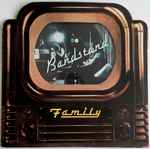
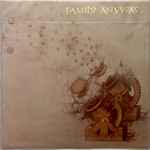
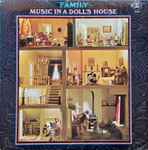
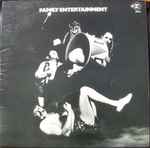
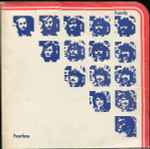
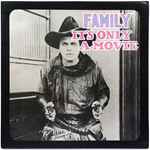
Family were an English rock band, active from late 1966 to October 1973, and again since 2013 for a series of live shows. Their style has been characterised as progressive rock, as their sound often explored other genres, incorporating elements of styles such as folk, psychedelia, acid rock, jazz fusion, and rock and roll. The band achieved recognition in the United Kingdom through their albums, club and concert tours, and appearances at festivals. Family's rotating membership during their relatively short existence led to a diversity of sound on their various albums, with lead vocalist Roger Chapman the only member who stayed in the band throughout its existence. The group have been described as an "odd band loved by a small but rabid group of fans". Family formed in late 1966 in Leicester, England, from the remaining members of a group that was previously known as The Farinas and later briefly The Roaring Sixties, whose sound was grounded in rhythm and blues though they did not record under that name. The Farinas originally consisted of John "Charlie" Whitney, Tim Kirchin (born around 1944, Birstall, Leicestershire died circa 2000), Harry Ovenall (born Richard Harry Ovenall, 12 September 1943, Peterborough, Cambridgeshire), and Jim King, forming at Leicester Art College in 1962. Ric Grech replaced Kirchin on bass in 1965 and Roger Chapman joined the following year on vocals. The American record producer Kim Fowley suggested they call themselves "The Family" as they regularly wore double-breasted suits in performances, giving themselves a mafia style appearance, a look they soon abandoned in favour of a more casual dress code. The group played the music club The Marquee regularly and other London clubs including The 100 Club and Sybilla's in Swallow Street. Through their friend, Mim Scala, they arranged Jimmy Miller to produce their first single and met manager John Gilbert. Because of their association with Miller, Steve Winwood helped with the recording. Shortly afterwards, Ovenall became disillusioned with the group's move away from soul music towards psychedelia and was concerned about the management. He subsequently decided to leave the band. Family's debut single "Scene Through The Eye of a Lens/Gypsy Woman" was released by Liberty Records in October 1967 but was not a success. Ovenall was replaced by Rob Townsend. The band signed with the Reprise Records label (the first UK band signed directly to UK and US Reprise) and their debut album Music in a Doll's House, was recorded during early 1968. Miller was originally slated to produce it, but he was tied up with production of the Rolling Stones' album Beggars Banquet and he is credited as co-producer on only two tracks, "The Breeze" and "Peace of Mind". The bulk of the album was produced by former Traffic member Dave Mason, and recorded at London's Olympic Studios with engineers Eddie Kramer and George Chkiantz. 18 year old Mike Batt arranged string and brass overdubs, notably on "The Chase", "Mellowing Grey" and "Old Songs, New Songs" but was uncredited. "Old Songs, New Songs" also included an uncredited tenor sax solo from Tubby Hayes. Mason also contributed one composition to the album, "Never Like This", the only song recorded by Family not written by a band member, and the group also backed Mason on "Little Woman", the B side of his February 1968 single "Just For You". Alongside Pink Floyd, Soft Machine, The Move, and The Nice, Family quickly became one of the premier attractions on the burgeoning UK psychedelic/progressive "underground" scene. Their lifestyle and exploits during this period provided some of the inspiration for the 1969 novel Groupie by Jenny Fabian (who lived in the group's Chelsea house for some time) and to Johnny Byrne. Family featured in the book under the pseudonym, 'Relation'. Music in a Doll's House was released in July 1968 and charted at number 35 in the UK to critical acclaim, thanks to strong support from BBC Radio 1's John Peel. Now widely acknowledged as a classic of British psychedelic rock, it showcased many of the stylistic and production features that are archetypal of the genre. The album's highly original sound was characterised by Chapman's vocals, rooted in the blues and R&B, combined with several unusual instruments for a rock band, courtesy of the presence of multi-instrumentalists Grech and King, including saxophones, violin, cello, and harmonica. Family's 1969 follow-up, Family Entertainment, toned down the psychedelic experimentation of their previous offering to some extent, reaching number six in the UK Albums Chart, and featured the single "The Weaver's Answer", although the group reportedly had no control over the mixing and choice of tracks, or the running order of the songs. With the UK success of Family's first two albums, the band undertook a tour of the United States in April 1969, but it was beset by problems. Halfway through the tour, Grech unexpectedly left the band to join the new supergroup Blind Faith; on the recommendation of tour manager Peter Grant, Grech was replaced by John Weider, previously of Eric Burdon and The Animals. A further setback occurred during their first concert at Bill Graham's Fillmore East, whilst sharing the bill with Ten Years After and The Nice – during his stage routine, Chapman lost control of his microphone stand, which flew in Graham's direction, an act Graham took to be deliberate; Chapman performed the following shows with his hands by his sides, and by the end of the tour, he had lost his voice; Family's reputation in the US never recovered and they ultimately never achieved great recognition there. Returning to the UK, the band performed at The Rolling Stones' Hyde Park gig and the Isle of Wight Festival that summer. In late 1969, Jim King was asked to leave Family due to "erratic behaviour" and was replaced by multi-instrumentalist John "Poli" Palmer. In 1970, Family played a few more gigs in the United States, appearing in San Francisco and Boston. In early 1970, they released their third studio album, A Song for Me; produced by the band, it became the highest-charting album the band had released, reaching No. 4 on the UK Albums Chart. The album itself was a blend of hard rock and folk rock. Family's new line-up played at major rock festivals that summer, including the Kralingen Music Festival in the Netherlands and the Isle of Wight Festival for the second year in a row. The band appeared in the documentary film Message to Love about the latter festival. Family's follow-up album Anyway, released in late 1970, had its first half consist of new material recorded live at Fairfield Halls in Croydon, England, with the second half a set of new songs recorded in the studio, and reached number seven on the UK chart. In March 1971 the compilation album, Old Songs New Songs, (which contained remixes and rare tracks) was released, but in June Weider left Family to join Stud. He was replaced by former Mogul Thrash bassist John Wetton, who had just declined an invitation from Robert Fripp to join King Crimson. The band performed at the Glastonbury Free Festival 1971, filmed by Nicolas Roeg for the 1972 documentary Glastonbury Fayre. As with Grech in Family's original line-up, Wetton also shared vocal duties with Chapman, and this line-up soon released Family's highest-charting single "In My Own Time/Seasons" which reached number four, and the album Fearless in October 1971, which charted in both the UK and the US. In 1972, another album, Bandstand was released, which leaned more towards hard rock than art rock, featuring the singles "Burlesque" in late 1972, and "My Friend the Sun", which was released in early 1973. In mid-1972, John Wetton left Family to join a new line-up of King Crimson and was replaced by bassist Jim Cregan, and at the end of that year, John "Poli" Palmer also left the band and was replaced by keyboardist Tony Ashton, previously of Ashton, Gardner and Dyke. After Wetton's departure
Discografía en vinilo
Ordenada por relevancia (lo más escuchado primero).
En la onda de Family
Otros artistas afines, con vinilo.