World Party
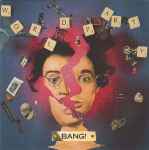
World Party was a musical group, predominantly the solo project of its sole consistent member, the songwriter, producer and multi-instrumentalist Karl Wallinger. Wallinger started the band in 1985 in London after leaving the Waterboys. At various times, World Party also featured Guy Chambers, David Catlin-Birch, future Oasis drummer Chris Sharrock, Jeff Trott, Amanda Kramer and John Turnbull. World Party produced several hit singles during the late 1980s and early 1990s including "Ship of Fools", "Way Down Now", "Put the Message in the Box" and "Is It Like Today?" The band also released the original version of "She's the One", written (like virtually all World Party material) by Karl Wallinger but best known due to the 1999 cover version by Robbie Williams, a UK number one hit single. Wallinger was born in Prestatyn. He received classical music training in piano and oboe as a child at both Eton College and Charterhouse School, before switching his allegiance fully to pop and rock music. Following initial stints in Prestatyn with the short-lived bands Pax and Quasimodo, he moved to London in the late 1970s and entered a five-year "lost period" during which he worked in music publishing, had a stint as musical director of a West End production of The Rocky Horror Show, and played in a funk band called The Out. By the end of this period, he'd also mastered all of the instruments needed for him to become a one-man rock band, as well as the arts of record production and synthesizer programming. In 1983, Wallinger joined his first notable band, the Waterboys, initially as a keyboard player. Having contributed one organ part to the band's debut album, and many more piano and organ parts to the second (A Pagan Place) as well as playing on tour, his additional skills made him the perfect ally for Waterboys leader Mike Scott when Scott wished to expand the sound of the band for their third album, 1985's This Is the Sea. Wallinger co-produced many of the album tracks, adding assorted synthesizer and sampler arrangements as well as backing vocals, synth bass, percussion, and piano and organ. He also wrote the original music for the opening track, "Don't Bang the Drum". Despite the productivity of the sessions for This is the Sea, growing rivalry between Scott and Wallinger led to tensions between the two on the subsequent tour, exacerbated by the fact that Wallinger had been writing his own songs from an early age and saw no opportunity to be able to play and sing them while in The Waterboys, which was entirely dominated by Scott's artistic vision. Now armed with his own record contract with the Waterboys' record label, Ensign, Wallinger left the band at the end of the This is the Sea tour in 1985. The first World Party album, Private Revolution, was recorded in a dilapidated former rectory in Woburn, which Wallinger had moved into after quitting both London and The Waterboys. Inspired by Prince, Wallinger recorded the majority of the instruments (guitars, bass, keyboards, drums, samplers) by himself, as well as singing lead vocals and handling programming and production. There were guest appearances on the record by two Waterboys members, saxophonist Anthony Thistlethwaite and fiddle player Steve Wickham. To create the illusion of a full band, Wallinger credited his own instrumental parts to a variety of imaginary players with whimsical names, including "Millennium Mills", "Rufus Dove" and "Will Towyn". During this time, he also worked on Sinéad O'Connor's debut album The Lion and the Cobra, and she in turn sang backing vocals on the song "Hawaiian Island World" as well as appearing in the promotional video for the album's title track. Wallinger's efforts rapidly drew further music business attention. "They'd heard there was a dumb kid in Woburn writing hits," Wallinger recalled in 2021. "There was this beauty-parade of visiting managers." Wallinger signed a management deal with Prince's manager Steve Fargnoli: "I was a sucker for Prince. I was like, "Take me to Minneapolis. Take me to your leader." Private Revolution was released in 1986 and displayed Wallinger's eclectic mastery of rock, pop, folk, and funk. The album's first single "Ship of Fools", reached a modest number 42 in the British charts but did much better outside the UK – it reached No. 4 in Australia, No. 21 in New Zealand, and No. 27 in the US, in the process becoming the act's only major international hit. "Private Revolution" was also issued as a single, but only charted in the UK (at No. 107). "I'm not retro. I'm writing songs about now – in fact, the songs I wrote back then are even more relevant now than they were when I wrote them. I wasn't trying to be ahead of the curve, I was just writing about things that seemed obvious to me at the time, and we still haven't done anything about it." — Karl Wallinger, 2012 Relocating to a 32-track studio in London (which he called "Seaview"), Wallinger began work on the second World Party album, Goodbye Jumbo. As with Private Revolution, he played almost all of the instruments himself. In 2000, recalling his songwriting aims at the time, Wallinger explained "I wanted to personify the world and sing about her. I always thought it would have been great if Otis Redding's "Try a Little Tenderness" had been about the planet. Plus, if I stand on top of a mountain Julie Andrews-style, the hills do seem to be alive with the sound of music. You can say whatever you like about eco whatever, but if you fuck up the environment you’re going to die." On some of the tracks, Wallinger collaborated with fellow former Waterboy and songwriter Guy Chambers, who had originally joined the project in 1986 for live and studio work. Sessions were lengthy, carried out during the night and fuelled by copious amounts of marijuana, with Chambers later remembering "if you worked with Karl you had to get into his headspace. Everything was very slow and you had to be extremely patient. I was one of Karl’s principal cheerleaders at that point. We laughed a lot and I learned a lot from him, particularly about lyrics, but he was a terrible procrastinator and still is now." For his part, Wallinger would credit Chambers as being "the pushy guy who would cue me into the corner pocket. I’ve got to thank him for that." Released on 24 April 1990, Goodbye Jumbo was voted "album of the year" by Q magazine and was nominated for a Grammy Award for "best alternative music performance" in the US. The album contained the minor UK hit singles "Way Down Now" and "Put the Message in the Box" (the latter going on to be covered by Brian Kennedy on his 1996 album A Better Man, and becoming a top 40 hit in the UK and a top 20 hit in Ireland). After the 1991 EP Thank You World, World Party recruited former Bootleg Beatles member David Catlin-Birch as guitarist and ex-Icicle Works member Chris Sharrock on drums, with intentions to play more live dates. Instead, Ensign label boss Nigel Grainge cancelled a planned tour support slot with Neil Young in favour of further recording. Looking back on the events twenty-two years later, Wallinger reflected "nowadays you would tour the fuck out of the Q Award thing, but (Grainge) was like, "No, you can’t go and support Neil Young in America – get back in the studio," and for me that meant three more years out of sight." He would consider this to be the decisive moment in the band's career which damaged its long-term chances. ("That was it. There was a moment there: door open, door closes.") With touring plans shelved, World Party began work on a third album, Bang!. During the lengthy recording process, Chambers set up his own band The Lemon Trees in 1992, continuing with them in parallel to his World Party work until 1995. Released in 1993, Bang! reached No. 2 on the UK Albums Chart, A single, "Is It Like Today?" (described by Wallinger as "a précis of Bertrand Russell's A History of Western Philosophy in four verses"), reached No. 19 on the UK Singles Chart as well
Discografía en vinilo
Ordenada por relevancia (lo más escuchado primero).



En la onda de World Party
Otros artistas afines, con vinilo.