ピンク・レディー
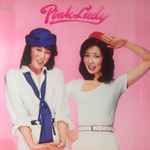
Pink Lady (ピンク・レディー, Pinku Redī) is a Japanese female pop music duo of the late 1970s and early 1980s, featuring Mie (Mitsuyo Nemoto, born March 9, 1958) and Keiko Masuda (formerly Kei, born September 2, 1957). In Japan, they are remembered for a run of pop-chart hits from roughly 1976 to 1979, but in the United States, they are best known for their short-lived 1980 NBC TV variety show Pink Lady and Jeff. Pink Lady is one of only two Japanese artists to have reached the Billboard Top 40, hitting No. 37 with the single "Kiss in the Dark"; the other was Kyu Sakamoto with the original Japanese-language version of "Sukiyaki". They are also the first Japanese act ever to have performed in Seoul, South Korea, in November 1980. In June 1979, Billboard stated the duo had sales of over US$72 million in Japan, and stated in September 1980 that Pink Lady's singles had grossed over US$40 million, their album releases over US$25 million, and their TV appearances, such as commercials and product sponsorship, near US$35 million—a combined total exceeding US$100 million. Mitsuyo Nemoto and Keiko Masuda were childhood friends who grew up and attended school together in Japan's Shizuoka Prefecture. In 1973, they attended the Yamaha Music School in Hamamatsu. In May 1974, the duo formed a folk group called "Cookie" (クッキー, Kukkī) and passed Yamaha's "Challenge on Stage" (チャレンジ・オン・ステージ, Charenji on Sutēji) audition. Nemoto and Masuda first appeared in March 1976 on NTV's prime-time TV talent show Star Tanjō!, performing a cover of Pīman's 1974 song "Heya wo Dete Kudasai" (部屋を出て下さい; "Please Leave the Room"). They were showcased as a cute, fresh-faced folk duo dressed in bib overalls. The duo's performance earned them a contract with Victor Entertainment. They were also affiliated with the talent management firm T&C Music (T&C ミュージック, Tī ando Shī Myūjikku), which gave them a makeover to compete with the teen trio Candies. Songwriter/producer Shunichi Tokura named the duo "Pink Lady" after the cocktail, while Yū Aku was assigned to write lyrics for their songs. Tokura and Aku previously composed hit songs for Linda Yamamoto and Finger 5. Hajime Doi supervised the duo's dance choreography while Yōko Noguchi designed their costumes. In addition, Nemoto and Masuda took the stage names of "Mie" (ミー, Mī; sometimes spelled "Mii") and "Kei" (ケイ), respectively. By the time the girls re-appeared on the show five months later, their image had completely changed - they were now dressed in slinky, beaded, short-skirted white dresses, performing upbeat pop tunes. Pink Lady epitomizes the Japanese concept of the pop-star "idol" (アイドル, Aidoru), singing catchy, hook-filled pop songs, often with a disco flavor (in later years especially), and performing almost perfectly synchronized dances to accompany their songs. They made their debut in August 1976 with the single "Pepper Keibu", which peaked at No. 4 on Oricon's charts. From 1976 to 1979, Pink Lady had a streak of nine No. 1 hits starting with "S.O.S."; five of which were consecutive million-selling singles according to Oricon; these include "Nagisa no Sindbad", "Wanted," "UFO" (their biggest-selling single, with 1.95 million copies sold), "Southpaw, and "Monster". This record was held until February 1983, when Seiko Matsuda's "Himitsu no Hanazono" became her 10th consecutive No. 1 single. With their 1978 single "Chameleon Army", Pink Lady stayed at Oricon's No. 1 position for a combined total of 63 weeks - a record they held until B'z achieved a total of 64 weeks in January 2015 with their single "Uchōten". The duo became commercial pitchwomen for various products, ranging from shampoo to radios to children's books to ramen noodles. Just about every product Pink Lady endorsed enjoyed a massive uptick in sales. As one example, Ito En's business skyrocketed when the duo said on TV that they lost weight after drinking 10 cups of oolong tea a day, triggering a massive demand and prompting Ito En to order 5,000 tons of oolong tea in 1979 and revolutionize the sales of canned oolong tea a year later. The peak of Pink Lady's popularity was in 1978, during which they headlined a concert at Korakuen Stadium in Tokyo with over 100,000 fans in attendance. In addition, they made their first concert appearance in the United States (at the Tropicana in Las Vegas), and starred in their first major full-length motion picture titled Pink Lady no Katsudō Daishashin (ピンク・レディーの活動大写真, Pinku Redī no Katsudō Daishashin; lit. Pink Lady's Big Motion Picture). The duo also traveled to Greece to film a TV special and have photos taken for a special photobook. Furthermore, they became cartoon stars with the airing of Pink Lady Monogatari: Eiko no Tenshi-tachi (ピンク・レディー物語 栄光の天使たち; The Story of Pink Lady: Angels of Splendid Fame), a 35-episode anime television series directed by Katsuhiko Taguchi and aired on Tokyo 12 Channel. The series was commissioned by T&C Music, with animation production by Toei Animation. Voice actresses Michiko Nomura and Junko Hori voiced Mie and Kei respectively. Pink Lady won the Grand Prix at two of Japan's most prestigious music awards, the 20th Japan Record Awards and All Japan Popular Music Awards. Between 1977 and 1979, Pink Lady hosted nine television programs between four networks, ranging from children's shows to variety shows and game shows. Because many of these shows aired on the same day, Mie and Kei had to commute from one network to another, with both of them having an average daily sleep time of 45 minutes. The duo's hectic schedule created the term "Busy as Pink Lady" (ピンク・レディー並みの忙しさ, Pinku Redī Nami no Isogashi-sa) in Japan's entertainment world. Pink Lady's net worth at the time was estimated to be between ¥20 billion and ¥50 billion, but T&C Music initially paid Mie and Kei ¥300,000 per month each on their first year; afterwards, their salary was raised to ¥3 million per month. As for the rest of the profits, it was reported that T&C Music was a subsidiary of a secret firm run by a yakuza syndicate, which collected 70% of the earnings. However, New Year's Eve 1978 represented the beginning of a downturn for Pink Lady. Mie and Kei turned down an invitation to perform on NHK's long-running annual New Year's Eve television music program Kōhaku Uta Gassen (Red and White Song Battle) to host their own TV special Pink Lady: 150 Minutes of Sweat and Tears on New Year's Eve!! (ピンク・レディー汗と涙の大晦日150分!!, Pinku Redī Ase to Namida no Ōmisoka Hyakugojū-bu!!) on NTV. Their decision backfired, as Kohaku garnered ratings nine times higher than Pink Lady's show. In addition, T&C Music announced that they had invited students from a school for the blind to the studio for the taping of the show, but the school denied that any such arrangement had been made. Critics accused Pink Lady of using blind children to promote their own TV special. The duo was not invited to perform again on Kōhaku the following year, and in fact did not perform on the annual special until 1988 - well after the duo had disbanded. In May 1979, Pink Lady performed a charity concert at the Osaka Expo '70 Stadium in front of 200,000 spectators, of which all profits went to UNICEF. It was the biggest event of its kind up until then. At the beginning of 1979, Pink Lady focused on the American market. Mie and Kei appeared as guest stars on a Leif Garrett TV special that spring, performing what was to be their first American single, a disco tune called "Kiss in the Dark," recorded phonetically in English and released by Curb Records, followed by an entire English-language album (a collection of disco tunes and ballads, including a cover of The Left Banke's 1966 classic "Walk Away Renée"). When "Kiss in the Dark" debuted on the Billboard charts that summer, Pink Lady became the first Japanese recording act to chart in America since Kyu Sakamoto hit No. 1 with "Sukiyaki" 16 years earlier. "Kiss In The Dark" reached No. 37 on Billboard's Top 40, (No. 49 on the Cash Box
Discografía en vinilo
Ordenada por relevancia (lo más escuchado primero).

En la onda de ピンク・レディー
Otros artistas afines, con vinilo.