Vikingarna
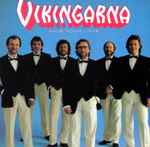
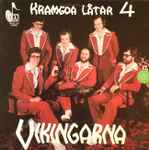
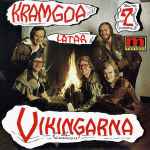
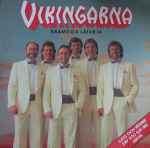
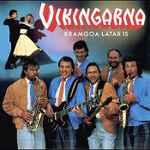
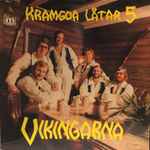
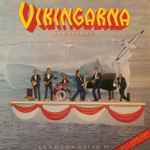
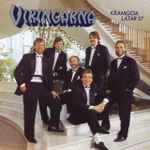
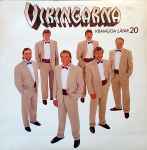
Vikingarna is a Swedish dansband formed in Karlstad in 1958. It is the best-selling dansband, and one of the best-selling artists, in Scandinavia and is often regarded as the greatest dansband to have existed. At the time of its 2004 dissolution it had sold more than 11 million records. In 1958, as skiffle bands were reaching the height of their popularity in Europe, Ji-Coo and the Vikings were formed in Sweden, with Gunnar Olsson on guitar, Hans Axelsson on bass, Egon Olsson on drums, Svante Valjestöl on keyboards, Jens “Ji-Coo” Carlson on saxophone, and Newman Alexander on trumpet. The band did not have a lead singer at first, but after a series of auditions, Kerstin Larsson was hired for the job. The band became a local hit, and in 1961, they were given a shot at recording their first EP, Viking Boogie, which entered the Top 20 charts on Radio Luxembourg. However, the lack of a real breakthrough became a struggle for many of the members, and by the end of 1961 the band had split into two groups: those who wanted to continue, and those who didn't. As Carlsson resigned, the band was renamed The Vikings. The newformed band soon found popularity once again and began touring the country, playing dance halls and other venues. They went through several member changes, rarely having a steady line-up for more than a year or two, eventually going through a total of twenty-four members by 1973. Notably however, two of the members arriving in the early 1960s would remain for many years: saxophonist Tony Eriksson and guitarist Jörgen Arnemar. In 1963, they recorded a cover of country standard "The Tennessee Waltz", selling 20,000 copies locally but falling short of any real success. By the mid-60s the band had gradually changed their style to dansband, a new style of schlager music that was gaining popularity in Sweden and Scandinavia. With a final set of changes in 1973, the band consisted of Jörgen Arnemar (guitar), Börje Gunnarson (bass guitar), Per-Anders Carlsson (drums), Tord Sjöman (piano, organ, vocals), Tony Eriksson (saxophone and keyboards), Christer Linde (trumpet) and, completing the line-up, lead singer Stefan Borsch, who had joined the year before. But as the band entered the 1970s, they had yet to make a record, much to the nuisance of several members. With the idea of creating a low-cost demo, guitarist Jörgen Arnemar brought a tape recorder to one the band's rehearsals and left it recording, filling a reel of magnetic tape with a run-through of their repertoire. The reel was then sent to EMI Odeon, who were impressed with what they heard, and offered the band to record a volume of Det Går Som En Dans, a series of records featuring lesser known dansbands. However, when the contract arrived for them to sign, a secretary had mistakenly translated their name from "the Vikings" to "Vikingarna". Afraid to compromise the opportunity, the band decided to keep the "new" name. Following a brief set of recording sessions, the record entered Svensktoppen in 1974, with the song "På världens tak", a Swedish-language cover of The Carpenters hit "Top of the World", becoming their first hit single. After the success with their first album the year prior, Vikingarna soon recorded and released their second album, Här kommer Vikingarna. However, it failed to break charts, and the band was released from their record deal with EMI Odeon, as the company saw them as "just another dansband". It would, however, not be many weeks until the band was signed again, this time by newly formed Swedish record company Mariann Records. Returning to recording, their big break-through came the following year, with "Du gav bara löften", their second major hit single, and first number one. The same year, the band achieved their first gold record for their album Kramgoa Låtar 1 in Sweden, as well as a silver record in Norway. In the years after, the band continued recording and releasing new albums, spawning several hits throughout the seventies, while at the same time doing very successful tours throughout Sweden and Scandinavia. In 1977, drummer Per-Anders Carlsson left the band as he felt the success had outgrown him, and he was replaced by experienced drummer Anders Erixon, who had been the band's drummer in the late sixties. The year after, the band recorded an English-language album titled Export as an attempt to receive international recognition but without success. Later that year, just as the band was finishing yet another tour following their latest album, Kramgoa Låtar 6, lead singer Stefan Borsch announced his departure to focus on a solo career. This came as a shock to the band, who were having greater success than ever at the time. Borsch would later state in interviews that he regretted leaving the band at that point, and several times considered going back in the following years. Hired to replace him was Christer Sjögren, a skilled yet unknown vocalist, who would stay as the band's singer for the rest of their career. The band soon recorded and released their ninth album, Kramgoa Låtar 7, including a Swedish cover of "Dschingis Khan", the West German entry to the Eurovision Song Contest in 1979. In 1980, bass guitarist Börje Gunnarsson left the band, and was replaced with Lars-Åke Svantesson, who in addition to playing the bass guitar, would co-produce the band's albums for the next eight years. Continuing their heavy schedule of touring and recording into the 1980s, the band gradually began to gain fame outside the Swedish borders. Already established in Norway and some parts of Denmark, the band soon expanded their tours to include all of Scandinavia, quickly becoming the most popular and best selling dansband ever. For most of the 1980s and 1990s, Vikingarna's music and repertoire was often seen as a standard for the dansband sound by music fans around Scandinavia.[citation needed] As the band began work on Kramgoa Låtar 13 in 1985, longtime guitarist Jörgen Arnemar announced his retirement from touring and recording, instead focusing on managing the band, a job he held until their disbanding. He was replaced by experienced dansband musician Erik Lihm, a previous associate of Sjögren. Kramgoa Låtar 13 saw the band's first ever release in the Soviet Union, selling 40 000 copies. The band would later become the first Scandinavian act to perform in the country. Throughout the eighties, the band kept going at a now well-established formula. They would record and mix an album during winter, release it during spring, before following with a six-month tour to support it. The band and their associates would then be writing new material during touring, and repeat the formula. From 1979 to 1992, they released one album every year, following this schedule.[citation needed] In 1988, bass guitarist Lars-Åke "Svante" Svantesson stopped touring and performing after suffering from a spinal disc herniation that impaired his ability to play. He continued, however, to assist with the recording and production of albums until 2004. Kenth Andersson, formerly of Erik Lihms band, replaced him on short notice as he happened to be available, but soon became a permanent member. Two years later, after almost thirty years with the band, longtime band leader, pianist and occasional lead vocalist Tord Sjöman decided to retire from the music industry. His departure saw a change of instruments in the band, as guitarist Erik Lihm took over the keyboards, while long-time studio musician and renowned guitarist Lasse Westmann joined the band as their permanent guitarist, having already performed on their albums since the early 1980s. The band kept recording and touring throughout the member changes, and in 1988 and 1991 they were awarded Grammis prizes. Continuing their success into the 1990s, the band recorded what would be their final album for several years in 1992, entitled Kramgoa Låtar 20, before going on a three-year break. During this time, several of the members began solo projects and
Discografía en vinilo
Ordenada por relevancia (lo más escuchado primero).
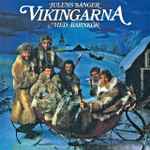

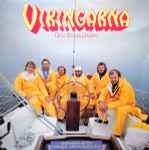

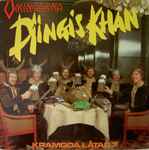
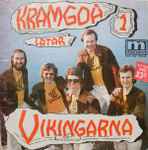





En la onda de Vikingarna
Otros artistas afines, con vinilo.