Matthews’ Southern Comfort
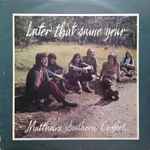
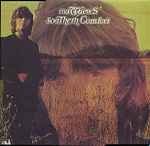
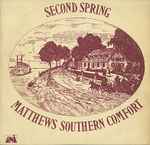
Matthews Southern Comfort (MSC) is a British country rock/folk rock band, formed in 1970 by former Fairport Convention singer Ian (later Iain) Matthews. The original line-up consisted of Matthews, lead guitarist Mark Griffiths (who later became the bass player with the Shadows and the Everly Brothers), rhythm guitarist Carl Barnwell, bass player Pete Watkins, drummer Roger Swallow and pedal steel guitarist Gordon Huntley. Watkins and Swallow left the band after a few weeks and were replaced by bass player Andy Leigh and drummer Ray Duffy. The band was formed to enable Matthews to tour following the success of his first post-Fairport album, released in early 1970, Matthews' Southern Comfort. The band recorded two more albums that year, Second Spring and Later That Same Year, before Matthews abruptly quit at the height of their fame, shortly after their version of Joni Mitchell's song "Woodstock" became a worldwide hit. It reached the top of the UK music charts in October 1970, their only No. 1 hit single, and charted in several European countries, as well as reaching No. 5 in Canada and No. 23 in the Billboard Top 100 in the United States. A second single, "Mare, Take Me Home", reached #86 in Canada. Three more albums were released by the band under the name Southern Comfort in the early 1970s. In the twenty-first century, Matthews has twice reformed the band with mostly Dutch musicians, first in 2010, releasing two new albums, Kind Of New and Kind Of Live (individually and as a combined tour issue), and again in 2017, releasing two further albums, Like A Radio in 2018 and The New Mine in 2020. A fifth MSC album, The Woodstock Album featuring 15 cover versions of songs played by various artists at the 1969 Woodstock Festival, was released in April 2023. Matthews had been a member of Fairport Convention between 1967 and 1969 and sang vocals on the band's first two albums, alongside Judy Dyble on the self-titled Fairport Convention, and with Sandy Denny on the acclaimed What We Did on Our Holidays after she had replaced Dyble as lead female singer in 1968. By the time they recorded their third album Unhalfbricking in early 1969, Fairport, under Denny's influence, had largely abandoned their original American singer-songwriter material and were moving towards what would become known as English folk rock. The genre was somewhat alien to Matthews' tastes, and led to a discontent within Fairport that ended with Matthews leaving the band after a meeting with producer Joe Boyd in February 1969. Matthews continued to live in a shared house in London with Fairport members Richard Thompson and Simon Nicol and was paid a £20 per week retainer while he found his new path. In Fairport Matthews had not played any instruments except the odd conga drum or Jew's harp, and to counter this 'deficiency' he set about learning to play the guitar, with Richard Thompson as his teacher. He was still living with Thompson and Nicol at the time of the motorway crash in May 1969 that killed Fairport drummer Martin Lamble and Thompson's then girlfriend, Jeannie Franklyn. During the summer of 1969, after discussions with DJ John Peel, who had always championed Fairport's music, Matthews decided to follow the singer-songwriter path and recorded his debut solo album, Matthews’ Southern Comfort, at De Lane Lea Studios in London in November 1969. The other musicians who played on the album were stalwarts of the British folk rock scene and included ex-Fairport colleagues Ashley Hutchings, Simon Nicol and Richard Thompson, plus Gerry Conway, the drummer of folk rock band Fotheringay in which Sandy Denny was now the vocalist. Thompson was the original producer of the album; Matthews later took over the role. The album was released in January 1970 on the Uni record label (a subsidiary of MCA Records) under the title Matthews’ Southern Comfort. Matthews Southern Comfort (without the apostrophe) was not a band at that stage and Matthews was not ready to go solo, so the name was an attempt to encompass an album title and the collective of musicians who had recorded it. As Matthews told author Ian Clayton in an interview for their co-written 2018 book Thro’ My Eyes: A Memoir, "it got me out of the dilemma of not wanting to go solo and it sounded like a band name". The album took its name from a song that Matthews liked, "Southern Comfort" by Canadian folk duo Ian & Sylvia. Most of the songs on the album were written by Matthews and his new managers Ken Howard and Alan Blaikley (under the assumed name Steve Barlby), who had previously written hit songs for the likes of The Honeycombs and Dave Dee, Dozy, Beaky, Mick and Tich. The ‘first’ MSC album was essentially an Ian Matthews solo album. The touring and recording band Matthews Southern Comfort, which later released two more albums, Second Spring and Later That Same Year, was not formed until later, with only pedal steel player Gordon Huntley and Matthews appearing on all three albums. Matthews was a friend of musician Marc Ellington, who had guested as supporting vocalist on Fairport's 1969 album Unhalfbricking and provided percussion on the 1969 Matthews’ Southern Comfort album. In early 1970, at Ellington's suggestion, Matthews went to see a group called Harsh Reality who were about to be dropped by their record label, Philips, and the band's lead guitarist Mark Griffiths, rhythm guitarist Carl Barnwell and drummer Roger Swallow became the core of the new Matthews Southern Comfort band, together with session player Gordon Huntley who had played pedal steel on the Matthews’ Southern Comfort album. A young bass player, Pete Watkins, completed the first line-up, but soon realised that his studies were going to be affected and dropped out, to be replaced by Andy Leigh who had just left Spooky Tooth. Roger Swallow also left and was replaced by drummer Ray Duffy, late of Marmalade, the best of the half dozen drummers who auditioned to be Swallow's replacement. This was the band that became the final version of Matthews Southern Comfort and recorded the follow-up albums Second Spring and Later That Same Year. Their style of three-part harmonies mixed with country rock appealed to English music fans at the time and they toured the UK extensively, beginning in February 1970 with a gig at the Mothers club in Birmingham, a triple-header bill alongside Fairport Convention and Fotheringay. A live performance of the band playing at a festival in Maidstone, Kent in 1970, again alongside Fairport Convention, was captured in a Tony Palmer film narrated by John Peel and released on DVD in 2007. It was also released as a CD soundtrack in 2009. MSC also recorded nine radio sessions for the BBC, the best of which were eventually released on the 1994 album Scion. These radio sessions were aired regularly on the BBC during 1970 on programmes such as 'Folk On One' and 'Top Gear'. The recordings also appeared on eight editions of a series of BBC Transcription Services discs called Various – Pick Of The Pops For Your D.J.. These discs at the time were usually only made available to overseas radio stations for broadcast purposes and were not made available for sale to the general public. Their albums were popular, but it was the band's version of Joni Mitchell's "Woodstock" that propelled Matthews Southern Comfort to fame. Mitchell wrote "Woodstock" about the music festival held in upstate New York in August 1969, an event widely regarded as a pivotal moment in the history of popular music. Hers was one of three versions of the song released in 1970. It was included on her March 1970 album Ladies Of The Canyon and was the B-side of her single release, "Big Yellow Taxi". The second version, also released in March, was by Crosby, Stills, Nash & Young, who had performed at the festival. Their version appeared as a track on their No.1 album Déjà Vu and as a single which reached No.11 in the Billboard Top 100 charts in May 1970. The CSN version became a staple of
Discografía en vinilo
Ordenada por relevancia (lo más escuchado primero).
En la onda de Matthews’ Southern Comfort
Otros artistas afines, con vinilo.