The La De Da’s
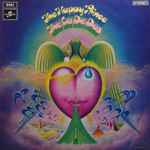
The La De Da's were a New Zealand rock band active from 1963 to 1975. Originally formed as a mod-inspired group called the Mergers in Te Atatū, the band’s long-term members were Kevin Borich (lead guitar and vocals), Phil Key (lead vocals and guitar), and Trevor Wilson (bass guitar). In mid-1968, they relocated to Australia. Their popular singles in New Zealand included "How Is the Air Up There?" and "On Top of the World" (both 1966), as well as "Hey! Baby", "All Purpose Low", and "Rosalie" (all 1967). In Australia, they achieved chart success on the Go-Set National Top 40 with "Gonna See My Baby Tonight" (1971), "Morning, Good Morning" (1972), and "Too Pooped to Pop" (1974). The group released one of the first Australasian concept albums, The Happy Prince (1969). The La De Da's toured throughout New Zealand, Australia, England, and continental Europe, and supported several international artists during their Australian performances. Their musical style evolved over time—from instrumentals and garage rock-infused R&B to psychedelic rock, and later to blues rock and a more stripped-down hard rock sound in their final years. In Australia, the band is remembered for launching the solo career of Borich, who went on to form the Kevin Borich Express in 1976. Phil Key died in 1984 from a congenital heart defect, and Ronnie Peel, their later-era bass guitarist, died of cancer in 2020. The La De Da's were formed as the Mergers in Te Atatū Peninsula in late 1963 by three Rutherford High School students Kevin Borich on lead guitar, Brett Neilsen on drums and Trevor Wilson on bass guitar; they were joined by Phil Key on rhythm guitar from Mt Albert Grammar School. Their average age was 16 years. The Mergers played mod-ish instrumentals, with the Shadows as their major influence, at local dances and school socials. The Beatles' visit in June 1964 and the emergence of the Rolling Stones, brought a change of style to the group with Key becoming their lead singer and Borich and Wilson adding backing vocals. The members decided that the Mergers failed to reflect the toughness of their new garage rock music and searched for another name. One promoter changed it to the Gonks for an early 1965 gig at a summer carnival. They initially decided on the Criminals, however, one of the members' mother suggested "something nice, like the la-de-das ...", which was approved. By early 1965 the group were getting regular bookings on Auckland's dance circuit. A local TV producer, Robert Handlin, had the group promote a film broadcast, Those Magnificent Men in Their Flying Machines (1965), in exchange for studio recording time. Their debut single, "Little Girl", was released on the Talent City label in April 1965. The track was co-written by Borich and Wilson. Australian musicologist Ian McFarlane described it as a "low-key slice of Rolling Stones-derived R&B". In November 1965 they gained a residency at an Auckland nightclub, The Platterack. After Key finished secondary education in December, the band became fully professional and received NZ£12 per week. Classically trained organist Bruce Howard joined them on keyboards and occasional lead vocals. Thereafter, Howard and Wilson co-wrote most of their original material. Zodiac's owner Eldred Stebbing caught their performance at The Platterack and asked the La De Da's to issue a cover version of American duo the Changin' Times's album track, "How Is the Air Up There?" (February 1966), as their second single. It reached No. 4 on New Zealand Listener's Hit Parade. The single also charted at Sydney radio stations. The group signed with Stebbing both as their talent manager and record producer for Zodiac, which was distributed via Phillips. Their fourth single, "On Top of the World" (November 1966), was a cover of John Mayall's song, which peaked at No. 2 on the Hit Parade. They became resident band at Stebbing's Galaxie nightclub and regularly appeared on TV pop music show C'mon. Although their music was "tough garage-punk", the La De Da's donned mod clothing with plaid trousers, satin shirts and buckle shoes. Key recalled: We tried to be honest and sincere with our music, only playing and recording what we liked. The guys in the good record bars dug what we were doing and they got in all the latest English R&B records for us. We were listening to Zoot Money, John Mayall, Manfred Mann, the Animals, all that sort of stuff and trying to create that sound... we tried to be a lot more imaginative about what we did ... We had no idea what we were earning on tour, we just spent what we wanted and ploughed the rest back into the band. We had our way with girls, bought more clothes and equipment and just enjoyed being stars. In November 1966 their song "How Is the Air Up There?" was a finalist for the Loxene Golden Disc Awards. They issued their debut self-titled album of cover versions in December 1966, which sold out of its first pressing. Multi-instrumentalist Claude Papesch recommended Bruce Channel's "Hey! Baby" to the group, which they released in February 1967. It resulted in their first number-one on the Hit Parade and the first New Zealand-made record to reach the top. In April they released their extended play Stupidity, with covers of Solomon Burke's "Stupidity", "Coming Home", the Young Rascals' "I Ain't Gonna Eat Out My Heart Anymore" and Otis Redding's "Respect". While preparing for their second album, Wilson began working on his rock opera project, The Happy Prince. He adapted Oscar Wilde's story "The Happy Prince". Howard supported his project, although it became a divisive issue for other band members. The La De Da's second album, Find Us a Way (May 1967), had their sound shifting from R&B roots by adding influences from the Spencer Davis Group. It included original material and covers. McFarlane, in 1999, described their first two albums and their EP as "highly regarded by 1960s aficionados". Although they were unhappy about Find Us a Way's track selection and cover art, it sold well in New Zealand. The La De Da's travelled to Sydney in May 1967, where they worked at Ward Austin's Jungle disco and also supported the Easybeats, which had returned from the United Kingdom. The band's Australian talent manager, Jimmy Murta, had their near-shoulder-length hair trimmed back and pitched them at the teenage market, which dissatisfied the band's members. Another single, "All Purpose Low", was released in June and went to No. 3 on the NZ Hit Parade. It was followed in August by "Rosalie", which reached No. 5. Before their second visit to Australia, in early 1968, Neilson was replaced on drums by Bryan Harris (ex-the Action). McFarlane observed, "they had changed direction. [They] were one of the first local bands to include covers of Vanilla Fudge, Doors and Traffic... [and were] at the forefront of the Australian flower power movement." In June 1968 Harris was replaced, in turn, by Keith Barber (ex-the Wild Cherries). English-born producer, Jimmy Stewart approached the La De Da's to record their third album, The Happy Prince, but by November the deal had collapsed. Early in 1969 Adrian Rawlins convinced the group to continue recording in Sydney with himself as narrator and David Woodley-Page as producer for EMI Music (NZ). Woodley-Page recorded their material onto two Scully 4-track recorders, which were electronically synchronised and provided better multi-tracking and overdubbing. The Happy Prince was issued in April 1969, as one of the first Australasian concept albums. It was "praised for its quality musicianship and production values. Despite the fine playing, it was an overly serious and flawed album, and duly sank without a trace." Music journalist Ed Nimmervoll felt "the ambition of the project outweighed its entertainment value." They toured England from April 1969, but "[their] brand of soft psychedelic pop was outdated". Their use of cover versions put them "out of step with what was going on" locally. Nevertheless they
Discografía en vinilo
Ordenada por relevancia (lo más escuchado primero).
En la onda de The La De Da’s
Otros artistas afines, con vinilo.