Johnny Burnette and the Rock ’n’ Roll Trio
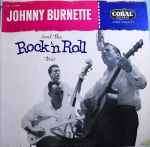
The Rock and Roll Trio were an American rockabilly group formed in Memphis, Tennessee, during the 1950s. They were also known as "Johnny Burnette and the Rock and Roll Trio" and the "Johnny Burnette Trio". The members of the Trio were Dorsey Burnette, his younger brother Johnny, and a friend Paul Burlison. Dorsey and Johnny Burnette were both natives of Memphis, having been born there in 1932 and 1934 respectively. Paul Burlison was born in Brownsville, Tennessee, in 1929, but moved to Memphis with his family in 1937. The Burnette brothers were keen amateur boxers and became Golden Gloves champions. In 1949, Dorsey met Paul Burlison, also a Golden Gloves champion, at an amateur boxing tournament in Memphis. The two became firm friends, and through this friendship Burlison would also meet Johnny Burnette. All three had an interest in music, and in 1951 they began playing together at the hillbilly nightspots on the outskirts of Memphis, both as a trio and as a part of other groups. In these early days, they played a mixture of country and bluegrass, not untainted with cottonpatch blues. In the honkytonks in and around Memphis the Trio would often play an upbeat country and blues so that the patrons had music to do the 1940-1950s bop and jitterbug, popular at the time, and the sound later called rockabilly, which they perfected in their 1956 Coral Records album. Johnny and Dorsey Burnette were reported to be early performers on the 'Saturday Night Jamboree', which was a local stage show held every Saturday night at the Goodwyn Institute Auditorium in downtown Memphis in 1953-54. The show was founded by Joe Manuel, who had been a popular hillbilly radio star of the 1930s and 1940s. In 1952 or 1953, they formed a group with Burlison playing lead guitar, Dorsey playing stand-up bass and Johnny playing rhythm guitar and taking the vocal lead. Occasionally they were joined by steel guitarist Albert Vescovo and fiddler Tommy Seeley. With this line-up and at this time, the group may have been known as the Rhythm Rangers. A contemporary poster from the Von Theater in Booneville, Mississippi, which advertised The Dixieland Jamboree, puts, as the top of the bill, Johnny Burnett & his Rhythm Rangers and describes him as a VON recording artist from Memphis, Tennessee. Second on this bill is Hayden Thomson and his Southern Melody Boys, who are described as Just Back from WSM Nashville, Tennessee. and Ernest Tubb Jamboree. The trio together with Tommy Seeley and Albert Vescovo had their first recording session with the Von Theater in Boonville, which booked the Burnettes and other talent from out of town. Hayden Thompson, who also recorded for VON, has asserted that the label was unconnected with the theatre. Music writer Adam Komorowski, however, states that the label owner Sam Thomas had named the label after the theatre. The session was arranged and paid for by Eddie Bond's father, Bill Bond, who wanted to manage the band. The Record Exchanger No. 26, however, noted that the session was set up and A & R'd by Buddy Bain, a disc-jockey and performer in Corinth, Mississippi. Their first single was "You're Undecided"(any early indication of their rockabilly style) backed with "Go Mule Go" (Von 1006), released under the name Johnny Burnette. It sold fewer than 200 copies. There is some disagreement over the year in which this single was released. The Guinness Book Of Rock Stars suggests that the year was 1953, but other sources suggest 1954, and others suggest November 1955. The trio were said to have auditioned for Sun Records but were turned down by Sam Phillips, apparently because they sounded too much like Elvis Presley. Whether or not this audition took place, however, remains a matter of dispute. Dorsey Burnette has stated that they recorded a demo session for Sun. He said, "We took Sam Phillips some songs and he turned 'em down, but they weren't very good anyway." In an article for TV Radio Mirror, Johnny Burnette recalled that he and Dorsey had auditioned for Sun Records and had been chased back onto the street when the fiddler's bridge broke. No tapes of any such audition have ever been found, although this could be explained by the fact that Sam Phillips was prone to record over tapes. More importantly, however, Burlison later insisted that the group did not audition at Sun at all, and he recalled the incident of the fiddler's bridge taking place during the recording of "Go Mule Go". If they did not, they were one of the few KWEM regulars not to do so. As the trio was only a loose aggregation until 1956, then it is possible that the Burnettes may have auditioned at Sun without Burlison. Sources also vary as to the time of the alleged audition. Some suggest 1954, but others have put it in early 1956, with only Dorsey and Johnny Burnette present. From 1954 to February 1956, the trio played at the Hideaway Club in Middleton, Tennessee, with the Doc MacQueen Swing Band. As well as their work with the band they were to have an intermission spot of their own, and by 1956 the trio had built a strong reputation in and around Memphis. But the earnings from these session did not provide them with enough on which to live, and so all three had daytime jobs. Both Paul Burlison and Dorsey Burnette were working for the Crown Electric Company as journeyman and apprentice electrician respectively, and Johnny held down a number of jobs, including one selling dishes and appliances door to door, another as a Repo Man and also as a deck hand on barges traversing the Mississippi River. In February/March 1956, Paul Burlison and Dorsey Burnette were laid off from Crown Electric. As they both needed to secure regular pay-cheques, they decided to drive to New York in the hope of gaining jobs there through the electrician's union. Paul Burlison was to later recall that "they could not make it alone on what they were being paid on Friday and Saturday nights at the Hideaway. So we thought, until things picked up in Memphis, they would go to New York and work awhile." After discussing the move with their wives and other family members, the trio drove to New York through one of the worst snowstorms to hit the Northeast in many years. They stopped off briefly in Brownsville in order to inform Doc McQueen of their move. McQueen is reported to have said, "Let me know if you make it big." When they arrived in New York, they took rooms in the YMCA. Paul and Dorsey started work as electricians, and Johnny worked in the garment district. They then found out about the Wednesday night auditions for the Ted Mack Original Amateur Hour, and they joined the endless queue of show business hopefuls. Elvis Presley had only hit the big time in late January 1956, and someone in the Mack audition crew thought that the Burnettes and Burlison might reach the same market. So they were given the fast track and appeared on the show, which was networked nationally by ABC. They won three straight appearances in April and May 1956, which gained them a slot on the finalists' tour on 9 September 1956, their appearance being unfortunately telecast live from New York opposite to that of Elvis Presley's first appearance at the Ed Sullivan Show which was also beamed live from Los Angeles, and capturing the highest share in the history of US television, an 82.6%, which meant the finals of the Arthur Godfrey Show were seen by less than 5 million viewers. A newspaper clip on the day after their third win on the Ted Mack Show referred to them as "the Rock and Roll Boys from Memphis". Between their second and third appearances, they were spotted by Bill Randle, who was a disc-jockey on WERE, Cleveland. Randle telephoned his friend Henry Jerome, who was a band leader at the Hotel Edison at the time, and he told Jerome to watch the trio's next appearance on television. Jerome was impressed by what he saw that he contacted the Burnettes and Burlison and signed them to a management contract. He got Johnny a daytime job as an
Discografía en vinilo
Ordenada por relevancia (lo más escuchado primero).
En la onda de Johnny Burnette and the Rock ’n’ Roll Trio
Otros artistas afines, con vinilo.