The Dukes of Stratosphear
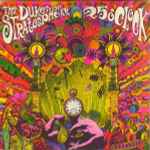
The Dukes of Stratosphear were an English rock band formed in 1984 by Andy Partridge, Colin Moulding, Dave Gregory, and Ian Gregory. Modelled after psychedelic pop groups from the 1960s, the Dukes were initially publicised by Virgin Records as a mysterious new act, but were actually an XTC spin-off band. They recorded only two albums: 25 O'Clock (1985) and Psonic Psunspot (1987). In the UK, the records outsold XTC's then-current albums The Big Express (1984) and Skylarking (1986). Partridge envisioned the Dukes as an amalgamation of "your favourite bands from 1967." He and Dave Gregory conceived the project in 1979, and in December 1984 the band found the opportunity to spend a few days recording what would become 25 O'Clock. Three rules were set for its production: songs must follow the conventions of 1967 and 1968 psychedelia, no more than two takes allowed, and use vintage equipment wherever possible. After reuniting for the LP Psonic Psunspot, XTC told interviewers that the group were killed in a "horrible sherbet accident". Several sequels were proposed but ultimately abandoned, including the mock rock opera The Great Royal Jelly Scandal, a prequel album featuring the Dukes in their early Merseybeat phase, and a glitter rock parody as "The Stratosphear Gang". In 1993, Partridge conceived a spiritual successor to the Dukes in the form of a "heavily sexual" bubblegum LP. Virgin rejected the album, leading XTC to go on strike against the label for several years. Some of its songs were later reworked and released on XTC albums and compilations. The Dukes of Stratosphear anticipated and were celebrated by retro-minded movements such as the Paisley Underground. In 2003, they reunited to record one song commissioned by the MS Society, and in 2008, Partridge recorded two tracks credited to "the Dukes" as part of a commission for Eurostar. These songs were included as bonuses on reissues of the Dukes albums. As a teenager listening to psychedelic records, XTC leader Andy Partridge was particularly fond of Pink Floyd's "See Emily Play" (1967), Tomorrow's "My White Bicycle" (1967), and the Moles' "We Are the Moles" (1968). Partridge viewed psychedelic music as a "grown-up" version of children's novelty records, believing that many acts were trying to emulate those records that they grew up with: "They use exactly the same techniques—sped-up bits, slowed-down bits, too much echo, too much reverb, that bit goes backwards. ... There was no transition to be made. You go from things like 'Flying Purple People Eater' to 'I Am the Walrus'. They go hand-in-hand." He also held a preference for British psychedelia rather than its American variant: "In the States, it was all about reaction to the Vietnam War. The music was dark and brooding, filled with angry distortion." In 1975, he considered renaming his fledgling band the Helium Kidz to "the Dukes of Stratosphear", but he thought "it was too flowery and people would think we were a psychedelic group. ... We needed a fast inventive name." When guitarist Dave Gregory was invited to join XTC in 1979, Partridge learned that they both shared a passion for 1960s psychedelic music. An album of songs in that style was immediately put to consideration, but the group could not go through with it due to their commercial obligations to Virgin Records. "We talked about it a lot, but he wasn't even in the band at the time, and really, to be honest, I didn't have any spare time at all. I was constantly touring." Another consideration Partridge had was the punk movement's antipathy toward pop music of the past: "A real Pol Pot kind of thing, which is ludicrous, and rather nasty." At a Mummer session in 1982, he remembered saying to producer Steve Nye "Ooh, I’m a bit funny about how this came out, Steve, because it sounds a bit Beatles-esque to me, and I don’t want people to think I’m copying the Beatles." He said, "Who gives a fuck? That’s how you’ve written it—just do it!' ... I realised that I should not be ashamed about digging them up, and getting them wrong, and using them as my template. ... from that moment onward, I started to recognise that those songwriters—the Ray Davieses, the Lennons and McCartneys, the Brian Wilsons—had gone into my head really deeply. During the making of XTC's 1984 album The Big Express, Partridge began writing material he thought could be performed in a psychedelic style, the first being "Your Gold Dress". He recalled "sneak[ing] off upstairs in Crescent Studios, in Bath, with my cassette machine and whisper these ideas for psychedelic songs into it. I was beginning not be able to contain the desire to do this. You can see it leaking out earlier ... 'Let's get a Mellotron! Let's put some backwards so-and-so on here.'" In November 1984, one month after the release of The Big Express, Partridge travelled to Monmouth in Wales with engineer John Leckie to produce the album Miss America by singer-songwriter Mary Margaret O'Hara, who had recently signed with Virgin. Partridge and Leckie were dismissed due to conflicts related to their religious affiliations or lack thereof (O'Hara was a devout Catholic). Partridge was feeling inspired by Nick Nicely's 1982 psychedelic single "Hilly Fields 1892", and devised a recording project to fill the newfound gap in his schedule. The rules were as follows: songs must follow the conventions of 1967 and 1968 psychedelia; no more than two takes allowed; use vintage equipment wherever possible. Partridge said: "I didn't really have songs ready, just ideas. I knew I wanted to do something like Syd Barrett. Perhaps a Beatles-esque track. ... I rung up the other guys and said 'Hey, let's put on a show!'; you know, that kind of thing." Leckie agreed to take on production and searched for a cheap studio for the band. Partridge invited his XTC bandmates to participate; they were augmented on drums by Dave's brother Ian, since the group did not have a drummer at the time. "The Mole from the Ministry" (1985) The album's only single, "The Mole from the Ministry", was an improvised-in-the-studio Beatles pastiche. Problems playing this file? See media help. The label, although sceptical, lent the group £5,000, and they spent two weeks on the album's recording and mixing at Chapel Lane Studios in Hereford, England. The project was planned as a full-length LP, but only six songs could be recorded due to time constraints. The album was produced so cheaply that the band refunded £1,000 back to the label. Partridge looked back on its making as the "most fun we ever had in the studio." Each musician adopted a pseudonym: "Sir John Johns" (Partridge) "Lord Cornelius Plum" (Dave), "The Red Curtain" (Colin Moulding) and "E.I.E.I. Owen" (Ian). Partridge's moniker was inspired by the Martian Manhunter's name, while Moulding's was derived from an old nickname referring to the length of his hair. The band dressed themselves in Paisley outfits for the sessions and lit scented candles." Released exclusively in Britain on April Fool's Day 1985, the mini-album 25 O'Clock was presented as a long-lost collection of recordings by a late 1960s group. Virgin Records publicised the Dukes as a mysterious new act, and when asked about the album in interviews, XTC initially denied having any involvement. A music video set to "The Mole from the Ministry"—the first in which they were allowed total creative input—was produced for BBC West's RPM music programme. Partridge: "That's the only one of our videos that I've liked, the only one I can watch ... every little [promo] film [from 1967] we could find, we put ideas from them in there." In England, 25 O'Clock sold twice as many copies as The Big Express, even before the Dukes' identity was made public. The album also achieved considerable sales in the US. On XTC's next album Skylarking (1986), the Dukes were mentioned in its liner notes, where they were thanked for the loan of their guitars. Partridge was reluctant to make another Dukes album, but to
Discografía en vinilo
Ordenada por relevancia (lo más escuchado primero).

En la onda de The Dukes of Stratosphear
Otros artistas afines, con vinilo.