The Gordon Highlanders
The Gordon Highlanders was a line infantry regiment of the British Army that existed for 113 years, from 1881 until 1994, when it was amalgamated with The Queen's Own Highlanders (Seaforth and Camerons) to form The Highlanders (Seaforth, Gordons and Camerons). Although the 'Gordon Highlanders' had existed as the 92nd (Gordon Highlanders) Regiment of Foot since 1794, the actual 'Gordon Highlanders Regiment' was formed in 1881 by amalgamation of the 75th (Stirlingshire) Regiment of Foot and 92nd (Gordon Highlanders) Regiment of Foot. The regiment was formed on 1 July 1881 instigated under the Childers Reforms as the county regiment of: Aberdeenshire, Banffshire, and Shetland. Although the regiment was formed by two regular regiments, it in fact controlled other units which were of the former Militia and Volunteer Force, including: Regimental Headquarters & Regimental Depot at Castlehill Barracks 1st Battalion (Regular, former 75th (Stirlingshire) Regiment of Foot) 2nd Battalion (Regular, former 92nd (Gordon Highlanders) Regiment of Foot) 3rd (Royal Aberdeenshire Highland Militia) Battalion (Militia) based at the King Street Barracks in Aberdeen 1st Volunteer Battalion (Volunteers, former 1st Aberdeenshire Rifle Volunteer Corps, became 1st VB in 1884), later became 4th (City of Aberdeen) Btn 2nd Volunteer Battalion (Volunteers, former 2nd Aberdeenshire Rifle Volunteer Corps, became 2nd VB in 1884), later became 5th (Buchan and Formartin) Btn 3rd (The Buchan) Volunteer Battalion (Volunteers, former 3rd Aberdeenshire Rifle Volunteer Corps) 4th Volunteer Battalion (Volunteers, former 4th Aberdeenshire Rifle Volunteer Corps), later became 6th (The Banff and Donside) Btn 5th (Deeside Highland) Volunteer Battalion (Volunteers, former 1st (Deeside Highland) Kincardineshire and Aberdeenshire Rifle Volunteer Corps), later became 7th (Deeside Highland) Btn The 1st Battalion fought at the Battle of Tel el-Kebir in September 1882 during the Anglo-Egyptian War, in the Eastern Sudan in 1884 under Sir Gerald Graham (battles of El Teb and Tamaii) and then took part in the Nile Expedition in an attempt to relieve Major-General Charles Gordon during the Mahdist War. The 1st Battalion then took part in the Chitral Expedition and then the Tirah Campaign; it was during operations on the North West Frontier in October 1897, during the storming of the Dargai Heights, that one of the regiment's most famous Victoria Crosses was earned. Piper George Findlater, despite being wounded in both legs, continued to play the bagpipes during the assault. Other heroes involved in the charge of the Gordon Highlanders at Dargai Heights were Pipers John Kidd and James Fraser. Piper Kidd was with Piper Findlater when, half-way up the heights, both pipers were shot down. Unmindful of his injuries, Piper Kidd sat up and continued to play "The Cock o' the North" as the troops advanced up the heights. Piper Fraser made it to the top of the heights with his pipes before he too was shot in the leg. Both battalions were sent to South Africa following the outbreak of the Second Boer War in 1899. The 2nd Battalion fought at the Battle of Elandslaagte in October 1899 and was part of the force besieged in the Siege of Ladysmith in November 1899. Meanwhile, the 1st Battalion, which arrived a little later, saw action at the Battle of Magersfontein in December 1899 and at the successful action at Paardeberg in February. The battalion was again in action at Doornkop, where they suffered severe losses, in May 1900. The battalion stayed in South Africa throughout the war, which ended with the Peace of Vereeniging in May 1902. Four months later, 475 officers and men of the 1st battalion left Cape Town on the SS Salamis in late September 1902, arriving at Southampton in late October, when the battalion was posted to Glasgow. In 1908 the Volunteers and Militia were reorganised nationally, with the former becoming the Territorial Force and the latter the Special Reserve; the regiment now had one Reserve and four Territorial battalions. The 1st Battalion was based in Plymouth on outbreak of war and landed at Boulogne-sur-Mer as part of the 8th Brigade in the 3rd Division in August 1914. It was immediately engaged with the Germans at the Battle of Mons, suffering only slight casualties. The battalion was next in action at the Battle of Le Cateau after which it ceased to exist as a fighting force when most personnel were captured in the confusion of disengaging after battle. The order for withdrawal had only reached a single Company and consequently the rest of the battalion, with troops from other attached Units, were late to disengage from the front line. During the night-time withdrawal, a German force was encountered and the force surrendered after a sharp action. The battalion was subsequently rebuilt with drafts of reinforcements and served on the Western Front for the duration of the war. The 2nd Battalion was in Egypt in 1914, but returned to England and landed at Zeebrugge as part of the 20th Brigade in the 7th Division in October 1914. It immediately saw action in the First Battle of Ypres. The battalion subsequently served on the Western Front until November 1917 when it moved with XIV Corps to Italy. It was subsequently involved in the final, successful, battle of the war in Italy at the Battle of Vettorio Veneto, October to November 1918. The 1/4th (City of Aberdeen) Battalion landed at Le Havre as part of the 8th Brigade in the 3rd Division in February 1915 for service on the Western Front. The 1/5th (Buchan and Formartin) Battalion landed at Boulogne-sur-Mer as part of the 153rd Brigade in the 51st (Highland) Division in May 1915 for service on the Western Front. The 1/6th (Banff and Donside) Battalion landed at Le Havre as part of the 20th Brigade in the 7th Division for service on the Western Front. One of the longest 1914 Christmas truces was upheld by this battalion: it lasted until the afternoon of 3 January 1915. The 1/7th (Deeside Highland) Battalion landed at Boulogne-sur-Mer as part of the 153rd Brigade in the 51st (Highland) Division in May 1915 for service on the Western Front. The 8th (Service) Battalion landed at Boulogne-sur-Mer as part of the 26th Brigade in the 9th (Scottish) Division in May 1915 for service on the Western Front. The 9th (Service) Battalion and the 10th (Service) Battalion landed at Boulogne-sur-Mer as part of the 44th Brigade in the 15th (Scottish) Division in July 1915 for service on the Western Front. Garrison Battalion The 1st Garrison Battalion, originally raised as the 12th Battalion, was formed in October 1916 of soldiers unfit for front line duties. It was sent to India in March 1917, and was stationed in Rawalpindi from April 1919. It served in the 2nd (Rawalpindi) Division and was subsequently on operations during the Third Anglo-Afghan War. The folk singer and Scottish Traveller Jimmy MacBeath served with the regiment during the war. The 1st Battalion, Gordon Highlanders was a Regular Army battalion that served originally with the 2nd Infantry Brigade, part of the 1st Infantry Division, and was sent to France in September 1939, shortly after the declaration of war, as part of the British Expeditionary Force (BEF): it remained there until May 1940. On 7 March 1940 the 1st Battalion exchanged with the Territorial Army 6th Battalion and transferred to the 153rd Infantry Brigade, part of the 51st (Highland) Division. The battalion served with the 51st Division during the Battle of France in 1940 when they were trapped and the majority of the division was forced to surrender at Saint-Valéry-en-Caux, with very few men escaping capture. The 1st Battalion was, however, reformed in the United Kingdom in August 1940 and went on to serve with the second formation of the 51st (Highland) Division (formed by redesignation of the 9th (Highland) Infantry Division throughout the rest of the Second World War, serving in North Africa at El Alamein, Tunisia, Sicily and
Discografía en vinilo
Ordenada por relevancia (lo más escuchado primero).

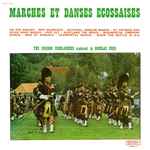

En la onda de The Gordon Highlanders
Otros artistas afines, con vinilo.