Wenge Musica (Congolese group)
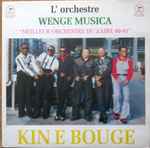
Wenge Musica (also known as Wenge Musica BCBG or Wenge Musica BCBG 4×4) was a Congolese soukous band founded in 1981 by Didier Masela and later led by JB Mpiana, from 1986 until its dissolution, in December 1997. Regarded as the forerunner of the fourth generation of Congolese popular dance music, particularly through their role in popularizing ndombolo, the band emerged in a fashion similar to Zaïko Langa Langa a decade earlier, operating as a collective of co-founders rather than revolving around a single bandleader. Like Zaïko Langa Langa and earlier TPOK Jazz, the band achieved success without relying on established musical sponsors. Wenge Musica released their debut album, Bouger!! Bouger!! Makinzu!!!, on the Bisel label in 1988, which introduced their first smash hit, "Mulolo", composed by JB Mpiana. In 1991, they released their second album, Kin É Bougé, through the Mabisa label, followed by Les Pleins Feux, recorded in 1992 but not released until 1996. In 1993, Wenge Musica recorded Kala-Yi-Boeing in Brussels and releasing their fifth album and first double album, Les Anges Adorables, the following year. By the mid-1990s, Wenge Musica had become a defining musical influence, inspiring numerous bands, including the Brazzaville-based Extra Musica, founded in 1993, which quickly emerged as a significant rival. Initially criticized as imitators, Extra Musica soon distinguished themselves with a dynamic style. Wenge Musica's sixth and final album, Pentagone, was released in April 1996. Interpersonal disputes intensified following Mpiana's solo debut, Feux de l'amour (1997), which deepened his rivalry with fellow co-founder Werrason. During a December 1997 performance at the InterContinental Hotel (now Pullman Kinshasa Grand Hôtel), divisions within the band became apparent to the public and fueled widespread speculation of an imminent breakup. Amid growing unrest among the fandom and mounting political sensitivities, particularly as the AFDL insurgency led by Laurent-Désiré Kabila gained ground in eastern Zaire, the government intervened, when the Minister of Information and Cultural Affairs convened a meeting between JB Mpiana and Werrason to ease tensions and preserve unity among Kinshasa's youth. The mediation failed, and shortly thereafter, Wenge Musica split into two rival groups, with Wenge BCBG, led by JB Mpiana, and Wenge Musica Maison Mère, led by Werrason. By the end of the 1990s, their rivalry had come to dominate the Congolese and broader African popular music scene. In 1979, a number of school friends that included Aimé Buanga (guitar), Werrason (vocals), Didier Masela (guitar), Machiro Kifaya (vocals), Papy Sanji (vocals), and Kija Brown formed a group called Celio Stars in Bandalungwa, Kinshasa. In 1981, they renamed themselves Wenge Musica. Their lineup initially remained the same, but they were later joined by Dede Masolo, Wes Koka, and Anicet Pandu on vocals; Alain "Docteur Zing" Mwanga, Alain Makaba, and Christian Zitu on guitars; and Ladins Montana, Maradona, and Evo Nsiona on drums. In late 1982, singer JB Mpiana joined the band and brought another vocalist, Blaise Bula, along with him. Following their early performances at the Moto Na Moto and Olympia bars around 1984 and an unreleased 1986 recording session at Verckys Kiamuangana Mateta's Studio Vévé, which featured "Kin É Bougé", "Bébé", "Laura", "Sylvie", and "Césarine", Wenge Musica experienced several lineup changes, with the departure of Pandu, Koka, Zitu, Masolo, Buanga, and Mwanga. The band stabilized at the end of the year around core members Mpiana, Werrason, Bula, Makaba, Masela, Maradona, and Nsiona, as well as new members Adolphe Dominguez (vocals), Ricoco Bulambemba (vocals), Alain Mpela (vocals), Djolina (guitar), Blaise Kombo (guitar), and their first atalaku, Full King. Around the same period, Aimé Buanga and Alain Mwanga relocated to Paris for studies, where they laid the groundwork for what would later become Wenge Musica Aile Paris. The band's debut studio album, Bouger!! Bouger!! Makinzu!!!, recorded in 1987, was released on the Bisel label in 1988. It was reissued in 1994 on the English label Natari, with two additional tracks. Bouger!! Bouger!! Makinzu!!! yielded the band's first smash hit, "Mulolo", which was written by Mpiana, and also featured "Amoi Nicky D" by Werrason, "La Fille de Roi" and "Bakolo Budget" by Mpiana, "Dodo La Rose" by Didier Masela, and "Fisol" by Alain Makaba. After its release, music critics in Kinshasa accentuated the band's distinctive sound, which was influenced by the rhythmic style of King Kester Emeneya. Werrason's baritone voice was likened to that of Victoria Eleison's frontman, while the album's electronic arrangements resembled those on Emeneya's Nzinzi (1987). The band subsequently became emblematic of a new generation promoting upper-class, stylish fashion trends and the La Sape sartorial subculture. Following the success of Bouger!! Bouger!! Makinzu!!!, Wenge Musica embarked on their first European tour, which was arranged by producers Kibonge and Kokar, with scheduled appearances in Paris and Brussels in 1989. However, the tour was marred by visa and customs issues, as while Ricoco Bulambemba and drummer Pipo La Musica managed to enter Europe using falsified travel documents, principal members such as Didier Masela, Werrason, Mpiana, and Alain Makaba were unable to leave Kinshasa. In Paris, Ricoco joined forces with Alain Mwanga (also known as "Zing Zong") and Aimé Buanga, who were residing there, to rehearse and perform, and shortly thereafter recruited additional musicians, including Ya Yuyu, JDT Mulopwe, Boss Matuta, and Prince César Loboko. Adolphe Dominguez, also in Europe, participated in these early rehearsals, awaiting the arrival of the rest of the band. Still in 1989, Wenge Musica appeared in the "Zaire" episode of the BBC documentary series Under African Skies, about African music. In December 1990, a second European tour brought Mpiana, Werrason, Masela, Makaba, Blaise Bula, Roberto Wunda Ekokota, Marie-Paul Kambulu, Collégien Zola, and drummer Titina Al Capone to Brussels, where they recorded Kin É Bougé and performed several concerts. For this tour, Adolphe Dominguez reinforced the lineup, while Ricoco was sidelined from performing with the returning Kinshasa faction. The album was released in 1991 through the Mabisa label. The record contained five tracks: "Ngoma Maguy" (Ekokota), "Kin É Bougé" (Mpiana), "Princesse" (Alain Makaba, performed by Mpiana), "Kaskin" (Werrason), and "Eve Sukali" (Blaise Bula). It achieved greater commercial success than Bouger!! Bouger!! Makinzu!!!, eclipsing even the popularity of "Mulolo". The lead vocal sections were performed by singers Mpiana, Werrason, Blaise Bula, Adolphe Dominguez, and Marie-Paul, while the instrumentation featured Makaba's guitars, Masela's bass, Titina's drumming, synthesizers by Cyril Orcel and Makaba, and atalaku contributions from Ekokota and Full King. "Ngoma Maguy" marked Ekokota's first major contribution as atalaku and is regarded as an early example of a proto–opening theme in ndombolo albums that emphasizes sebene and animation over sung rumba sections, a format popularized earlier by Pépé Kallé and Zaïko Langa Langa, notably on Nippon Banzai. With improved sound quality, a faster, staccato tempo, and the introduction of an acoustic snare drum, Kin É Bougé gained success on both sides of the Congo River, across Africa, and among the African diaspora, and solidified the group as Zaire's leading band in 1991, as well as earning Mpiana the accolade of best singer. After their return to Zaire, Marie-Paul, despite his notable backing vocals on Kin É Bougé, left the band and rejoined the Paris-based musicians, which intensified tensions between the two camps. Marie-Paul's departure marked the formal consolidation of Wenge Musica Aile Paris under the management of Francis Kalombo. The Paris wing expanded its membership to include Kojak, Rento
Discografía en vinilo
Ordenada por relevancia (lo más escuchado primero).

En la onda de Wenge Musica
Otros artistas afines, con vinilo.