The Shadows of Knight
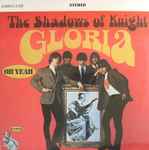
The Shadows of Knight were an American rock band from Chicago, Illinois, that played a version of British blues influenced by their native city. The Shadows of Knight saw regional success with a cover of Them's 1964 single "Gloria", which peaked at number 10 on the Billboard Hot 100 chart in the spring of 1966. In 1972, Lenny Kaye coined the term "garage punk" on the track-by-track liner notes for the Nuggets compilation, describing the Shadows of Knight's follow-up single "Oh Yeah", which opens side two of the anthology, as "classic garage punk". The band was formed in 1964 as simply the Shadows. In the spring of 1965, the band learned of an already existing British group, the Shadows. Whiz Winters, a friend who worked for their manager, Paul Sampson, in his record shop, came up with the name "The Shadows of Knight" to tie into the British Invasion in music of that time, and because four of the band members attended Prospect High School in Mt. Prospect, Illinois, whose sports team had the name "The Knights". Founding members included Jim Sohns (vocals; 1946–2022), Warren Rogers (lead guitar), Norm Gotsch (rhythm guitar), Wayne Pursell (bass guitar), and Tom Schiffour (drums). They released three albums in their first five years of existence. In early Fall 1965, Pursell left the band to attend college. Subsequently, Joe Kelley was recruited to play bass. Kelley would swap bass and lead duties with Rogers in late 1965 at the time of the "Gloria" recordings. Guitarist and vocalist Jerry McGeorge replaced Norm Gotsch in late 1965 after Gotsch joined the U.S. Navy, serving in Vietnam during his tour of duty. David "Hawk" Wolinski, who later worked with Rufus and Chaka Khan, replaced Rogers on bass in late 1966. After performing in and around Chicago's northwest suburbs in 1964 and 1965, The Shadows of Knight became the house band at The Cellar in Arlington Heights, Illinois, owned by Sampson. They attracted more than 500 teenagers every Saturday and Sunday at the "Cellar" for more than six months until Sampson began booking other bands, giving them a break. (A recording of a Shadows of Knight performance at The Cellar was released in 2018 by Sundazed Music as Alive in '65, showcasing the five original members of the band.) A stellar performance in support of the Byrds at Chicago's McCormick Place in early summer 1965 attracted the attention of Dunwich Records record producers Bill Traut and George Badonski. During that show, they performed "Gloria" by Van Morrison's band Them. The band signed with Dunwich shortly thereafter and recorded "Gloria" as a first effort. Released in December 1965, "Gloria" received regional airplay. The band had slightly altered the song's lyrics, replacing Morrison's original "she comes to my room, then she made me feel alright" with "she called out my name, that made me feel alright" after influential Chicago station WLS had banned Them's original version. This simple change overcame the prevalent AM radio censorship of the era and got The Shadows of Knight's cover version of the song onto the playlist of WLS. The single reached the No. 1 position on the radio station's countdown, as well as on local rival WCFL. On the Billboard national charts, "Gloria" rose to No. 10. The secondary publication Cashbox ranked "Gloria" as high as No. 7. In Canada the song reached No. 8 on the RPM Magazine charts. "Gloria" sold over one million copies, and was awarded a gold disc by the RIAA. The Shadows of Knight soon released the Gloria album, followed by the Back Door Men LP, in the summer of 1966. Subsequent singles included their version of the Bo Diddley song "Oh Yeah" (which reached No. 39 nationally), "Bad Little Woman" (No. 91), and the powerhouse "I'm Gonna Make You Mine" (No. 90). However, none of these releases approached their initial commercial success. Failure to find a winning follow-up to "Gloria" handicapped the band's earning power and led to its disintegration. Tom Schiffour left the band in spring 1967, first to be replaced by a young local fan of the band, Bruce Bruscato. He was subsequently replaced by Tom Morris. The original band fragmented further when McGeorge departed for acid-rock band H.P. Lovecraft, while Kelley left to front his own blues band. Hawk Wolinski also left the band to form Bangor Flying Circus with Schiffour and guitarist Alan De Carlo. By mid-1967, the only original member of the Shadows of Knight remaining was vocalist Jim Sohns, who trademarked the band name and inherited the groups's legacy. In the second generation of the band he was joined by Kenny Turkin on drums and vocals, Steve (Woody) Woodruff on lead guitar and vocals, Dan Baughman on rhythm guitar and vocals, and John Fisher on bass guitar and vocals. This generation of the band would perform together for the next 18 months. Sohns signed the band with Buddah Records in New York. Sohns had hoped to take the band in a British power-rock direction, but the Super K record label pulled them into a more commercial orientation, pairing the band with bubblegum groups such as the 1910 Fruitgum Company and the Ohio Express on tour. In 1969, the second generation Shadows of Knight released "Shake" on Buddha's short-lived subsidiary Team Records; the track eventually climbed to No. 46 (No. 37 Canada, December 1968). That same year, without the band's knowledge or consent, the unsuccessful update "Gloria '69" was released by Dunwich. "Shake" and its B-side, "From Way Out to Way Under" were actually recorded by Sohns and a number of studio musicians, on the understanding that a Shadows of Knight reassembled by Sohns would record a follow-up album. That album, Shadows of Knight is today regarded as a distinct recording oddity, being an attempt to mix punk and bubblegum music. From 1960s to 1970s, Chicago jazz rock, blue-eyed soul, blues rock, garage rock scene that included the Shadows of Knight, Chicago, The Buckinghams, the Mauds and The Ides of March. The four years after the breakup of the original Shadows were a dark creative period with little financial success. The band's repertoire consisted mostly of pop cover songs, which allowed them to survive by playing clubs. The second iteration of the band continued to evolve. Baughman left to pursue a career in metal sculpture. Turkin was replaced in early 1969 by Paul Scarpelli, and in 1970 Jack "Hawkeye" Daniels replaced Woodruff on guitar. The band's lineup remained the same for two years. During that time it recorded "I Am the Hunter." John Fisher was replaced by Jorge Gonzales on bass in 1971, who was subsequently replaced by John Hardy the next year. He was then replaced by studio bassist Don Ferrone. In 1972, Nuggets was created by Lenny Kaye, and the album included the Shadows of Knight's 1966 "Oh Yeah". Over subsequent decades, Sohns fronted varying incarnations of the group on the oldies circuit. He also spent a period of time reflecting on his future in the music business, choosing to become the road manager of the band Skafish from 1978 to 1980. He would join the band to sing "Gloria" as the band's encore. The Shadows of Knight enjoyed renewed public interest during the 1990s, significantly due to the 1998 release of their first two albums, remastered by Sundazed Music. In 1992, Performance Records (aka "Donewitch" Records) released The Shadows Of Knight – Live, Featuring "Gloria". This was a previously unreleased performance recorded live in Rockford, Illinois, in 1972. The album is also noted as containing "a wonderfully blistering guitar-laced extended version of Willie Dixon's 'I Just Want to Make Love to You'", which is nearly twelve minutes long. Also in 1992, another live recording, Raw 'n' Alive at The Cellar, 1966, was released by Sundazed Music. As noted by Richie Unterberger, "This is one of the very few live garage band tapes from the mid-'60s of relatively decent sound quality (considering the standards of the era). The song selection of this set should also please fans of
Discografía en vinilo
Ordenada por relevancia (lo más escuchado primero).

En la onda de The Shadows of Knight
Otros artistas afines, con vinilo.