Game Theory (US power pop band)
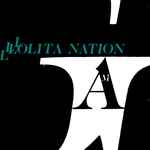
Game Theory was an American power pop band, founded in 1982 by singer/songwriter Scott Miller, combining melodic jangle pop with dense experimental production and hyperliterate lyrics. MTV described their sound as "still visceral and vital" in 2013, with records "full of sweetly psychedelic-tinged, appealingly idiosyncratic gems" that continued "influencing a new generation of indie artists." Between 1982 and 1990, Game Theory released five studio albums and two EPs, which had long been out of print until 2014, when Omnivore Recordings began a series of remastered reissues of the entire Game Theory catalog. Miller's posthumously completed Game Theory album, Supercalifragile, was released in August 2017 in a limited first pressing. Miller was the group's leader and sole constant member, presiding over frequently changing line-ups. During its early years in Davis, California, Game Theory was often associated with the Paisley Underground movement, but remained in northern California, moving to the Bay Area in 1985, while similarly aligned local bands moved to Los Angeles. The group became known for its fusion of catchy musical hooks with musical complexity, as well as for Miller's lyrics that often featured self-described "young-adult-hurt-feeling-athons," along with literary references (e.g., Real Nighttime's allusions to James Joyce), and pop culture references ranging from Peanuts ("The Red Baron") to Star Trek quotes ("One More for St. Michael"). Prior to founding Game Theory, Scott Miller had been the lead singer and songwriter of Alternate Learning, which issued an EP in 1979 and an LP in 1981. Alternate Learning was based in Sacramento and Davis, California, and frequently performed at U.C. Davis. Two members of the band, Jozef Becker and Nancy Becker, would join Miller in Game Theory. Alternate Learning was disbanded in early 1982. Scott Miller chose to name his new band "Game Theory" as an allusion to the mathematical field of game theory, which he described as "the study of calculating the most appropriate action given an adversary, ... someone who was thinking against you, and you had to organize what his moves could be, and what your moves should be, to give yourself the minimum amount of failure." In a 1988 interview, Miller stated, "It's a theory of probability that's a mathematical discipline that more or less has been applied improperly to real-life situations. It's just that idea of a set of rules that gets misused that intrigued me about it ... kind of a telling comment on life in general—that you just have to have some sort of set of rules, but who knows what the set of rules should be." That theme, according to Miller, was what many Game Theory songs were about: "Always be wary of the superstructure of whatever situation you're in. It may just be that the whole game that you're into is something very bogus and you should get out." By mid-1982, Scott Miller had assembled the first iteration of Game Theory, with himself as lead guitarist and vocalist. The group consisted of Miller, Nancy Becker (keyboards, vocals), Fred Juhos (bass, guitar, vocals), and Michael Irwin (drums). The first Game Theory album was the Blaze of Glory LP, released on Rational Records in 1982. Due to a lack of funds to both press the album and print a jacket, a thousand copies of the LP were packaged in white plastic trash bags with Xeroxed cover art glued to each bag. Nearly thirty years after the release of Blaze of Glory, Harvard professor Stephanie Burt described it as "true to the wordy awkwardness ... of the nerd stereotype, and yet true to the visceral power, the sexual charge, in guitar-based Anglo-American pop. The songs, and the people depicted in the songs, attempted to have fun, to act on instinct, but they knew they were too cerebral to make it so, except with like-minded small circles of puzzle-solvers." With Dave Gill replacing Michael Irwin on drums, two 12-inch EPs followed. In 1983, the group released the six-song EP Pointed Accounts of People You Know, recorded at Samurai Sound Studio, which was co-owned by Gill. The group then recorded the five-song Distortion EP in December 1983 (released 1984), with The Three O'Clock's Michael Quercio producing. The first three releases, originally released on Rational, were anthologized by Alias Records in 1993 as the Distortion of Glory CD. The early Game Theory was described as a "pseudo-psychedelic pop quartet" for which Miller sang and wrote "almost all of the material." On the first three releases, Miller shared co-writing credits on "The Young Drug" with Alternate Learning's Carolyn O'Rourke, and on "Life in July" with Nancy Becker. Miller also included three songs that were written by Fred Juhos, and later defended the decision to record Juhos's songs as a Beatles-like "relief from seriousness", though only one was included in the Distortion of Glory compilation. Juhos's contributions were criticized as failing to mesh with Miller's, and Miller later mused, "It's funny that his stuff wasn't popular. We all had the impression that no one was ever going to get into my stuff and that his one or two would be the ones to catapult us to fame." Reviewers of Distortion of Glory wrote that the band had improved with each successive EP, both featuring "some stellar material." Notable songs included "The Red Baron", cited as "heartbreaking ... an anguished acoustic lost-love song leavened by keyboardist Nancy Becker's mocking 'fifty or more' backing vocal," as well as "Shark Pretty," which featured guest lead guitar by Bowie sideman Earl Slick (credited as Ernie Smith). In 1984, the Dead Center LP was released in France, on the Lolita label. Dead Center was a compilation of selected tracks from Pointed Accounts of People You Know and Distortion, with three additional tracks including the group's cover of "The Letter" (a 1967 hit for the Box Tops with Alex Chilton's vocals). Real Nighttime, recorded in July 1984, marked the entrance of Mitch Easter as producer for the band's remaining releases. Easter was also credited as a guest musician on Real Nighttime, along with Quercio and Jozef Becker. The album was well-reviewed, appearing in the Village Voice's annual poll of 1984's best releases. One critic said the album walked "a fine line between pretension and genius." Miller contributed liner notes he penned in the style of James Joyce's Finnegans Wake, and the record sported "chiming guitars and great pop melodies" described as "breathtaking." Reviewers wrote, and Miller later confirmed, that a recurring theme in the lyrics of Real Nighttime was life after college, which Miller paired with the intuition that "freedom had a strong aspect of being bad news." The song "24" placed the narrator at the cusp of a quarter-life crisis, as a self-conscious young adult whose mixed feelings established that he "doesn't know where he fits, or to how to live on his own, in a post-collegiate milieu." The theme continued with allusions to finding one's own direction and leaving the nest, as in "Curse of the Frontier Land" ("A year ago we called this a good time"), and "I Mean It This Time" ("Give me all the gin I need, for I may not be this strong when I call my parents and tell them they've been wrong.") After commencing a national tour for Real Nighttime in October 1984, but before the album's 1985 release, the group went through a wholesale change in personnel, with only Miller remaining. According to Spin, the band had "lost one original member to motherhood and one to Jesus." As a result, a photograph of Miller was substituted for a photograph of the full group that had previously been taken for the album cover. In 2013, after Scott Miller's death, the group's surviving members from this period (including both Irwin and Gill) briefly adopted the nickname "Game Theory 1.0," coined by Juhos during planning of the band's July 2013 reunion performance in a memorial tribute to Miller, to describe the pre-1985 version of the
Discografía en vinilo
Ordenada por relevancia (lo más escuchado primero).


En la onda de Game Theory
Otros artistas afines, con vinilo.