Mahlathini and the Mahotella Queens
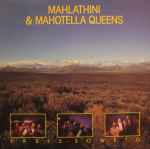
Mahlathini and the Mahotella Queens (also known as Mahlathini Nezintombi Zomgqashiyo and Mahlathini and the Girls of Mgqashiyo) were a South African mbaqanga supergroup made up of the three musical acts linked together by talent scout and record producer Rupert Bopape at the Gallo Recording Company in Johannesburg, South Africa in 1964. The group composed of the following three distinct parts: The late Simon "Mahlathini" Nkabinde (1937–1999), a powerful singer in the basso-profundo "groaning" style. The girl group the Mahotella Queens (1964–present), the classic line up being the threesome Hilda Tloubatla, Nobesuthu Mbadu and Mildred Mangxola. Still recording and performing internationally, the trio is noted for its distinct vocal harmony sound alternating between multi-part harmonies and unison vocals, guitar-led mbaqanga music, and fast stage dancing. The instrumental band the Makgona Tsohle Band (1964–1999), that is noted for creating the mbaqanga music style, led by electric lead guitarist Marks Mankwane and alto saxophonist West Nkosi. Together they were an extremely productive commercial success and a major live attraction in and around South Africa 1964–72. The three parts of the group reformed in 1986–87, and following the 70th-birthday tribute to Nelson Mandela in 1988 at London's Wembley Arena the supergroup rose to international renown, going on to feature in many international festivals during the years 1987–97. The major record labels under South Africa's apartheid era were white-owned companies with very few black artists. Historically, laws such as the Land Act of 1913 to the Group Areas Act (1950) prevented musicians from different tribal communities integrating and many were not permitted to establish themselves in the city. Consequently, making it almost impossible for most black music artists to gain recognition beyond their own tribal boundaries. During the apartheid period, black South Africans could no longer play to white audiences and white broadcasting programmers did not approve of American-influenced music. Mavuthela was instituted in 1964 as a division of the country's largest independent record label Gallo Africa to focus solely on producing music for the black South African market. It was headed by talent scout/producer Rupert Bopape, a former producer for EMI South Africa before joining Gallo Record Company. Bopabe had already had successes recording popular artists such as Alexandra Black Mambazo, the King's Messengers Quartet and female group the Dark City Sisters. Black South African producers came up with the idea of returning to the styles of acoustic African popular music and harmony singing groups, but they electrified the instruments, mixed the sexes, and added a lively 8/8 township beat. Mbaqanga music became popular amongst urban black South Africans living in the townships. The group that later became known worldwide as Mahlathini and the Mahotella Queens started as part of the team of musicians working at the Mavuthela Music Company. Rupert Bopape largely created the group from three distinct parts. He had brought with him from EMI Mahlathini (the 'Lion of Soweto'), a leading exponent of a style that was later christened groaning (a vocal style was performed by deep-voiced male singers in conjunction with five-piece female harmony groups and a backing band of instrumentalists). Another of Bopape's more successful acts was a team of female singers that would record songs under various group pseudonyms, including under the name, Mahotella Queens. The line-up of the group would consist of five singers taken from a larger pool of vocalists that included Hilda Tloubatla, Juliet Mazamisa, Ethel Mngomezulu and Francisca Mngomezulu, Mildred Mangxola, Nobesuthu Mbadu, Windy Sibeko, Mary Rabotapi (formerly of The Skylarks) and Nunu Maseko; they became the country's most popular girl group during the late 1960s – mid-1970s period. The Mahotella Queens and Mahlathini were backed by the newly formed Makgona Tsohle Band (which translates as the 'Band Who Can Do Everything'), the five musicians were all former domestic workers from Pretoria – West Nkosi (saxophone), Marks Mankwane (lead guitar), Joseph Makwela (bass guitar), Vivian Ngubane (rhythm guitar) and Lucky Monama (drums). The horn section included Lemmy 'Special' Mabaso, Shadrack Piliso, Mario da Conceicao and (briefly) Spokes Mashiyane. The team of horn-blowers was expanded in the late 1960s to include Roger Xezu, Sipho Bhengu, Thomas Motshoane, David Khanyile (aka "Fastos The Great") and Sello Mmutung (better known as "Bra Sello"). Black South African musicians received little money and it was difficult to get air time on local radio stations, so often they performed outside record stores to attract audiences. The band began by cutting 78 record copies of their first collection of songs and playing their music in the street, they went on to recording hundreds of hit singles. Throughout the late 1960s and early 1970s, Mahlathini and the Mahotella Queens dominated South African music, notching up many recordings from their debut Orlando Train to songs like Uyavutha Umlilo (Music Inferno), Sengikala Ngiyabeleka (Crying And Running Away), Thoko, Sithunyiwe, Pitsa Tse Kgolo, Ngikhala Ngiyabaleka and Izulu Liyaduduma. Some of their more successful singles were compiled onto albums such as Meet the Mahotella Queens (their first LP), Indoda Mahlathini, Marena, Marks Umthakathi and Umculo Kawupheli. The ensemble became a major live attraction and commercial success, with Mahlathini's groaning vocals matched against the close harmonies of the Queens, and the driving mbaqanga-township jive work from the Makonga Tsohle Band. They toured extensively, both within South Africa and surrounding countries including Mozambique, Botswana and Zimbabwe. Known for their distinctive sounding records and energy packed presence at concerts, they were dubbed "The Beatles of South Africa". The supergroup – Mahlathini, the Mahotella Queens and Makgona Tsohle – were an extremely productive and popular cohesive recording/performing team until 1972. In 1972 the line-up disintegrated after royalty disagreements with Bopape. The Mahotella Queens under the production of Makgona Tsohle Band guitarist Marks Mankwane, continued to record and perform to some degree of success throughout into the 1970s and 1980s, but by the late 1970s due to royalty disagreements and/or family commitments, none of the original members of the Queens remained. At the same time, Mahlathini who also recorded solo material backed solely by the Makgona Tsohle Band, cultivating a distinct public identity as Indoda Mahlathini, resigned from Mavuthela also due to royalty/payment disputes with Bopape. The Makgona Tsohle also recorded instrumental singles to massive public acclaim until Makgona Tsohle split up and its individual members, who had been mentored by Bopape, concentrated on producing the roster of Mavuthela artists. Musical tastes were changing – disco was taking over in South Africa. In 1983, Mankwane reunited Mahlathini with five of the original Mahotella Queens for a spin-off group titled Mahlathini Nezintombi Zomgqashiyo. However, the decline of mbaqanga music meant that the project lasted only a year. Mankwane continued to produce the Mahotella Queens. Mahlathini joined the West Nkosi-produced Swazi-mbaqanga trio Amaswazi Emvelo, one of the few mbaqanga groups to still selling well at the time. In 1983, in the UK Malcolm McLaren produced his influential album Duck Rock, a project that mixed unrelated genres together, including the uncredited music of Mahlathini and the Mahotella Queens. Criticised over the years by some as exploitative, it was the first album that brought what is now known as world music to a bigger audience outside of South Africa and other countries. Western musicians slowly began to incorporate various world music styles into theirs. In 1986–87, partly due to contributing to Harry
Discografía en vinilo
Ordenada por relevancia (lo más escuchado primero).


En la onda de Mahlathini and the Mahotella Queens
Otros artistas afines, con vinilo.