The Albion Band
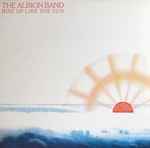
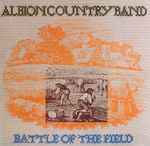
The Albion Band, also known as The Albion Country Band, The Albion Dance Band, and The Albion Christmas Band, is a British folk rock band, originally brought together and led by musician Ashley Hutchings. An important grouping in the genre, it has contained or been associated with a large proportion of major English folk performers in its long and fluid history. The one constant in the band's history has been the band leader Ashley Hutchings, founding member of two other English folk rock groupings Fairport Convention and Steeleye Span, and it has been the home for most of the projects of his long career, though in the 2011 incarnation of the band he has handed over the reins to his son Blair Dunlop. This version continued until 2014. Hutchings continues to perform in a separate Christmas-themed incarnation (occasionally featuring Dunlop) The Albion Christmas Band that was first established in 2005. Initially Hutchings formed the band in April 1971 to accompany his then wife the singer Shirley Collins on her No Roses album. Dave Mattacks, Richard Thompson and Simon Nicol (from Fairport Convention), Lal and Mike Waterson (of The Watersons) and Maddy Prior, were among twenty five credited backing musicians. On a short tour, core members were joined by Richard Thompson and his then wife Linda Thompson. Several members contributed with Hutchings to the project Morris On (1972), including John Kirkpatrick, Richard Thompson and Dave Mattacks, and cumbersomely all their names appeared on the album cover. Hutchings was keen to make a permanent band from these musicians and the first line-up (which debuted in June 1972) included Royston Wood, Steve Ashley, Sue Draheim, Simon Nicol and Dave Mattacks, but the group failed to gel and Wood, Steve Ashley and Draheim all departed in October 1972. No formal album was released by this line-up, however an instrumental "Four Hand Reel / St. Anne's Reel" recorded for the BBC "Top Gear" show on 19 June 1972 was released on the 1994 Ashley Hutchings retrospective The Guv'nor Vol 1, followed by 2 more tracks, "Morris Dance Tunes: Morris On / Jockey to the Fair / Room for the Cuckoo / Princess Royal / Morris Off" and the song "Rambling Sailor", both from the same Top Gear session, on The Guv'nor Vol 2 in 1975. A full band version of "Lord Bateman" with Steve Ashley on vocals, recorded with a temporarily reconvened original personnel in November 1972, was eventually included on the latter's debut solo album Stroll On in 1974. Following this personnel change, Hutchings wished to recruit others including John Kirkpatrick and Sue Harris to the band but the latter two were unavailable until early 1973, so a "caretaker" band (Albion Country Band Mk 2) was put together to fulfil bookings that had already been arranged, comprising Hutchings with Richard Thompson and Linda Peters (later Thompson) as well as Simon Nicol and (on occasion) Shirley Collins, with either Mattacks or Roger Swallow on drums. This incarnation of the band never formally recorded but a number of audience tapes recorded between August and December 1972 survive (mainly accessible here) which show the band not surprisingly leaning heavily upon a number of either recently released, or soon to be released Thompson originals performed in an electric context. Early in 1973 the final "Mk 3" Albion Country Band line-up came together which comprised Hutchings with Martin Carthy, Kirkpatrick, Harris, Simon Nicol and Roger Swallow on drums. In this incarnation the band played dates in England and in Europe (including the Enschede Folk Festival in the Netherlands in June 1973) and recorded the tracks for an album Battle of the Field, however split up in August 1973; with no touring band to promote it, the album was shelved for several years by the record label before being eventually released on Island Records's mid-price "HELP" label in 1976. Other material recorded by this line-up (4 tracks recorded on 9 May 1973 for the Bob Harris radio show) eventually appeared on the later BBC Sessions CD (1998), with one of the same also previewed earlier on The Guv'nor Vol 3 in 1995. From 1974 to 1975, Hutchings abandoned the Albion name and focused on forming the Etchingham Steam Band with his wife Shirley Collins. However, in 1976 he pulled together a new Albion Band, this time with the aim of playing traditional dance music. It had a huge and unstable membership that included Simon Nicol, Graeme Taylor from Gryphon, the early musicians Phil Pickett and John Sothcott, fiddle player Ric Sanders, plus John Tams, one of folk music's most distinctive and highly regarded vocalists. The immediate result was a lively traditional based album The Prospect Before Us under the name The Albion Dance Band. In 1978 they shortened the name to The Albion Band (which has remained the basis of the group's identity since) and released, under Tams' direction, what is usually considered the finest album in the long history of the band Rise Up Like the Sun (1978). The band took part in a 1977 TV show Here We Come A-Wassailing and in 1978–9 collaborated with playwright Keith Dewhurst for a stage adaptation of British author Flora Thompson's Lark Rise to Candleford, tracks from which were released as an album in 1980. In fact, while one line up of the band was working on the latter project at the National Theatre, Hutchings took a different line up on the road for a UK tour in the early summer of 1979. That version of The Albion Band featured Melanie Harrold on acoustic guitar and vocals, Barry Dransfield on fiddle, dulcimer and vocals, Ashley Hutchings on bass, Dave Mattacks on drums, Martin Simpson on guitar and banjo, and two electric guitarists, Andy Roberts and Doug Morter. The Albion Band was probably at the height of its mainstream profile at this point, with the single "Poor Old Horse" (a track from Rise Up Like the Sun) being selected as a "Record of the Week" on BBC Radio 1 and the band getting its own BBC Arena documentary that explored their work. While Hutchings was more interested in pursuing theatrical possibilities, many members of the band wanted to be a touring and recording band and, despite critical acclaim, this line-up split. Tams, Taylor and Gregory went on to form the nucleus of Home Service. Live material from this period has been released in Songs from the Shows (1997 and 1999) and The Guvnor, Vols 1–4 (1996–2004). Hutchings reformed the band around the nucleus of the remaining ex-Fairporters Nicol and Mattacks. He added three members of Cock and Bull (Dave Whetstone, Jean-Pierre Rasle and John Maxwell) and for the first time on record, opted for a lead female vocalist in Cathy Lesurf of the Oyster Band, whose tones characterize most recordings from this era. An album from this relatively stable period was Light Shining (1983), on which most of the tracks were original material. However, the reputation of the album has since been marred by accusations that Hutchings plagiarized one of its songs, "Wolfe," from "Northwest Passage" by Canadian folksinger Stan Rogers. Shuffle Off (1983) followed, after which Nicol and Mattacks left to reform Fairport Convention. Phil Beer on guitar/fiddle/vocals, Doug Morter on guitar/vocals and Trevor Foster on drums joined the band, and Under the Rose (1984), A Christmas Present From The Albion Band (1985) and The Wild Side of Town (1987) followed, the last of which was based on a five-part BBC television series presented by Chris Baines. The line-up then shifted with Martin Bell joining on violin before the release of Stella Maris in (1987). Martin Bell and Cathy Lesurf then left and the group were joined by Simon Care and John Shepherd. This was the most stable lineup in the band's history in terms of albums, producing three: I Got New Shoes (1988), Give Me a Saddle and I'll Trade you a Car (1989) and 1990 in the year of that name. In 1990 they were joined by singer-songwriter and instrumentalist Julie Matthews, but although they toured they
Discografía en vinilo
Ordenada por relevancia (lo más escuchado primero).


En la onda de The Albion Band
Otros artistas afines, con vinilo.