The Stone Poneys
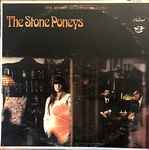
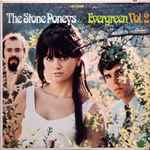
Stone Poneys (also the Stone Poneys, Linda Ronstadt and the Stone Poneys, and the Stone Poneys with Linda Ronstadt) were a folk rock trio formed in Los Angeles, consisting of Linda Ronstadt on vocals, Bobby Kimmel on rhythm guitar and vocals, and Kenny Edwards on lead guitar. The group featured Ronstadt showcasing an eclectic mix of songs, often from under-appreciated songwriters, requiring a wide array of backing musicians. Their recordings include Ronstadt's first hit song, a cover of Mike Nesmith's "Different Drum", recorded without the other members of the group. The band released three albums: The Stone Poneys; Evergreen, Volume 2; and Linda Ronstadt, Stone Poneys and Friends, Vol. III. The three albums were reissued in CD format in the 1990s in the US. The first two albums were reissued in Australia in 2008. Linda Ronstadt first met Bobby Kimmel as a teenager in 1960 while performing gigs in and around Tucson, Arizona, with her older brother Peter and older sister Suzi (under the name The Three Ronstadts, among others). The three Ronstadts joined with Kimmel and a local banjo player named Richard Saltus, performing locally as The New Union Ramblers. Kimmel, six years older than Ronstadt (who was 14), was impressed with her strong voice and enthusiasm. He moved to Southern California around 1961 and wrote regularly to cajole Ronstadt into joining him throughout her high school years at Catalina High School. Kimmel had already met and befriended Edwards shortly before Ronstadt's arrival in Los Angeles, and they had started writing folk-rock songs together. in December 1964, after dropping out of Catalina High School and completing a semester at the University of Arizona, Ronstadt decided to move to Los Angeles to join Bobby Kimmel and form a band. Ronstadt described Kimmel's vision of the band: "It was going to be five people. We had an electric autoharp and a girl singer... we thought we were unique in the world... It turned out Jefferson Airplane and The Lovin' Spoonful had beaten us." The group trimmed down to a trio that called themselves The Stone Poneys. Their (misspelled) name came from Delta blues singer Charley Patton's 1929 song, "The Stone Pony Blues" (also known as "Pony Blues"). The band was discovered by a couple of music industry executives while rehearsing at a soul food restaurant called Olivia's in Ocean Park, a community between Venice Beach and Santa Monica. Olivia's was famous for its food and performers including the Doors. In 1965, the Doors recorded the Johnny Otis song "So Fine" and several others. Mike Curb, who at the time was working for Mercury, produced the sessions. The record company wanted them to change the group's name to "The Signets" and sing surf music, which the trio did not opt to do. Instead, the Stone Poneys became a leading attraction on the Los Angeles club circuit, with Ronstadt usually performing on stage in a miniskirt and bare feet. They worked in intimate clubs like The Troubadour in Hollywood, California, where they opened for artists including Odetta and Oscar Brown Jr.; The Insomniac in Hermosa Beach, where they often appeared with the Chambers Brothers; and The Bitter End in Greenwich Village. One night at The Troubadour, the band's first manager, Herb Cohen, told Kimmel in front of Ronstadt: "Well, I can get your chick singer recorded, but I don't know about the rest of the group". Ronstadt called this "the beginning of the end", although this occurred even before they were signed to Capitol Records and Ronstadt insisted that she would not record without the band. The Stone Poneys broke up briefly in this time period, and Cohen tried to connect Ronstadt with Frank Zappa to make a demo, and also with Jack Nitzsche, but nothing ever materialized. She and Zappa were both managed by Cohen and later made a radio commercial for Remington brand electric shavers which was rejected by Remington. After the Poneys reformed, Cohen introduced Ronstadt, Edwards, and Kimmel to Nick Venet (also known as Nik Venet) at The Troubadour. Venet signed the band to Capitol Records in the summer of 1966. Ronstadt remembered, "Capitol wanted me as a solo, but Nick convinced them I wasn't ready, that I would develop. It was true." In a late 1966 article in Billboard, Venet referenced the formation of a new record label under Capitol called FolkWorld specifically to promote folk-rock artists. Although the FolkWorld concept was never realized, The Stone Poneys became the lead act in the stable of folk-rock performers that Venet was signing and producing in this time period. The three albums by the Stone Poneys were produced by Nick Venet. The band's original songs were credited to Kimmel and Edwards, although later CD reissues removed Edwards' name from most of the credits. BMI's website now credits all original Kimmel-Edwards songs to Kimmel alone, resulting in "Back Home" being Edwards's lone songwriting credit with the Stone Poneys. The first album, simply called The Stone Poneys, was more folk than rock and featured relatively few lead vocals by Ronstadt; it received little notice. The band again broke up briefly between the first two albums; but, as related by Edwards, Venet told the band: "'We can make another record, we can make this happen. If we're going to do anything with this, we've got to make something that sounds commercial and get on the radio." For the second album, Evergreen, Volume 2, the songs were in more of a rock vein; and Ronstadt was moved firmly into the lead vocalist position, with only occasional harmony vocals. The album includes the band's only hit song, "Different Drum". The original recording by The Stone Poneys of "Different Drum" was quite similar to the recorded version by The Greenbriar Boys from their 1966 album Better Late than Never!; but as Edwards said, "That's when Nik Venet sort of took an executive position and went, 'This could be a hit song, and we need to sort of have an arranger arrange it.' So none of us actually played on the record version of that." (A live performance of "Different Drum" in the earlier style survives, however.) The original album version of "Different Drum" from 1967 had a slightly longer run time (2:46) from the single edit (2:35), owing to a repeat of the harpsichord break in the middle of the song. All versions of the song reissued after that time have been the single edit although listed with the longer run time. That was not the only instance of the male band members being pushed out of the recording studio. Ironically, one of the few songs on the second album to feature harmony vocals, "Back on the Street Again" was a duet by Ronstadt and songwriter Steve Gillette (though Ronstadt's voice was clearly on top); Gillette remembers from the session: "[T]here was a scuffle and some noise just outside the door. When we opened it, there was a sad and for some, tearful scene in which it became clear that Kenny [Edwards] and Bobby [Kimmel] had not been notified of the session, and had heard about it indirectly and showed up full of anger at the betrayal. Capitol really did try to break the group up.” The success of "Different Drum" effectively spelled the end of The Stone Poneys as a band: Almost immediately, they started to become known as "Linda Ronstadt and The Stone Poneys". Also unlike the other 45s, which had been released solely under the name of the band, the "Different Drum" single also included in small letters: "Featuring Linda Ronstadt". As Edwards said, "From the record company's point of view, immediately they wanted to push Linda as a solo artist... frankly, Linda's taste in songs was really growing away from what Bobby was writing... There was a spontaneous growth toward her being a solo artist." A series of club dates throughout the United States to support the second album followed. Ronstadt remembers opening for The Paul Butterfield Blues Band at the Cafe Au Go Go in Greenwich Village as one of her worst experiences with the band:
Discografía en vinilo
Ordenada por relevancia (lo más escuchado primero).

En la onda de The Stone Poneys
Otros artistas afines, con vinilo.