The Radiators (New Orleans)
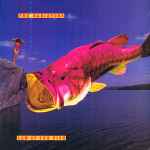
The Radiators, also known as The New Orleans Radiators, are an American rock band from New Orleans, Louisiana, United States. The band's musical style, which draws from blues, rock, rhythm and blues, funk and soul music, has attracted a dedicated fanbase who the band calls "fish heads". Described by OffBeat magazine as "New Orleans' longest-running and most successful rock band", The Radiators had only limited commercial success, with only a handful of chart appearances, but, as a party band from a party town, their enthusiastic live performances, danceable beats and relentless touring earned the band a dedicated following and the admiration of many of their peers. In a feat of continuity rarely seen in the rock music world, the five-man line up in the year of their breakup (2011) is the same one as when the band formed in 1978. They performed at every New Orleans Jazz & Heritage Festival from their inception until their retirement (1979 - 2011). The Radiators had a repertoire which included over three hundred original songs—many never released on album—and over one thousand covers (or partial covers used as parts of medleys). With the band's approval, over 500 concert recordings have been made available for free (for non-commercial use) on the Internet Archive. On June 10, 2011, at Tipitina's in New Orleans, during the second of their final three concerts, The Radiators were inducted into The Louisiana Music Hall of Fame. The Radiators wore their influences on their sleeves, or, at least, proudly displayed them in concert. While their albums mainly featured songs written by chief songwriter/keyboardist/vocalist Ed "Zeke" Volker and other band members, their concerts typically included a wide variety of music written by other artists. From the local New Orleans scene, The Radiators often featured works by, among others, The Meters, Dr. John, Allen Toussaint, Fats Domino, Earl King, Jelly Roll Morton, and, of course, Professor Longhair, several of whom played with The Radiators at one time or another. The Radiators also covered songs traditionally associated with New Orleans or Mardi Gras, such as "Iko Iko" and "St. James Infirmary Blues." From the world of the blues, The Radiators performed standards by Robert Johnson, Muddy Waters, Jimmy Reed, Lightnin' Hopkins, Howlin' Wolf and more. They also covered early rock and roll and R&B artists such as Elvis Presley, Ray Charles, Chuck Berry and Mose Allison. Other obvious influences were from outside of the music of New Orleans, coming from the popular music of the 1960s and 1970s. Fellow swamp-rockers Creedence Clearwater Revival and J. J. Cale were well represented in The Radiators' repertoire, as are more mainstream acts such as The Beatles, The Rolling Stones, Bob Dylan, Van Morrison, Jimi Hendrix, The Grateful Dead, Eric Clapton, Taj Mahal, The Doors, The Allman Brothers, Marvin Gaye, Smokey Robinson, Sam Cooke, Stevie Wonder, Jesse Winchester, Little Feat (to whom the band are often compared) and Parliament-Funkadelic. Songs by 1980s-era artists such as Talking Heads and Elvis Costello showed up in The Radiators' performances. The Radiators were formed in January 1978 after a jam session in keyboardist Ed Volker's garage. At the time, Volker, Camile Baudoin and Frank Bua, Jr. were in a band called The Rhapsodizers, while Dave Malone and Reggie Scanlan were in a band called Road Apple. Scanlan had also, not long before, been a member of Professor Longhair's touring band. The five musicians felt an immediate rapport. Scanlan later said, "we jammed for five hours straight, then all quit our old bands the next day. On April 6, 2019, Reggie Scanlan recalled how the band came to be "The Radiators." After joining up and playing many shows together, without a formal band name, it was determined that a name was necessary. Scanlan suggested the name. As already-established musicians in New Orleans, the newly formed band was quickly able to find work in the city's bars and clubs, including a weekly Wednesday night show at Luigi's Pizza Parlor on Elysian Fields, which was canceled after Bua brought in a real chainsaw during a performance of their song "Texas Chainsaw Massacre". Their high-energy style of rock-and-roll quickly earned them fans among the locals, especially among the students at Tulane University. Within a couple of years, the band released their first album, Work Done on Premises on their own Croaker label. Fittingly, for a live act like The Radiators, this was a live double album, taped on May 9, 1980 at Tipitina's club in New Orleans, a favorite venue the Radiators would return to many times in the future. Most of the songs on Work Done on Premises were written by Ed Volker, with one, "Hard Core", credited to the entire band, and another, "Red Dress", a collaboration between Volker and guitarist Dave Malone. The following year, the band released their first studio album, Heat Generation, again on the Croaker label. Like all of the Radiators' studio albums to come, this primarily featured tried-and-tested material from their live shows, rather than new compositions created for the album. All the songs were penned by Volker except the very short title track, which was credited to the whole band. Neither album attracted much national attention, but both helped cement the band's reputation in the city of New Orleans. After this brief venture into album-making, the band turned their focus back to what they did best; performing live. They played marathon-length concerts with an emphasis on funky dance beats mixed with fiery rock licks, and their popularity continued to grow. As students from Tulane graduated and moved on to other cities, they spread the word about The Radiators, and the band began to establish a fan base beyond New Orleans and Louisiana. It was during this era that The Radiators started playing at the M.O.M.'s Ball, a private masquerade and concert held in New Orleans each year before Mardi Gras. Ed Volker's previous band, the Rhapsodizers, had earlier been the featured act at this party, so it was natural for The Radiators to take over. The M.O.M.'s Ball, put on by the renegade Krewe of Mystic Orphans and Misfits, would become an inspiration for other private parties hosted by groups of Radiators fans in other cities. The band's increasing popularity, coupled with winning a battle of the bands sponsored by Epic, attracted the attention of the major labels, and in 1987 the Radiators signed with Epic Records and entered a recording studio for the first time in over half a decade. The result was Law of the Fish, their first actual charting record, which made it up to #139 on the Billboard charts. The album was compared favorably to acts such as Little Feat and The Allman Brothers Band. Their next album on Epic, 1989's Zig-Zaggin' Through Ghostland, was their biggest release ever, making it all the way up to #122 on Billboard, but it also failed to crack the top 100, and when Total Evaporation, their third album with Epic, failed to make the charts at all, the band and the label parted ways. Later, the label would release Party On, a compilation of songs from The Radiators' three Epic albums, and The Best of the Radiators: Songs from the Ancient Furnace, another compilation with songs from the same three albums, plus some previously unreleased material. One critic wrote of this last, "this wasn't the Radiators' best era". Even those who agree, however, would have to admit that it was the era of their greatest mainstream success. While traditional rock and roll success had so-far eluded the Radiators, they had, at least, managed to establish a broad enough fan base that they could make regular national tours. In 1992, they released Snafu 10-31-'91, on their old Croaker label. This was a live album—their first in over a decade—recorded in New Orleans, at a private Halloween party hosted by the Krewe of SNAFU, on October 31, 1991. This self-published album was not distributed widely,
Discografía en vinilo
Ordenada por relevancia (lo más escuchado primero).


En la onda de The Radiators
Otros artistas afines, con vinilo.