Atomsko sklonište
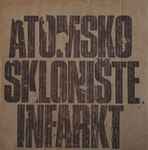
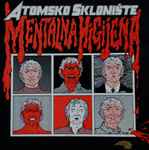
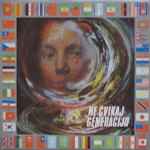
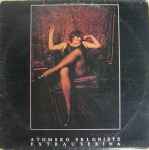
Atomsko Sklonište (transl. Fallout Shelter) is a Croatian and Yugoslav hard rock band, formed in Pula in 1977. Known for their early anti-war concept, as well as their later hit songs, Atomsko Sklonište were one of the most prominent acts of the Yugoslav rock scene. The formation of the band was initiated by Boško Obradović [hr], a poet who wanted a musical band to perform his cataclysmically imagined anti-war verses as lyrics to hard rock songs. The fusion gained the band immediate attention of the Yugoslav public and media. Their first two studio albums, Ne cvikaj generacijo and Infarkt, both released in 1978, brought them nationwide popularity, although Obradović's lyrics were often described by Yugoslav music critics as unrefined. The group ended their cooperation with Obradović after the release of their fourth studio album Extrauterina, released in 1981, with the group's bass guitarist Bruno Langer taking over the role of the band's leader and principal songwriter. Simultaneously with their career in Yugoslavia, the band recorded the English language studio album Space Generation in their attempts to break into foreign market under the name Atomic Shelter. After the death of the band's original vocalist Sergio Blažić in 1987, Langer and the guitarist Dragan Gužvan recorded the band's second English language album, entitled This Spaceship, with a group of American musicians. After Gužvan's departure, Langer remained the only original member of the group, and would be the band's only mainstay member in the following years. After the release of the band's latest studio album Terra Mystica in 1995, Atomsko Sklonište devoted themselves to live performances, releasing several live albums since. Although they do not enjoy large mainstream popularity as in the late 1970s and the first half of the 1980s, the group maintains a loyal fan base in Croatia and other former Yugoslav republics. The band's prehistory can be tracked to 1968, when a play entitled Atomsko sklonište premiered in Istrian National Theater in Pula. The play was directed by poet Boško Obradović and featured a selection of anti-war poetry from across the world, including two of Obradović's poems: "Kuga u Danangu" ("Plague in Danang"), directed against Vietnam War, and "Vaclavske namjesti" ("Wenceslas Square"), against Warsaw Pact invasion of Czechoslovakia. During the following years, Obradović developed an idea of a rock band performing songs with his lyrics. In 1977, in front of the kafana Jadran in Pula, which was a gathering place for local musicians, he offered his lyrics to experienced local musicians and soon reached an agreement with a group of them. The first lineup of the band featured Sergio Blažić "Đoser" (vocals), Dragan Gužvan (guitar), Bruno Langer (bass guitar), Eduard Kancelar (keyboards), Saša Dadić (drums), and Rudolf Grum (backing vocals). As a teenager, Langer competed as a middleweight boxer, before deciding to dedicate himself to music and becoming the bass guitarist for the Pula band Beat Stones in 1964. After Beat Stones, he performed in the bands Fantomi (The Phantoms) and Logaritmi (The Logarithms). At the beginning of the 1970s, Langer, Blažić (at the time playing the drums), Gužvan, Dadić and vocalist Branko Umković formed the cover band Hush. In 1974, Langer moved to the Koper-based band Boomerang, where he was soon joined by Blažić, the two performing with the group until the autumn of 1976. Atomsko Sklonište was officially formed on 26 February 1977. The band attracted the attention of the public with their performance at the seventh edition of BOOM Festival, held in December 1977 in Novi Sad. On 11 May 1978, they performed, alongside Galija, Generacija 5, Rani Mraz, Laboratorija Zvuka, Igra Staklenih Perli, Tako and other acts, at Youth Festival held at Subotica Sports Hall, presenting songs to be released on their first studio album. The band's debut album, entitled Ne cvikaj generacijo (Don't Be Afraid, My Generation), was released in 1978 through ZKP RTLJ record label. It featured hard rock sound combined with Obradović's anti-war and cataclysmic lyrics, heavily inspired by hippie movement, which would lead part of Yugoslav music critics to describe the band's image and song themes as outdated. The opening track was Obradović's recitation of his poem "Od rata do rata" ("From War to War"). The album brought the hits "Pomorac sam, majko" ("I'm a Mariner, Mother"), "Kinematograf našeg detinjstva" ("Cinematograph of Our Childhood"), "Ne cvikaj, generacijo" and "Saznao sam dijagnozu" ("They Told Me the Diagnosis"), the latter featuring lyrics written by Blažić. The band gained additional attention of the public by stating that they perform punk (although they later admitted that at that point they had no idea what punk sounds like), with torn clothes and effective photographs made by photographer Tone Stojko from Maribor. The band would later record the song "Zaspao si u mojoj kosi" ("You Fell Asleep in My Hair") with Stojko's wife Neca Falk. Ne cvikaj generacijo was the band's only album recorded with dwarfism-suffering backing vocalist Rudolf Grum. After the recording of the album, he got a job in the Uljanik shipbuilding company and retired from performing. The band's second album, entitled Infarkt (Heart Attack), was released during the same year. The release featured a book of photographs by Stojko. It brought new hits for the band, "Pakleni vozači" ("Hell Riders"), "Bez kaputa" ("Without a Coat") and "Djevojka br. 8" ("The Girl No.8"). As the band's previous album, Infarkt also featured Obradović's recitation as the opening track, "Na proplanku čeka cvijet" ("A Flower Is Waiting in the Clearing"). The song "Oni što dolaze za nama" ("The Ones Coming after Us") received attention in the following decades for its visionary lyrics, especially the verse "Sklapaće se prijateljstva putem kućnog kompjutera" ("Friendships will be made via personal computer"). After the album release, Kancelar left the band in order to dedicate himself to his studies, and was replaced by Paul Bilandžić. The band maintained their popularity with their live appearances, which featured unusual scenery, such as barbed wire, and during a concert in Tivoli Hall in Ljubljana three hundred yellow umbrellas were hanged open above the stage, in reference to the band's song "Žuti kišobran" ("Yellow Umbrella"). The band gained a loyal fanbase, although Obradović's lyrics were often criticized in the Yugoslav music press as unconvincing and unrefined. The band recorded their third album U vremenu horoskopa (In the Time of Horoscope) on the Stoja peninsula near Pula, in the Mobile One mobile studio, previously used by AC/DC. The album was produced by John Etchells and Bill Ainsworth and brought the hits "Gazi opet čizma" ("The Boot Is Stamping Again") and "Čedna gradska lica" ("Innocent City Faces"). After the album release, Bilandžić left the band and formed the group Lilihip (Lollipop)—in the following years he would release four albums with the band, Obavezan smjer (Mandatory Direction, 1980), Lutke sad su skupe (The Dolls Are Expensive Nowadays, 1984), Lilihip (1985) and Ja sam dečko naviknut na bol (I'm a Boy Accustomed to Pain, 1996)—and Atomsko Sklonište continued as a quartet. In 1980, the band recorded their first live album Atomska trilogija (Nuclear Trilogy) on a concert held in the garden of the Yugoslav People's Army Hall in Pula. On 31 December 1980 and 1 January 1981 they held two concerts with Riblja Čorba (Fish Stew) in Belgrade's Pionir Hall, the concerts being advertised as Atomska Čorba (Atomic Stew). In 1981 they were, alongside Iron Maiden, Bijelo Dugme and Divlje Jagode, the headliners of the two-day festival Svi marš na ples! (Everybody Dance Now!) held in 1981 at Belgrade Hippodrome. The band released their fourth studio album Extrauterina (Ectopic Pregnancy) in 1981. The album was recorded with Etchells and Ainsworth as the producers in the Super Bear Studio,
Discografía en vinilo
Ordenada por relevancia (lo más escuchado primero).

En la onda de Atomsko sklonište
Otros artistas afines, con vinilo.