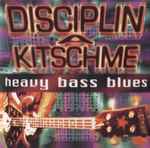
Disciplin A Kitschme
Disciplin A Kitschme, originally known as Disciplina Kičme (Serbian Cyrillic: Дисциплина Кичме, transl. Backbone Discipline), was a Serbian and Yugoslav and, for a period of time, British rock band, formed in Belgrade in 1981. The band was noted for their unique and energetic sound, with bass guitar as the primary instrument and drawing inspiration from punk rock, funk, blues, jazz fusion, Motown, rap, the works of Jimi Hendrix, Yugoslav 1970s progressive and hard rock bands, and in the later phases of their career from jungle and drum and bass. Disciplina Kičme was formed by bass guitarist and vocalist Dušan Kojić "Koja" as one of the two spin-offs of the seminal Yugoslav new wave band Šarlo Akrobata, the other being Ekatarina Velika. Initially, the band featured Kojić on bass and vocals, Srđan Marković "Đile" on bass and Nenad Krasavac on drums. Marković soon left the band, Disciplina Kičme continuing as a duo. Krasavac was later replaced by Srđan "Žika" Todorović, but returned to the band in the mid-1980s, the group performing with both Krasavac and Todorović on drums. The band's debut album, Sviđa mi se da ti ne bude prijatno, released in 1983 (recorded December 1982), presented the band's raw and minimalist sound, with Kojić's dominant bass lines combined with the aggressive sound of Todorović's drums, bringing cult following to the band. Since the band's third album, Svi za mnom!, released in 1986, the band's lineup included a brass section. With Svi za mnom! the group gained the attention of the media, and until the dissolution of Yugoslavia the band enjoyed significant mainstream popularity. With the outbreak of Yugoslav Wars, Kojić moved to London, where he reformed the band under the name Disciplin A Kitschme, featuring female vocalist Gofie Bebe and drummer Peter Warren. From 1995 to 2003, the band was based in London, releasing three studio albums (last one recorded in Belgrade), performing in Great Britain and occasionally touring former Yugoslav republics. In 2003, Kojić returned to Belgrade, where he reformed Disciplin A Kitschme with younger musicians, the last lineup of the band featuring Kojić on bass guitar and vocals, Manja Đorđević on vocals, Rade Vulić on drums and Igor Djeke on harmonica. Đorđević died in April 2019, and three months later, Kojić suffered a stroke from which he only partially recovered, and the band—although never officially announcing their disbandment—has not been active since. Dušan Kojić "Koja" started his musical career in the late 1970s, in the band Limunovo Drvo (Lemon Tree), which would later evolve into new wave band Šarlo Akrobata. Consisting of Milan Mladenović (guitar, vocals), Kojić (bass guitar, vocals) and Ivica Vdović "Vd" (drums, vocals), Šarlo Akrobata was short-lived, participating in the seminal compilation album Paket aranžman (Package Deal) and releasing only one studio album, Bistriji ili tuplji čovek biva kad... (Brighter or Dumber a Man Gets When...). Nevertheless, the group became one of the most notable acts of the Yugoslav new wave scene. During the late 1970s and early 1980s, Kojić also wrote for Džuboks magazine under the pseudonyms Novica Talasić (a pun coming from the Serbian language term novi talas, transl. new wave) and Zeleni Zub (Green Tooth). At the end of 1970s, he hosted discussions on new wave held in Belgrade's Students' Cultural Center and also worked as a DJ in Belgrade's Akademija club. He appeared in Jovan Živanović's 1979 film Radio Vihor zove Anđeliju (Radio Wind Calling Anđelija) and Miloš Radivojević's 1980 film The Promising Boy, writing a part of music for the latter. After Šarlo Akrobata ended their activity in late 1981, Kojić formed the band Disciplina Kičme with former Urbana Gerila member Nenad Krasavac "Kele". The band featured Kojić on vocals and bass guitar and Krasavac on drums. The first lineup also featured another bass guitarist, former Radnička Kontrola and UKT member Srđan Marković "Đile", but after a short period of time, he left the band. The following year, Krasavac went to serve his mandatory stint in the Yugoslav army, and was replaced by former Radnička Kontrola and Centar drummer Srđan "Žika" Todorović. At the beginning of their career, the band occasionally performed with the alternative theatre troupe Kugla glumište (The Ball Theatre) from Zagreb. The band recorded material for their debut album, but due to the non-commercial musical style, the major Yugoslav record labels refused it. Eventually, the band's first album, entitled Sviđa mi se da ti ne bude prijatno (I Like When You Feel Uncomfortable), was released in very small circulation by the independent record label Helidon in early 1983. The album was produced by Kojić with the help of Toni Jurij and Partibrejkers guitarist Nebojša Antonijević "Anton" (signed on the album as Riki Rif). The tracks "Uživaj" ("Enjoy"), "Zgodne kretnje" ("Attractive Movements"), "Mladost ne opravdava besvest" ("Youth Does Not Justify Senselessness") and "Nemoj" ("Do Not") presented the band's minimalist and raw but energetic sound. The album featured the song "Pečati" ("Stamps"), written by Kojić and originally performed by Šarlo Akrobata, but previously never recorded, which dealt with bureaucracy in socialist Yugoslavia. The song featured a part of the Yugoslav national anthem, "Hej Sloveni", as an homage to the Jimi Hendrix cover of "The Star-Spangled Banner". The album cover was designed by Kojić, and the band's future releases would feature his unique visual creations on the covers, inspired by comic book heroes and punk aesthetics. The album was quickly sold out, bringing to the band a cult following. In 1984, Kojić made an appearance in Slobodan Šijan's film Strangler vs. Strangler. After the album release, the band continued performing in clubs of all major Yugoslav cities, and in 1985, they released the Mini LP Ja imam šarene oči (I Have Colorful Eyes) through the label Dokumentarna, recorded during 1983 and 1984, with the track "Novac neće doći" ("Money Will Not Come") as the most notable. Todorović did the drums and Krasavac appeared only on the intro for the track "Sviđa mi se..." ("I Like...") and on "28. jun 1984." ("28 June 1984"), the latter recorded live at Belgrade's Engineering Students' Club on the same date. Kojić produced the Mini LP and for the first time songs featured the trumpet, played by Jugoslav Muškinja. From this release onwards, all of the band releases would be produced by Kojić himself. In 1985, Kojić also debuted as producer on a non-Disciplina Kičme release, producing Partibrejkers debut album Partibrejkers I; during the following years, he would produce albums by Partibrejkers, Boye, S.T.R.A.H., Obojeni Program, Kontrabanda, Električni Orgazam, Sila, Popečitelji and other acts. The band's third studio album, Svi za mnom! (Everybody, Follow Me!), released in 1986 by Helidon, brought some lineup and stylistic changes. The album was recorded with both Krasavac and Todorović on drums and with a brass section, featuring Zoran Erkman "Zerkman" and Dedža on trumpets and Branislav Trivić on saxophone, contributing to jazz influences on the record. Guest appearances featured Električni Orgazam guitarist Branislav Petrović "Banana" (on backing vocals), former Radnička Kontrola guitarist Darko Milojković (on percussion) and the members of the all-girl band Boye (on backing vocals); the members of Boye would continue to work with Disciplina Kičme on their future releases. A cover of the song "Čudna šuma" ("The Strange Forest"), originally recorded in 1973 by progressive/hard rock band YU Grupa, appeared as the opening track on the album. Kojić used violin, in the theme from a Humoresque by Antonín Dvořák on the track "Zašto" ("Why"), and acoustic guitar, on the instrumental version of "Čudna šuma", entitled "Šuma igra" ("The Forest Is Dancing"). The track "Ovo je zvuk" ("This Is The Sound") featured a part of the interview Kojić did for Vrnjačka Banja Radio, and "Ne, ne, ne"
Discografía en vinilo
Ordenada por relevancia (lo más escuchado primero).

En la onda de Disciplin A Kitschme
Otros artistas afines, con vinilo.