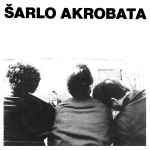
Šarlo Akrobata
Šarlo Akrobata (Serbian Cyrillic: Шарло Акробата, lit. 'Charlot the Acrobat') were a Serbian new wave/post-punk band from Belgrade. Short-lived but extremely influential, in addition to being one of the most important acts of the Yugoslav new wave scene, the three piece left an indelible mark on the entire music scene of former Yugoslavia. Spawning from the progressive/hard rock group Limunovo Drvo (Serbian Cyrillic: Лимуново Дрво, lit. 'Lemon Tree'), founded in 1977 by guitarist and vocalist Milan Mladenović and guitarist Dragomir "Gagi" Mihajlović, after several lineup changes, moved towards new wave music, with the arrival of bassist and vocalist Dušan "Koja" Kojić and drummer Ivan "Vd" Vdović. After performing as an opening act for Pankrti in April 1980, Mihajlović left the band and the remaining three members changed their name to Šarlo Akrobata, after a Yugoslav nickname for Charlie Chaplin's character the Tramp. Subsequently, the trio recorded four tracks which were released on the 1981 compilation album Paket aranžman, now considered to be one of the most influential releases in the history of former Yugoslav rock music. During 1981, the band released their debut album Bistriji ili tuplji čovek biva kad..., after which, owing to irreconcilable differences between the band members, the band ceased to exist. The album received critical recognition and is regarded as one of the most notable albums of former Yugoslav rock music. After the band disbandment, Mladenović with Vdović and Mihajlović formed Katarina II, which changed its name to Ekatarina Velika after the departure of the latter two, and Kojić formed Disciplina Kičme, changing its name to Disciplin A Kitschme in 1995. In 1992, Vdović died of AIDS, followed by Milan Mladenović's death from pancreatic cancer in 1994. In 1978, Milan Mladenović (guitar, vocals) and Gagi Mihajlović (guitar) formed the progressive/hard rock band Limunovo Drvo, with bassist Goran "Maksa" Kovinčić and drummer Dušan "Džindžer" Dejanović.[full citation needed] The lineup did not last long and the band experienced frequent personnel changes, including bassist Mikica Stefanović as well as Kovinčić's and Dejanović's respective returns. Despite never achieving stable lineup, the band still managed to string together a bit of an active presence on Belgrade's underground music scene, performing at the Žarkovo and Železnik guitar festivals, at Novi Beograd's Blok 45, the Belgrade Youth Center, as well as staging two solo concerts at the SKC. During this period, the band also recorded a few demo tracks at the famous JM Sound Studio in Zagreb owned by Janko "Truli" Mlinarić and Petko Kantardijev. Still, Limunovo Drvo never managed to put out an official release although they were reportedly close to recording an album for Suzy Records, only to break apart before that could be realized. Songs performed by Limunovo Drvo include "Da li se sećate?" ("Do you remember?", "Sedmi krug" ("The Seventh Circle", "Oko moje glave" ("All Around My Head"), "Limunovo drvo" ("The Lemon Tree"), "Ne veruj" ("Do Not Believe") and "Gubitak (Nešto u nama)" ("The Loss (Something Within Us)"). At the end of Mladenović's and Mihajlović's creative wits, the two were joined by Dušan "Koja" Kojić (bass, vocals) — who had previously played with a number of underground Belgrade bands in addition to moving in alternative and punk circles gathered around the SKC where he used to conduct public forum debates related to new wave music — as well as Ivan Vdović "VD" (drums, backing vocals), a drummer with a background in jazz music who performed with numerous Belgrade bands including BG5 and Suncokret. Furthermore, Kojić and Mladenović had previously played in a band Izvan Vremena, having their first performance in 1978. The addition of a new rhythm section brought a change in their musical orientations through adopting a new musical direction inspired by the emerging punk rock and new wave scenes. Upon his arrival in Limunovo Drvo, Kojić also brought along his and Milan's mutual friend Nenad "Kele" Krasavac who became the band's unofficial manager. In April 1980, the new Limunovo Drvo lineup opened for Pankrti at Belgrade SKC, performing a set of new and rearranged older songs, after which guitarist Mihajlović decided to leave the band and the remaining members decided to continue working as a trio, changing the name to Šarlo Akrobata. In June 1980, the band performed at a series of multiple acts free concerts, mostly featuring the newly formed new wave and punk bands, organized at the Belgrade SKC under the supervision of Nebojša Pajkić, after which, Šarlo Akrobata (labeled as Akrobata Šarlo), along with Električni Orgazam and Idoli were recognized by the Džuboks critic Momčilo Rajin as "one of the most exciting new acts".". Rajin stated that Vdović's drum playing style was "reminiscent of Stewart Copeland of The Police", Kojić bass playing as "a true example of simplicity and bareness to the essence of playing his instrument", and Mladenović as "matured into a true band leader". Soon after, the three bands were labeled by the music critics as the core of the emerging scene, consisting of the newly formed Belgrade punk rock and new wave bands centered on SKC, which they called the "Belgrade Alternative Scene" or "BAS". During November, with the performance of the song "Ona se budi" the band competed at Subotica Festival Omladina, the event where the representatives of both the Belgrade and Zagreb new wave scene had met for the first time, claiming second jury prize behind Film. By the Subotica performance, during autumn 1980, the band had already made their first recordings, the songs "Ona se budi" ("She is Rousing"), "Oko moje glave" ("All Around My Head"), "Niko kao ja" ("No One Like Me") and "Mali čovek" ("Little Man") at the Belgrade Druga Maca studio, owned by the former Indexi keyboard player Enco Lesić, who had also made recordings of the other two "BAS" bands, Idoli and Električni Orgazam. Eventually, in coordination with Lesić and Idoli manager Dragan Papić, the Jugoton executive editor Siniša Škarica came up with an idea of releasing the recordings of three bands in a compilation album, rather than releasing separate maxi singles. During the recording sessions of the three bands, the Druga Maca studio was visited by the young PGP RTB television directors, Boris Miljković and Branimir Dimitrijević "Tucko", who were at the time working together on the Rokenroler (Rockenroller) television show, and in the following couple of weeks, they recorded several music videos for the songs of the three bands, all featuring the same style: a minimalist barren white chroma key scenery surrounding the band members. The recorded music videos, including the video for the song "Niko kao ja", appeared in the third episode of the Rokenroler show, originally broadcast on New Year's Eve 1981 on R, being the debut television appearance of the three Belgrade new wave acts, as well as the first presentation of the Belgrade new wave bands to a nationwide audience outside. The show became the most notable of all the Rokenroler episodes as well as the most notable work of the two directors. The show also marked one of the first serious attempts of introducing the mainstream music video in Yugoslav media. Following the show's broadcast, in January 1981, The Džuboks magazine journalist Nebojša Mirčetović, in the text "The Ultimate Breakup with the Apathetic Seventies", in the context of the unreleased material promoted by the music videos, stated that the show marked the "beginning of a rainbow at the end of which we would find a jar full of beautiful music waiting for the record labels to release it". During following month, in the same magazine, Ivica Vdović was polled by the readers as the 10th best drummer, and Dušan Kojić as the 9th best bassist of the year 1980. Despite the intended release during the late-1980, due to the lack of vinyl material, the omnibus
Discografía en vinilo
Ordenada por relevancia (lo más escuchado primero).

En la onda de Šarlo Akrobata
Otros artistas afines, con vinilo.