Jade Warrior
Jade Warrior were a British progressive rock band formed in 1970, originally evolving out of a band named July. The founder members were Tony Duhig (guitar) (born Anthony Christopher Duhig, 18 September 1941, Acton, London; died 11 November 1990, Somerset, England), Jon Field (flute, percussion, keyboards) (born John Frederick Field, 5 July 1940, Harrow, Middlesex) and Glyn Havard (vocals, bass) (born 15 February 1947, Nantyglo, Wales). David Duhig, the younger brother of Tony Duhig, played on several of Jade Warrior's albums and in every live gig Jade Warrior ever performed - apart from the reunion concert of 2008. He died on 1 December 2021. Jon Field and Tony Duhig met in the early 1960s when working in a factory (both driving forklifts). Soon they found common musical interests (jazz, African and Japanese music), started playing instruments (Jon a set of congas, Tony a guitar, which he tuned unconventionally to open C), bought a four-track tape recorder each and started experimenting with multi-layered overdubs. According to Field, the process was not unlike "...trying to build a cathedral with the sort of things you'd find in your back yard," but still, as it turned out, formed a blueprint for Jade Warrior's music throughout their career. In 1965, the two formed a rhythm & blues outfit called Second Thoughts with Patrick Lyons on vocals, which released one four-song EP. Meanwhile, in a parallel line of development, Tom Newman (later the engineer for Mike Oldfield's Tubular Bells), Alan James, Pete Cook and Chris Jackson had formed the Tomcats. In 1965, both bands split up, Lyons joining Alex Spyropoulos in a (then) duo Nirvana, which released five LPs (with Jade Warrior members guesting on 1972's Local Anaesthetic). Reformed with a new line-up – Newman, James, Jackson, Jon Field and Tony Duhig – Tomcats spent 1965–1966 in Spain where they released four EPs to local acclaim (later Acme Records released them as a single LP, having included The Second Thoughts EP). In 1966, Tomcats returned to England, changed their name to July, and released their one only (eponymous) album, a psychedelic pop-rock collection. (Later it was re-issued as Second of July with some alternate versions and outtakes, and then as Dandelion Seeds with yet a different track list). July disbanded in 1968, and Tony Duhig got a gig as guitarist in Unit 4 + 2, who, some years earlier had a UK number one with "Concrete and Clay". Already in the line-up were Glyn Havard, bass, and Allan Price, drums. The outfit was basically a pick-up band designed to tour the Northern British clubs and capitalise on the success of the aforementioned hit record. A month or two later, Duhig, Havard and Price travelled to Persia (later to become Iran) and worked in various nightclubs for three months, only to return to England practically destitute after a series of management mishaps. Before this, however, Duhig had introduced Havard to Jon Field, suggesting that he make a vocal contribution to Duhig and Field's own musical project. When Havard and Duhig returned from Persia, they and Field set about recording a series of demos that laid the foundation for the initial Jade Warrior albums. In the words of David Duhig, Tony's brother (and later a band member), "Tony met Glyn Havard and Allan Price, and they formed a band, which nobody really mentions because they went off to Persia to do some sort of money gig. I suppose the most notable thing about that is that Tony caught some sort of disease he called 'Persian Leg,' (Phlebitis!) which plagued him from there on in. That was around the end of '69." Field, Duhig, and Havard stuck together, and soon named themselves Jade Warrior after a certain dance drama ('The Phoenix and the Dove') Tony and Jon had composed for a London drama school. According to Havard, though, – We all agreed that whatever we called ourselves would need to express the dualistic nature of our music – the 'soft/hard' quality if you like. Working along those lines, we sat down in Jon's living room and drew up two lists, one comprising words we identified with the quieter, meditative side of the band, and the other expressing the heavier, more menacing aspect. The hard list featured a more macho selection such as 'Spear' and, of course, 'Warrior'. Jon's first wife, Jenny, had made the suggestion that we might select our name from a choice of verbs rather than nouns, but after some deliberation, we ditched this idea as being too outre. In the end we decided on 'Jade', from the soft list, and 'Warrior' from the hard one. I guess had it gone differently, we might just as easily have been called something like 'Lotus Spear'. Later a Red Hot Records press release stated that, "Jade Warrior was a Japanese term for a samurai warrior who was also a poet and scholar", but Havard expressed doubts as for the literal truth of this interpretation. In 1970, Jade Warrior signed a deal with Vertigo (their old band-mate Patrick Lyons, now Patrick Campbell-Lyons, had become a producer and a scout for this label), according to Havard, 'in a package' with Assagai, an Afro-rock band, with whom they shared the same management. Havard said, "They didn't want us, but they wanted Assagai because Afro-Rock, courtesy of Osibisa, was perceived to be the next best thing. Our production company, Mother Mistro, basically told them that if they wanted Assagai, then they'd have to take Jade Warrior as well". This (according to an official biography), "left Jade Warrior a contract with a record company, which had little actual interest in the band, and very little willingness to support or promote them." Their debut album, Jade Warrior, released in 1971, established their trademark sound of soft/loud contrasts, with Field's multi-layered flutes and percussion vying with Duhig's cutting guitar, and which incidentally outsold Assagai's offering (which featured a Jade Warrior track called "Telephone Girl"). This was followed in the same year by Released with appearances from Allan Price on drums, and guest saxophonist Dave Conners. Here Jade Warrior sharpened their rock edge ("Three Horned Dragon King", "Minnamato's Dream", the fifteen-minute rock jam "Barazinbar"), their quieter side represented by pieces like "Yellow Eyes" and "Bride of Summer". According to critic Peter Thelen, "where the first album featured an array of sonic possibilities, this is an album that highlighted the contrasts within that sound". "If Jade Warrior's second album has any overwhelming flaw, it is that its predecessor traveled so far off the conventional beaten tracks of early-'70s prog that anything less than absolute reinvention could only be regarded as a rerun of past glories", AllMusic argued years later. "…There is little here that Jade Warrior itself did not predict, but the unerring delivery of those predictions is a marvel in itself", critic Dave Thompson concluded. In 1972, Last Autumn's Dream followed, both Price and David Duhig taking part in the procedures. The album, taking a step back to revisit "the wall-of-all-colors approach of their debut with a more surefooted and substantive instrumental approach," featured mysterious-sounding, introspective instrumental tunes ("Dark River", "Obedience", "Borne on the Solar Wind") juxtaposed with melodic pieces like "A Winter's Tale" and "May Queen" and harsh rockers ("Snake", "The Demon Trucker", "Joanne"). "One might sense in the overview that the band lost their way on the second album, and tried to put themselves back on track with the third", Peter Thelen argued. Nevertheless, as Dave Thompson put it, "For anybody just discovering Jade Warrior, Last Autumn's Dream is certainly the last of its truly essential albums". Taken as a whole, the first three albums saw the band creating and perfecting an innovative style, which (according to Dave Platt and Charles Wilkinson's biography) "had its base in rock music… with a Jethro Tull flavour, and significant admixtures of what we'd
Discografía en vinilo
Ordenada por relevancia (lo más escuchado primero).


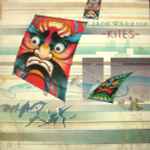


En la onda de Jade Warrior
Otros artistas afines, con vinilo.