The Jazz Butcher (Pat Fish group)
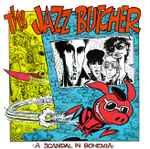
The Jazz Butcher was the alias of British singer/songwriter Pat Fish (20 December 1957 – 5 October 2021). It has also been the name of the band, though adjuncts were frequently used to distinguish between Fish's persona and band itself (The Jazz Butcher Conspiracy or JBC, the Jazz Butcher Group, the Jazz Butcher and his Sikkorskis from Hell, the Jazz Butcher Quartet and the Jazz Butcher Quintet). The line-up of the band changed frequently, with Pat Fish being the only constant. Notable members included band co-founder Max Eider (Peter Millson), David J. (Haskins), Owen P. Jones, Rolo McGinty, Alice Thompson, Paul Mulreany, Alex Green, Richard Formby, Kizzy O'Callaghan, Curtis E. Johnson and Peter Crouch. The band were formed in Oxford in 1982 by Pat Fish and Max Eider. Having met at university, Fish and Eider had previously been in bands the Institution, along with Rolo McGinty (later of The Woodentops), and The Sonic Tonix (later The Tonix) with John Silver. Upon the breakup of The Tonix, Fish moved to Northampton, a place he described as "seething with creativity, backed by a supportive local press". He began writing songs, and the first advertised Jazz Butcher performance took place at Merton College in Oxford, on 20 February 1982. Both the name and the gig itself were "perceived as a one-off laugh". Shortly thereafter, Fish reconnected with Eider, only to find that Eider’s playing style had changed to a "rich, clean, country soul sound with just a touch of Wes Montgomery", which complemented the kinds of songs Fish had been writing at that time. Around this time, Fish began recording songs using an Amstrad 7090 audio cassette recorder. The purpose of the device was to dub the contents of one cassette to another; however, Fish discovered that the microphone channel remained open, so that he could add multiple parts with each pass. These primitive "multi-track" recordings were enough to interest David Barker, who invited Fish to record an album for his newly founded Glass Records label. In August / September 1982, Fish and several friends and collaborators began recording the first Jazz Butcher album at Starforce Studio in Clapham. This was co-produced by Fish and Barker (under the pseudonym Lionel Brando); contributors included Eider, McGinty, Silver, Alice Thompson, Ian Sturgess, Louis Leroi and engineer Martin K. Daley. On 1 November 1982, Fish was approached to open for fellow Northampton band Bauhaus. The whimsical nature of the Jazz Butcher band did not impress the headliners' goth followers. "The massed audience listened politely, if disconcertingly quietly", reported the Northampton Mercury and Herald. Fish was "pleased to survive the experience". Fish had assumed that Bauhaus drummer Kevin Haskins had arranged their spot on the bill, as Kevin and Fish were friends, only to find that it was Haskins' brother David J. who had taken an interest in The Jazz Butcher. In Bath of Bacon was released in March 1983. The album, according to Fish, was "the sound of a few mates failing to take seriously the fact they they've got an LP to make". A review in The Scotsman called Bath "quite good fun, if you don't mind being used in someone else's experiment." In early 1984, Fish and Thompson recorded a number of cover songs, mostly by Lou Reed, John Cale and Kevin Ayers in what would be known as the “Cak Bag” sessions. Many of these appeared on Glass Record compilations and fan magazines throughout the year. The summer of 1983 found Fish and Eider back in the studio with McGinty and Thompson (who had now formed The Woodentops), joined by Kevin Haskins on drums. The result was the single "Southern Mark Smith". The single gained some national recognition, having been played on “hit-maker” John Peel’s radio show. Glass also released two singles in 1984: "Marnie" and "Roadrunner" (Jonathan Richman). The B-side for "Roadrunner" featured the Max Eider song "D.R.I.N.K.", which became a fan favorite. David J.'s friendship with Fish and continued interest in the Jazz Butcher group prompted discussions of J. producing the Butcher's next LP. However, the dissolution of Bauhaus corresponded with an opening in the bassist’s role. The line-up of Fish, Eider, Jones and David J. would be regarded as the first “official” line-up, and remain so for much of 1984 into 1985. Produced by John A. Rivers, A Scandal in Bohemia was released in November 1984. With the help of Rivers and J., the band improved upon their studio technique. Eider’s guitar style had also strengthened since A Bath of Bacon, becoming less "ornamental" and more of an “essential element” to the Jazz Butcher’s sound of that time. The album shares its title with the first Sherlock Holmes short story, and features a memorable cover by comic artist Hunt Emerson. According to Fish, "We were young(ish) and cocky and I think it shows….Still, it was cheap and cheerful, and it helped us to meet an awful lot of people". The record ended up selling over 20,000 copies. The cohesion of a "proper" band, David J's Bauhaus notoriety, and the success of Scandal led to a more ambitious touring schedule. 1985 was also a prolific time for the band in the studio, releasing the singles "Real Men" and "The Human Jungle," as well as the live album Hamburg (credited to The Jazz Butcher and His Sikkorskis from Hell). Glass released The Gift of Music, which compiled many of the band's singles and B-sides, including a re-recording of "Partytime", which was a staple of their live performances. The Jazz Butcher also released Sex and Travel, again recorded with John A. Rivers as producer. "One day's rehearsal in Kevin Haskin's living room, five days' recording and two days' mixing was all it took for us to make my favourite of the Glass records,” said Fish in 1993. In February 1985, David J left the band to form Love and Rockets, and Graham "Felix" Fudger was brought in as his replacement as the band continued with a tour schedule that was three times the year prior: 110 shows in 1985, as compared to 36 shows in 1984. In 1986, the band released singles for "Hard", "Conspiracy", "Angels", and the fan club–only release "Christmas with the Pygmies", as well as appearing on compilation albums, such as 50,000 Glass Fans Can't Be Wrong (which also features solo songs by David J. and Max Eider). Bloody Nonsense, a compilation of B-sides, was released in America and Canada, finding its way onto the college charts. In May 1986, The Jazz Butcher returned to the studio with John A. Rivers to record their next LP, Distressed Gentlefolk. The extensive touring had honed the band’s skills, but according to Fish, they were also exhausted and went into the studio with "a scanty armful of tunes", many ideas having already been released as singles. Rivers had embraced the digital revolution, which was reflected in the production. Fish and Eider had both been focused on their song writing, but their styles had begun to drift apart, with Fish leaning toward a heavier sound, and Eider maintaining a quieter, more jazz-influenced style. Touring continued, including America and Canada for the first time in 1986. The popularity of the band was growing, but the effort was taking its toll. Fudger was replaced on bass by Richard Lohan, and Alex Green joined the band on saxophone. On 22 November 1986, after a show in Zurich, Switzerland, personal tensions, alcohol and exhaustion boiled over into a physical fight between Fish and Eider, resulting in the lead guitarist quitting the band. The tour continued without the lead guitarist and concluded on Fish's birthday, 20 December. Shortly thereafter, Jones tendered his resignation. Soon afterwards, Fish's contract with Glass Records expired but not before the release of Big Questions - The Gift of Music Volume 2, another compilation of singles and B-sides. The success of Bloody Nonsense and Distressed Gentlefolk, especially in America, led Eider to sign as a solo artist to the Jazz Butcher’s US distributor, Big Time
Discografía en vinilo
Ordenada por relevancia (lo más escuchado primero).




En la onda de The Jazz Butcher
Otros artistas afines, con vinilo.