Climax Blues Band
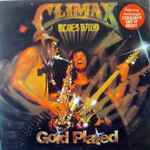
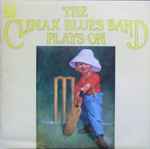
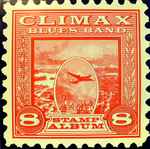
Climax Blues Band (originally known as The Climax Chicago Blues Band) are a British blues rock and pop band that has released 22 albums. "Couldn't Get It Right" reached No. 10 on the UK Singles Chart and No. 3 on the Billboard Hot 100 in 1977. "I Love You" peaked on the Billboard chart at No. 12 in 1981. The band were formed in Stafford, Staffordshire, England, in 1968 by vocalist, saxophonist, guitarist and harmonica player Colin Cooper (1939–2008), guitarist, bassist and vocalist Pete Haycock (1951–2013), guitarist Derek Holt (b. 1949), bassist and keyboardist Richard Jones (b. 1949), drummer George Newsome (b. 1947) and keyboardist Arthur Wood (1929–2005). Holt tells of their formation: "When I left school, I went to work in a local grinding wheel factory as a laboratory assistant and attending college for a degree in Chemistry. Colin Cooper also worked there as a metallurgist, so that's how we met. He had already discovered a young Peter Haycock and had wanted to put a blues band together. He was already gigging with a jazz band on clarinet. We started doing local gigs with local drummer George Newsome and a keyboard player named Arthur Wood, who at the time was a school teacher. Our bass player then was Richard Jones, who also knew Pete from grammar school. I was rhythm guitarist. While playing local gigs we were "discovered" by a scout for the new EMI label Parlophone, who was on the look out for a young blues/rock outfit for their label. We signed up for two albums with them, though we still had day jobs, so had to take time off work to go and record in London. Our first album was recorded over two days in the infamous Abbey Road Studios in 1968. We were in Studio 1, The Beatles were in Studio 2 and Pink Floyd in Studio 3! I was just 19 years of age. Their first two albums, Climax Chicago Blues Band (February 1969) and Plays On (October 1969), were released on Parlophone and were the first official productions by Chris Thomas, who had worked with the Beatles and would go on to produce Roxy Music, Elton John and many others. Jones left the group in 1969 and Holt began playing bass. EMI switched the band over to their Harvest Records subsidiary in 1970 and their subsequent albums, A Lot of Bottle (December 1970) and Tightly Knit (October 1971), had a more rock-oriented feel. Keyboardist Anton Farmer (a.k.a. Anton Ackerbauer) also played with the band from 1969 to 1970, appearing on their third album, A Lot of Bottle, and playing on live dates with the group, while their other keyboard player, Arthur Wood, restricted himself to studio sessions only. Wood also eventually left, in late 1971, to take a job with the BBC. Drummer John Cuffley replaced George Newsome in the summer of 1972, after the latter decided to leave when his wife was expecting their first child. In 1971 the band had toyed with the idea of renaming to Climax Chicago, but in 1972 they opted for the shortened moniker of Climax Blues Band to avoid confusion with the group Chicago. For Rich Man (November 1972; produced by American Richard Gottehrer and their very first to chart in the lower reaches of the US charts) in 1972 the band had settled into a permanent grouping, which remained stable for a decade, until 1982, comprising Colin Cooper (saxes, harmonica, clarinet, rhythm guitar and vocals), Peter Haycock (guitars, bass and vocals), Derek Holt (bass, keyboards and vocals) and John Cuffley (drums, percussion). During the autumn of 1972, a chance meeting with up and coming mover and shaker Miles Copeland III led to the group hiring him to look after them when their original manager, Pete Riley, resigned. Copeland was instrumental in bringing them over to tour the US for the first of many times in May 1973.[unreliable source?] Also in 1972, the group signed to Sire Records (who had already been releasing their records in the US since their second LP in 1969), distributed by Polydor, and albums issued in the 1970s saw them moving away from the blues somewhat to also incorporate funk and album-oriented rock (AOR) influences. Their 70s albums include: FM/Live (October 1973), a double set recorded at a 1 July 1973, concert at the Academy of Music in New York, and the studio LPs Sense of Direction (May 1974), Stamp Album (August 1975) and Gold Plated (October 1976), featuring the 1977 hit single "Couldn't Get It Right". The latter two albums were handled through their manager Miles Copeland's BTM label in the UK. But Copeland and the band would sever ties by 1977 and the group's label Sire Records became a subsidiary of Warner Bros. that same year. Copeland then sued the band but both parties quickly settled out of court for £100,000. In the 1970s, the band's concerts in the US were attended by up to 20,000 people. A previously unknown recording of a live performance was later released as Climax Blues Band/World Tour 1976 by the Major League Productions (MLP) record label. Original member Richard Jones returned in early 1975 after finishing college and played on Stamp Album. He handled keyboards, guitar and switched with Holt on bass. But he left again by 1977. In May 1977 keyboardist Peter Filleul (who had met the band the previous year while playing with an outfit called East of Eden) joined just before the group set off on a US tour. And the band released the album Shine On in April 1978. And after recording Real to Reel (May 1979) in Montserrat, the first band to use George Martin's AIR studios there, the band (spurred on by the record company, who were now looking for hit singles) began moving towards more of a pop-rock sound on their next album, Flying the Flag (September 1980), and its first single "Gotta Have More Love" dented the US charts at No. 47. By now, the band were appearing directly on the Warner Bros. label after it had completely absorbed Sire Records. Holt tells of the album's genesis: "This was at the time when we had a six album deal with Warner Brothers. Everyone was writing songs to try and get theirs on. I had a little studio set up. When I say little, I mean one corner of a bedroom with a Fender Rhodes electric piano, a 4-track recorder, a very small drum kit, a few guitars and one microphone. I remember one night just going in there, I sat down at the piano, set the recorder and just started playing the intro and chords to "I Love You". I wrote the whole structure of the song in a couple of takes including the key change to the solo which I thought was quite clever how it came back to the bridge. I then played a rough feel on my very basic drum kit. Next I added the guitar solo which just seemed naturally what would fit. I played it by bending the strings, it wasn't a slide guitar. Then I put the bass on, sat down and out poured the lyrics, from nowhere. I then sang it and did all the harmonies myself. But the irony of "I Love You" is that I played it to the band and they didn't like it. I thought it was the best and most complete song I'd ever written. We had our producer John Ryan come to England from L.A. to run through the tracks for our next album. He was sent to pre-produce our songs and asked us if anyone had any more songs. I said, 'I have this one but the band doesn't like it.' I played my cassette recording for him and he loved it, even said he thought it was a hit. We arrived in L.A. to record the album at Sound City Studios. When it came to "I Love You", our producer got Nicky Hopkins to play the grand piano. So it was me at the Fender Rhodes piano, Nicky by my side at the grand and John Cuffley on drums. The three of us laid down the basic track. I then put on the bass, sang it and did all the harmonies, Pete Haycock played my guitar solo with his slide and Colin Cooper wasn't even on the track. Then the producer decided to get a string section on the track, which was the icing on the cake. Warner Brothers came to the album launch at the studio for the execs to have a listen. They all raved about "I Love You". They got behind it and it became a
Discografía en vinilo
Ordenada por relevancia (lo más escuchado primero).








En la onda de Climax Blues Band
Otros artistas afines, con vinilo.