Goanna
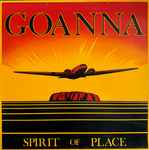
Goanna are an Australian rock band which formed in 1977 in Geelong as The Goanna Band with mainstay Shane Howard as singer-songwriter and guitarist. The group integrated social protest with popular music and reached the Top 20 on the Australian Kent Music Report Singles Chart with "Solid Rock" (1982) and "Let the Franklin Flow" (released under the name Gordon Franklin & the Wilderness Ensemble in 1983). Their debut album, Spirit of Place, peaked at No. 2 on the related albums chart. They disbanded in 1987 and briefly reformed in 1998. Goanna was formed as an Australian folk-rock group by singer-songwriter and guitarist Shane Howard in Geelong in 1977. Alongside Howard, the original line-up was Mike Biscan (guitar), Richard Griffiths (bass guitar) and Rod Hoe (drums). During their early years the line-up changed numerous times, with only Howard as the mainstay. In 1979, the group consisted of Howard, keyboardist and vocalist Rose Bygrave, lead guitarist and vocalist Warwick Harwood, bass guitarist Carl Smith, drummer Gary Crothall and vocalist and harmonica player Ian Morrison. They recorded an independent 12" EP, The Goanna Band. The four-track EP was produced by Broderick Smith (ex-The Dingoes) and released on EMI Music. By 1981 the band were now Shane Howard, Rose Bygrave, Warrick Harwood, Peter Coughlan on bass guitar, Marcia Howard (vocalist and synthesisers), Graham Davidge (electric guitar) and Robbie Ross on drums. They had shortened the name to Goanna, and with their increasing popularity they attracted the interest of major record companies. They supported James Taylor on the Australian leg of his 1981 tour. In February 1982, they signed to WEA Australia, and Shane Howard established a music publishing company, Uluru Music, headed by Helene Jedwab. The band released its single "Solid Rock" in September. According to Howard, the inspiration came on a ten-day camping trip to Uluru during 1980, where he had a "spiritual awakening" which brought "the fire in the belly" to the surface over injustices to Australia's Indigenous peoples. I realised that this country that I grew up in, that I thought was my country, wasn't. I had to reassess my whole relationship with the land and the landscape, and understand that we had come from somewhere else, and we had dis-empowered a whole race of people when we arrived. — Shane Howard WEA were at first reluctant to issue it as a single, and even Howard initially had a few doubts about whether commercial radio was ready for such a weighty political subject; however, Howard insisted on its release to make a statement on the British invasion of Australia. "Solid Rock" peaked at No. #2 on the Australian Kent Music Report Singles Chart, remaining in the Top 50 for 26 weeks. It also reached No. #31 on the US Billboard Mainstream Rock Chart and appeared on the Billboard Hot 100. In November 2013, "Solid Rock" was voted No. 20 in the Triple M Melbourne/Herald Sun Australian Top-40 chart of the last 40 years. Goanna released their debut album, Spirit of Place, in December. It was produced by Trevor Lucas, a member of UK folk-rock group Fairport Convention, who had returned to Australia in 1979. Spirit of Place reached No. 2 on the Kent Music Report Albums Chart, within two weeks of its release and remained there for 10 weeks, alternating with Midnight Oil's 10, 9, 8, 7, 6, 5, 4, 3, 2, 1 for the No. 1 & No. 2 spot. It also reached No. 179 on the US Billboard 200. For the album, Goanna were Rose Bygrave on keyboards, Peter Coughlan on bass guitar, Graham Davidge (ex-Little River Band) on guitar, Warrick Harwood, Shane Howard, his sister Marcia Howard on backing vocals, Mick O'Connor on keyboards and Robbie Ross on drums. An ever-changing line-up saw Harwood reluctantly leave the band. The follow-up single "Razors Edge" released in March 1983 reached No. 36 on the national charts. On 13 February 1983, Gordon Franklin & the Wilderness Ensemble performed "Let the Franklin Flow" at the Stop The Drop nuclear disarmament concert at the Sidney Myer Music Bowl. The ensemble included members of Goanna and fellow folk rock group Redgum and Lucas. In April, "Let the Franklin Flow" was issued as a single with Lucas and Jeff Campbell as producer. Howard, the song's writer, was credited as F. River. The single reached No. 12 nationally. Proceeds supported the Tasmanian Wilderness Society's campaign against the proposed damming of Tasmania's Gordon and Franklin rivers for a hydroelectricity project. Howard physically supported the protests by joining the picket lines. The B-side of the single, "Franklin River – World Heritage", was written and recorded by the society's director, Bob Brown, who later became a senator and the leader of Australian Greens. On 19 April 1983, Goanna won three Countdown Music and Video Awards for their work in 1982: Spirit of Place won Best Debut Album, "Solid Rock" won Best Debut Single and the band itself won the Best New Talent (Johnny O'Keefe Memorial Award). "Solid Rock" is the first charting rock record to feature extensive use of the didgeridoo, one of the world's oldest wood instruments, played by Billy Inda (No Fixed Address) and Bobby Djabanunga. By late 1983, Goanna included new guitarists Ross Hannaford (Daddy Cool, Mighty Kong) and Russell Smith (Company Caine, Mighty Kong) with Robert Ross replaced by Geoff Bridgford (Bee Gees),(Jim Keays Band) on drums. In October they released a third single, "That Day (Is Coming Sooner)", which peaked at No. 67. Surprisingly WEA dropped the band from the label. Howard then travelled around the world looking for other record companies to pick them up. During this time he visited Ireland, the home of his ancestors and experienced another cultural awakening. The whole experience of travelling through aboriginal Australia and awakening to that cultural reality made me ask the question, okay where do I fit here? In this landscape, in Australia, I'm not aboriginal, I'm not of the land, I'm not of this country – so I came from somewhere else. It made me want to look at where my own people had come from. — Shane Howard The band were just on the verge of signing a worldwide deal with CBS, when Warners in Australia contacted them and re-signed the band, who then spent much of 1984 recording a new album at John French's Fast Forward studio in Melbourne, the Music Farm Studio in Byron Bay, and also in Los Angeles at George Massenburg's The Complex studio, with Little Feat's keyboard player Billy Payne. The band's second album, Oceania, produced by Billy Payne, was released in April 1985 and reached No. 29. The first single from this album, "Common Ground", had been released in December 1984 and peaked at No. 42. The second single, "Dangerous Dancing", released in May 1985 only reached No. 91. Throughout 1985, the band toured relentlessly in support of the album, with a constantly revolving line-up of members, including at one stage ex-Little River Band drummer Derek Pellicci. The band then released a non-album single, "Song for Africa", dedicated to famine relief, in September but it failed to chart. WEA dropped Goanna from their roster again.[citation needed] On 13 July 1985, Goanna performed three songs for the Oz for Africa concert (part of the global Live Aid program) – "Common Ground", "Song for Africa", "Solid Rock". It was broadcast in Australia (on both Seven Network and Nine Network) and on MTV in the US. In September, still promoting Oceania and the newly released "Song for Africa", Howard went "walkabout", and the band was forced to cancel $20,000 worth of bookings. Eventually a disillusioned Howard had travelled to South Australia to perform with Aboriginal musician and didgeridoo player Bart Willoughby (No Fixed Address). With Howard no longer involved, Goanna effectively disbanded but reformed, self-managed, for one final farewell tour of Victoria, NSW, and Tasmania with aboriginal band Coloured Stone in October 1986.[citation needed] The final gig of
Discografía en vinilo
Ordenada por relevancia (lo más escuchado primero).

En la onda de Goanna
Otros artistas afines, con vinilo.