The Oak Ridge Boys
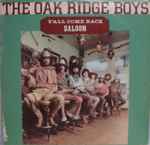
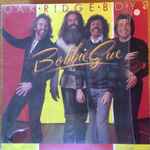
The Oak Ridge Boys are an American vocal quartet. The group consists of Duane Allen (lead), William Lee Golden (baritone), Richard Sterban (bass), and Ben James, who replaced Joe Bonsall as tenor in December of 2023. Allen, Bonsall, Golden, and Sterban comprised the group's longest-lasting lineup, from 1973 until 2023, except for the period between 1987 and 1995 when Golden was replaced by Steve Sanders. The act was founded in 1943 as Wally Fowler and the Georgia Clodhoppers, but were soon known as The Oak Ridge Quartet. They became popular in Southern gospel in the 1950s and their name was changed to Oak Ridge Boys in the 1960s. They moved from traditional southern gospel to contemporary gospel before going into popular music in the mid-1970s. The Oak Ridge Boys finally broke through in the late 1970s, including their appearance on "Slip Slidin' Away" with Paul Simon, and reached their commercial peak in 1981 with their cover of "Elvira", a Top 5 hit on the Billboard Hot 100. The core group that eventually led to the Oak Ridge Boys was a country group called Wally Fowler and the Georgia Clodhoppers, formed in 1943 in Knoxville, Tennessee. They were requested to perform for staff members and their families restricted during World War II at the Oak Ridge National Laboratory in nearby Oak Ridge, Tennessee. They were asked to sing there so often that eventually they changed their name to the Oak Ridge Quartet, and because their most popular songs were gospel, Fowler decided to focus solely on Southern gospel music. At the time, the quartet was made up of Wally Fowler, Lon "Deacon" Freeman, Curly Kinsey, and Johnny New. This group began recording in 1947. Wally Fowler and the Oak Ridge Quartet were members of the Grand Ole Opry in the 1940s. In 1949, the other three men split from Fowler to form a new group, Curley Kinsey and the Tennessee Ridge Runners, so Fowler hired an existing group, the Calvary Quartet, to reform the Oak Ridge Quartet. Walt Cornell sang baritone for the Oak Ridge Quartet in the early 1950s. In 1957, Fowler sold the rights to the "Oak Ridge Quartet" name to group member Smitty Gatlin in exchange for forgiveness of a debt. As a result of more personnel changes, the group lost its tenor, so they lowered their arrangements and had Gatlin sing tenor, while the pianist, Tommy Fairchild, sang lead. They recorded an album for Cadence Records, then in 1958, they hired Willie Wynn to sing the tenor part, and Fairchild moved back exclusively to the piano. At this point, the group consisted of Fairchild, Wynn, Gatlin, baritone Ron Page, and bass Herman Harper. They recorded an album on the Checker Records label, one on Starday, and three on Skylite. In 1961, Gatlin changed the group's name to "the Oak Ridge Boys" because their producer, Bud Praeger, thought "Oak Ridge Quartet" was too old-fashioned. When Page left in 1962, Gary McSpadden, who had filled in for Jake Hess in the Statesmen Quartet, took over as baritone with the understanding that when Hess was ready to start a group, he would recruit McSpadden. They recorded another album on Skylite, and then two albums on Warner Bros. Records. When Hess followed through, McSpadden quit to join the Imperials. Jim Hamill (who later became a mainstay in the Kingsmen Quartet) was hired as his replacement. They made one album for Festival Records, one for Stateswood (Skylite's budget label), and two for Skylite. Hamill did not get along with the other Oaks, and William Lee Golden, a relative newcomer to the music industry, felt Hamill was hurting the act and suggested himself as a replacement. After Hamill's exit in 1964, Golden joined as baritone. The group recorded an album for Starday and another on Skylite before Gatlin left in 1966. On Golden's recommendation, Duane Allen, former baritone of the Prophets, was hired as their new lead singer. With Willie Wynn and Herman Harper still on board, the group made another album for Skylite and one for United Artists before making a dozen albums between 1966 and 1973 for Heart Warming. They also had an album on Vista (Heart Warming's budget label) consisting of unreleased songs from previous sessions. When Harper departed in 1968 to join the Don Light Talent Agency (before starting his own company, the Harper Agency), Noel Fox, formerly of the Tennesseans and the Harvesters, took over the bass part. In 1971, the Oak Ridge Boys earned their first Grammy Award for a Jerry Reed song, "Talk About the Good Times"; Reed played guitar on the track. Late in 1972, Richard Sterban, a member of the Stamps Quartet, joined the Oak Ridge Boys after the exit of Noel Fox. As a result, the quartet appearing on Hee Haw that year consisted of Allen, Wynn, Golden, and Sterban, and they took part in a single with Johnny Cash and the Carter Family, "Praise the Lord and Pass the Soup", that put the Oak Ridge Boys on the country charts for the first time. After completing their first Columbia album, Wynn departed and was succeeded by Joe Bonsall in October of 1973. (Bonsall replaced Wynn's vocals on half of the album.) The lineup remained constant for the next 14 years. In 1975, the Oak Ridge Boys, after a brief flirtation with pop music, signed with country music promoter Jim Halsey, who as their new manager, encouraged them not only to leave gospel music behind by becoming a country act—the most fundamental change in their history—but also to present themselves as a singing quartet rather than as an eight-man band. The group's move to Columbia resulted in three albums and several singles. In 1976, they toured Russia in support of Roy Clark. They were not a label priority, and their musical direction (pop, gospel, country) was unclear. While promoting the single "Heaven Bound", the Oak Ridge Boys made appearances on The Mike Douglas Show and The Merv Griffin Show. In an attempt to widen their appeal, they backed up Jimmy Buffett on "My Head Hurts, My Feet Stink, and I Don't Love Jesus". Despite being tapped by Paul Simon to sing backup on "Slip Slidin' Away", the group asked to be released from their contract after "Family Reunion", written by David Allan Coe, was not a hit. Columbia complied, and the band immediately made an album that was a mix of gospel, pop, and country on their own label, for sale at their concerts. In 1977, the Oak Ridge Boys hit it big in country with their first ABC Records album, Y'all Come Back Saloon. The cover photo was the last to depict them as an eight-man group, although the band did not play on the album as on prior releases. Room Service broadened their reach into pop music while yielding three more country hits, including "I'll Be True to You", which was carried over from the previous album and became their first of seventeen number-one singles on the Billboard Hot Country Songs charts. The Oak Ridge Boys Have Arrived provided three more hits, two of which crossed over, in 1979. After MCA Records bought out ABC, Together came out in 1980, followed by a compilation in the autumn, Greatest Hits, with ten hits from their first four ABC/MCA albums. Their next project, Fancy Free, released early in 1981, contained the Dallas Frazier song "Elvira". This remains their most widely known record, and Fancy Free their best-selling album. "Elvira" was recorded by other artists, including Frazier himself in the late 1960s and Kenny Rogers and the First Edition in 1970, but the Oak Ridge Boys were the first to make it a major hit. Their version sold platinum, hit number one on the country chart, and number five on the pop chart. In 1984, they became the first country act to be honored with the RIAA’s multi-platinum award, recognizing double-platinum sales for their album Fancy Free. The doo-wop-style title track from Bobbie Sue, their eighth album, was another crossover hit, reaching number one on the country chart and number 12 on the pop chart. That album also spawned the group's first domestic music video, for their minor hit "So Fine". (A video was
Discografía en vinilo
Ordenada por relevancia (lo más escuchado primero).






En la onda de The Oak Ridge Boys
Otros artistas afines, con vinilo.