Poésie Noire (Belgian darkwave/synth-pop band)
Poésie Noire are a Belgian band that rose to prominence in the mid-1980s. Their Belgian origins and tendency to develop a goth-oriented, synthetic, gloomy universe with low-pitched voices – Poésie Noire could translate by "Black/Dark Poetry" – had them categorized as EBM, along with other Belgian members of the 1980s electronic music scene like À;GRUMH... or A Split-Second. However, much in the manner of various renowned Belgian EBM bands like The Neon Judgement and, to some extent, Front 242, they declared, through their music, a will to step away from the usual industrial aggressiveness that characterized Electronic body music and developed a more mainstream accessible dark pop sound that helped them to be regarded as plain new wave or dark wave. Initially based on seven members, Poésie Noire rapidly boiled down to just three hardcore members so as to be finally incarnated by Johan Casters aka "La Bête Noire" – "The Black/Dark Beast" – (writer, composer and main male singer of the band), Marianne Valvekens (co-writer, female vocalist up to the 1991 Marianne album – and then back on Sense of Purpose – and keyboard player) and Herman Gillis (co-writer and mainly the band's guitar player.) As Poésie Noire's fanbase grew along the years, Casters and Valvekens were soon to be given 'status nicknames' (probably in tradition of some typically "Goth-spirited" symbolical hierarchy.) Consequently, it did not take long for Casters to be considered the band's "Master" to the fans whereas Valvekens became their "Goddess". In 1991, Irish vocalist Evanna joined the band for the Marianne album because producer Ludo Camberlin did not feel that Valverken's voice was right for the album and Evanna's had more warmth and soul to it. Little is known about how the band actually started their career in music. They are known to have won the 1985 Breekend Rock Festival (a long-lasting, reputed festival set in Bree, Belgium, that hosted large amounts of well-known bands such as The Smiths in 1984 or even Slade in 2009). The following year, Poésie Noire started supporting Dead Can Dance and The Sisters of Mercy[citation needed] on tour, along with their own personal gigs. Along their years as Poésie Noire, the band demonstrated qualities as an act with intensive releases : in just seven years, Casters, Valvekens and Gillis recorded nine albums and mini-albums, two official best of compilation, one remix compilation and 15 singles, which allowed them to appear on various EBM or new wave compilations and become genuine figures of the kind throughout their sphere of influence. By 1992, it seems the relations between Poésie Noire and their label, Antler-Subway, were not as sound as they used to. Indeed, the record label promised the band they would release yet another album of the band's composition entitled Delirious, but this never happened and Antler-Subway finally released Casters, Gillis and newcomer Evanna from their recording contract instead. With the help of Ludo Camberlin aka Carl S. Johansen, who had been their producer since the 1989 album Love is Colder than Death, Poésie Noire changed their name to TBX ("To Be eXcited") and signed to larger label EMI Belgium that enabled them to release this Delirious album which had been the source of so many issues and changes. But unfortunately for the band, this new beginning rapidly ended up unsuccessful – because the band's "music [was not] meant for [the] mass consumption [that EMI was used to aiming at]", their official site explains – and led EMI Belgium to delete TBX from their catalog promptly afterwards. Consequently, for Poésie Noire/TBX', the bell tolled although they finally returned in 2010 with a new album, Sense of Purpose. More than a decade after the band split, they formed again and started working on a new album, Sense of Purpose, finally released in October 2010 under the name that made them famous, Poésie Noire. The release of this new opus went along with Poésie Noire taking part in the Sinner's Day festival, on 31 October 2010, together with such prestigious artists as Heaven 17, Nina Hagen, Marc Almond, The Psychedelic Furs, Echo & the Bunnymen, Peter Murphy, The Selecter, Department S, Marky Ramone, Jah Wobble or Young Gods. After Poésie Noire disbanded, their members carried on musical projects they had been involved in while the band was active, developed new ones or radically turned over a new leaf. Using different aliases (Morton, Joey Morton, Pateke Morton, Ilya Dimitrijevic, Jill (or Jille) Johnson or Alessandro Di Ravo), Johan Casters has extensively served as a writer, producer and even remixer or editor for various acts and artists. He has developed personal projects from the late 1980s onwards, either alone or with Herman Gillis. As a producer or executive producer, Jo has been involved in several obscure projects such as The Passion of a Primitif, Company of State, Men 2nd, In Sotto Voce, Attrition, Ei Mori, Bulgarka, Danse Macabre, Pussy Jew, Dee Bass, Translator, Minimalistix, Orion Too feat. Caitlin, Roxane and Biba Binoche. Joe has engaged and collaborated with several artists including The Neon Judgement, Jean-Paul Gaultier, The Weathermen, Jean-Jacques Smoothie, and Sinéad O'Connor. Though Jo and Marianne seem to go on making music together, Jo was known, in the late 1990s, to be working in the field of important musical events coordination and then as A&R for the Roadrunner turned Mostiko division of Arcade/CNR. While Poésie Noire was still active, Jo and Herman have been involved as writers and composers in the full or partial development of original or pre-existing projects (with the occasional help of Marianne). The two of them usually worked together though, every once in a while, only one of them would be involved. The massive list of projects the two happen to be behind includes In Sotto Voce, Brothers on Acid, Ei Mori, Bulgarka, Trio Balkana, Fruit of Life, Erotic Dissidents, Mission Impossible, The Brothers, Morton, Sherman and Bellucci, Danse Macabre, Opium Monks, Berliner Meisterschaft, The Secrets of China, Kings of Agreppo, Explorers of the Nile, Taste of Sugar feat. K. Finley, TNT Clan, The New Beat Sensation, Msb Sound System, Beat Professor, The Freak Brothers, Student Fashion, Mr. Horse, Subway's new Acid House Techno Beat, Balearic Beach, M.S.B., Supernova, Brotherhood of Sleep, The Moneymakers, The Airplane Crashers, Voor Den Broode, German Beat Syndrome, Neue Beat Collectione, Matt's Phantasy Club, Serious ft.JJ Maurie, Boris Mikulic, J.E.T., Strictly Nervous. Similarly to Casters, while he was already busy co-writing Poésie Noire tracks and playing the guitar on them, Herman made sure to develop parallel activities as a producer, writer, composer, programmer and musician using, like his fellow singer, multiple nicknames : Sherman, Herman Sherman, Boris Mikulic and Tessa Rossa. Those activities can be traced back to 1987 until 1994. Among the projects he worked for as a writer or co-writer, he regularly assumed the position of a musician in some of them and took care of programming, keyboards and guitar-playing. Included in this category are The Passion of a Primitif (1987), Company of State (1987; 1988), In Sotto Voce – actually, a genuine Poésie Noire side-project posing as a Yugoslavian act. It was incarnated by Jo and Herman, respectively pretending to be Ilya Dimitrijevic and Boris Mikulic. The point of creating those bogus identities and launching this project was to give a "response to a belgian journalist who found Poésie Noire too "poppy" " (the official site claims) – (1987; 1988; 1989), Boris Mikulic (1990), Volt (formerly known as Running Cow) (1993)... Gillis, much like Casters, also remixed or edited recordings by various artists either with or without Jo : Jean-Paul Gaultier (1989), Take 6 and Take 7 (19??), DWF (1990), and Wire. Producing records soon got Gillis interested and he quickly had his own production company set up : Sherman Productions.
Discografía en vinilo
Ordenada por relevancia (lo más escuchado primero).
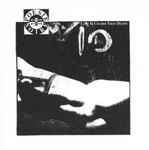
En la onda de Poésie Noire
Otros artistas afines, con vinilo.