Kenny Rogers & The First Edition
Kenny Rogers and the First Edition, until 1970 billed as the First Edition, were an American band. The band's style was difficult to singularly classify, as it incorporated elements of country, rock and psychedelic pop. Its stalwart members were Kenny Rogers (lead vocals and bass guitar), Mickey Jones (drums and percussion) and Terry Williams (guitar and vocals). The band formed in 1967, with folk musician Mike Settle (guitar and backing vocals) and the operatically trained Thelma Camacho (lead vocals) completing the lineup.[citation needed] As the counterculture of the 1960s was developing, the First Edition signed with Reprise Records in 1967 and had their first big hit in early 1968 with the psychedelic single "Just Dropped In (To See What Condition My Condition Was In)" (US No. 5). After other chart hits, "But You Know I Love You" (US No. 19) and "Tell It All Brother" (US No. 17), the group, newly billed as "Kenny Rogers and the First Edition", once again hit the top ten, this time in 1969 with the topical "Ruby, Don't Take Your Love to Town" (US No. 6, UK No.2). For the next six years, the First Edition enjoyed worldwide success. By the mid-1970s, frontman Kenny Rogers had embarked on a solo music career, becoming one of the top-selling country artists of all time. Kenny Rogers and the First Edition were mostly made up of former members of the New Christy Minstrels who felt creatively stifled.[citation needed] The exception was Mickey Jones, who had been part of Bob Dylan's backing group on his first electric world tour.[citation needed] In 1967, with the help of Terry Williams' mother, who worked for producer and executive Jimmy Bowen, they signed with Reprise and recorded their first single together, "I Found a Reason", which had minor sales.[citation needed] Settle had first come up with the idea of forming the band as his work took on the characteristics of rock.[citation needed] Over the previous seven years, Settle had been writing decidedly more folk-oriented songs, most notably the oft-covered "Sing Hallelujah".[citation needed] It was their follow-up (sung by Rogers), the psychedelic single "Just Dropped In (To See What Condition My Condition Was In)", that first got notice.[citation needed] The single, with an arrangement by their producer, Mike Post, had Glen Campbell playing the backward guitar intro and Mike Deasy providing various psychedelic sounds.[citation needed] It became a hit early in 1968, climbing to No. 5 on the Billboard Hot 100.[citation needed] Terry Williams played the solo that later led Jimi Hendrix to tell Rogers that it was his favorite record.[citation needed] The group's next three single releases failed commercially, as did their second album.[citation needed] The 1968 release "But You Know I Love You" (composed by Settle) possessed a distinctive brass-tinged country-folk sound, broadening their fan base.[citation needed] In the group's rendition on The Smothers Brothers Comedy Hour that aired on 8 December 1968, the audience was unwittingly fooled into applauding too soon, right after the false ending but well before the real ending.[citation needed] The record peaked at No. 19 on the Hot 100 just under a year after "Just Dropped In" was at its Billboard summit.[citation needed] According to Mickey Jones' book That Would Be Me, Thelma was fired from the group in late 1968 (soon after the release of "But You Know I Love You" and the aforementioned Smothers Brothers television appearance, but before the record would chart on the Hot 100), after missing too many gigs and rehearsals.[citation needed] For her part, Thelma did not see it the same way. She has stated that while she always loved being with them in the studio, the road was too hard on her from a health and personal standpoint.[citation needed] All agreed that the situation could not continue, and she was replaced by her roommate, Mary Arnold, an Iowa-born singer who beat out newcomer Karen Carpenter for the job. Thelma appears on the first three LPs plus half of the fourth album. Arnold made her debut on "Reuben James".[citation needed] By the end of the decade Rogers had long brown hair, an earring, and pink sunglasses. Known affectionately in retrospect as "Hippie Kenny".[citation needed] Rogers had a notably smoother vocal style at the time.[citation needed] During mid-1969 the band scored another Top Ten hit with Mel Tillis' "Ruby, Don't Take Your Love to Town".[citation needed] Mickey's drumming was part of the hook. At Rogers' shows the song was often clapped along to, or joked around with, but it was meant seriously at the time.[citation needed] Telling the graphic story of a crippled veteran was admirably daring at the height of America's involvement with the war in Vietnam. The song lyrics were originally meant to address the Korean War, albeit in such a vague way that it could have referred to Korea, Vietnam, or even the Japanese attack on Pearl Harbor.[citation needed] The song was picked up by some disc jockeys, and there was suddenly great demand to release the final track recorded for, and included on, the First Edition '69 album.[citation needed] In order to release "Ruby" at the same time as the "But You Know I Love You" soundalike "Once Again She's All Alone", the group renamed themselves "Kenny Rogers and the First Edition".[citation needed] When "Ruby" became the hit, the name stuck.[citation needed] Terry later said that this made him feel like one of Gladys Knight's Pips.[citation needed] This, their third major hit single, like the previous two featured Kenny Rogers on lead, along with the band name change, these factors cemented Kenny's fate as a global household name.[citation needed] Kenny Rogers and the First Edition had five hits.[citation needed] A man Rogers at first took to be a rude fan first pitched "Reuben James" to Rogers at a golf match. The man, who turned out to be a song pitcher for American songwriter Alex Harvey, followed him around the greens singing the song until Rogers listened. Rogers loved the song's look at a black man raising a white boy and agreed to record it.[citation needed] "Reuben James" came out at the end of 1969, by which time Mike Settle had been gone for several months.[citation needed] During his absence, he was replaced by Kin Vassy.[citation needed] The group continued to record country, rock, and folk by fairly equal measures, blurring the lines among the genres.[citation needed] The First Edition reached what was arguably the peak of their fame with "Something's Burning", a No. 11 hit in early 1970.[citation needed] A blatantly sexual song, it was slightly hindered chart-wise by the controversy surrounding it.[citation needed] Regardless, Kenny's soft voice on verses and rock shouting on the chorus earned the group much acclaim. "Burning" opened with a sample of an actual heartbeat played backward to replicate the song's rhythmic beat.[citation needed] Meanwhile, Terry Williams had begun to record some solo singles.[citation needed] Williams' "I'm Gonna Sing You A Sad Song Susie" was part of the First Edition's next LP Tell It All Brother. The title track (also written by Harvey), which dealt with love and brotherhood, was a national top 20 hit and topped WRKO's August 13, 1970, top 30 survey for one week.[citation needed] Released a month or so after the Kent State shootings, the song drew a standing ovation the night it debuted live.[citation needed] In addition to the band's continuing frequent appearances on television, songs by Kenny Rogers and the First Edition were featured in two 1970 films.[citation needed] First up was the never released on record "If Nobody Loved" for the camp political comedy Flap.[citation needed] A few months later they recorded "Someone Who Cares" and "A Poem I Wrote For Your Hair" to appear in the soundtrack for the romantic film Fools starring Jason Robards Jr., and Katharine Ross. The Fools soundtrack was released in 1971.[citation needed] At the end
Discografía en vinilo
Ordenada por relevancia (lo más escuchado primero).
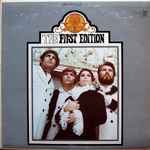


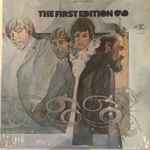


En la onda de Kenny Rogers & The First Edition
Otros artistas afines, con vinilo.