Cardiacs
Cardiacs are an English rock band formed in Kingston upon Thames by guitarist and primary songwriter Tim Smith and his brother, bassist Jim Smith, in 1977 under the name Cardiac Arrest. One of Britain's leading cult rock bands, their sound folds in genres including art rock, jazz, psychedelia and metal, which was topped by Tim Smith's anarchic vocals and hard-to-decipher lyrics. He was noted for his complex and innovative compositional style; Cardiacs have been credited with fusing circus, baroque pop and medieval music with progressive rock and post-punk. The band's theatrical performance style has often incorporated off-putting costumes and make-up with on-stage confrontations. Their sound and image has sometimes made them unpopular with the press, but they have amassed a devoted following and inspired many rock groups, including Blur. Following several DIY cassette tape releases and personnel changes, Cardiacs settled on a six-piece lineup from 1984 to 1989 comprising Tim, Jim and saxophonist Sarah Smith, percussionist Tim Quy, drummer Dominic Luckman and keyboardist William D. Drake. They created their own indie label, the Alphabet Business Concern, and found mainstream exposure with the single "Is This the Life" from their debut album A Little Man and a House and the Whole World Window (1988), which was followed by On Land and in the Sea in 1989. With the addition of guitarist Christian Hayes and the departures of Sarah Smith, Quy, and Drake, Cardiacs slimmed to a four-piece and displayed a harder edged, metal-leaning sound by 1992's Heaven Born and Ever Bright which was retained for their subsequent albums. During this time, the spin-off group the Sea Nymphs comprising Tim, Sarah and Drake recorded an album of the same name. Previously having been members of the progressive pop band Ad Nauseam, guitarist and keyboardist Jon Poole joined Cardiacs in 1991, followed by drummer Bob Leith in 1993, replacing Hayes and Luckman respectively. The quartet released the albums Sing to God (1996) and Guns (1999). Beginning with the Special Garage Concerts shows in 2003, Kavus Torabi replaced Poole on guitar, and the band toured from 2004 to 2007 with an expanded lineup of additional singers and percussionists. In 2008, Tim Smith was abruptly hospitalised with dystonia resulting from a cardiac arrest and stroke, which caused the band to go on indefinite hiatus but also brought increased critical recognition, with several music outlets calling Sing to God a masterpiece. His death in 2020 saw a raft of tributes on social media. In 2021, Cardiacs' music appeared on streaming services and the band continued the recording of their sixth album LSD, which was released in 2025. As Cardiacs Family & Friends, band members performed the music of Tim Smith at several tribute shows entitled Sing to Tim in 2024, and a new lineup of Cardiacs played live dates in 2026 with Mike Vennart as lead singer. Cardiacs originated in Kingston upon Thames, Surrey, in the late 1970s. Frontman Tim Smith began his musical career in 1975 after forming a nameless band at school in which he played guitar. Smith played his first gig at Surbiton Assembly Rooms aged 16 alongside Adrian Borland of the Outsiders and drummer Bruce Bisland as Gazunder. The Cardiacs biography describes their two gigs in 1976 as sounding "a bit like the rocky instrumental bits" on David Bowie's The Man Who Sold the World (1970). The band that would become Cardiacs was formed in late 1977 by Smith and his brother Jim on bass guitar and backing vocals, alongside Michael Pugh on lead vocals and Peter Tagg on drums. The project was initially called the Filth, but soon changed their name to Cardiac Arrest, possibly by their second gig in 1978 according to Tagg. According to the official history, Tim Smith formed the band merely to punish his brother "for all the unkind things he would do to him as an infant", as Jim allegedly couldn't play an instrument. Cardiac Arrest produced a demo in 1977, and released their debut single "A Bus for a Bus on the Bus" in 1979 under Tortch Records. Peter Tagg and Ralph Cade decamped from Cardiacs and formed the Trudy. Tim Smith, the primary lyricist, initially took on guitar and backing vocal duties before Pugh's departure saw him promoted to frontman. Cardiac Arrest followed the single with a full-length cassette release titled The Obvious Identity in 1980, which was released at around 1000 copies exclusively sold at concerts. Shortly after, the group went through a number of name changes, settling on simply Cardiacs in 1981. They held their first concert under the new name in April. In 1981, Cardiacs self-released the cassette album, Toy World, featuring both new material and recordings dating back to the Cardiac Arrest period. (Consequently, some tracks featured Michael Pugh as lead singer rather than Tim Smith). During 1981, Colvin Mayers left the band to join the Sound, a group led by Borland. Sarah Cutts briefly covered live keyboards as well as saxophone, before Mark Cawthra swapped drums for keyboards and Dominic Luckman was recruited from the road crew as the new drummer. At around the same time percussionist Tim Quy became a full-time member (also doubling on bass synthesizer). In July 1983, Tim Smith married Sarah Cutts – taking his surname, she was henceforward known as Sarah Smith. In mid-1983 Mark Cawthra left the band, to be replaced on keyboards by William D. Drake. Tim Smith had previously met Drake in 1982 at the debut performance of Drake's band Honour Our Trumpet (who promptly invited him to join as bass guitarist.) Following Cawthra's departure, Smith returned Drake's favour by inviting him to join Cardiacs. Drake played his first concert with the band on 31 August 1983. Later in the year, Cardiacs added Marguerite Johnston (alto saxophone) and Graham Simmonds (guitar), and for about a year the band worked as an octet. Both Johnston and Simmonds left during the following summer (in July and August respectively), although Simmonds stayed on as Cardiacs' sound engineer. By autumn 1984, the band lineup had settled as the sextet generally referred to as "the classic lineup" – Tim Smith (lead vocals and guitar), Jim Smith (bass and vocals), William D. Drake (keyboards and vocals), Sarah Smith (saxophones and vocals), Tim Quy (percussion and keyboards) and Dominic Luckman (drums). The first Cardiacs release featuring the "classic" lineup was their third album, The Seaside (although Cawthra featured throughout on drums, keyboards and voice; and Simmonds and Johnston also appeared on several tracks). The album was released on Cardiacs own record label, Alphabet (which later became Alphabet Business Concern). The bizarre and sinister "Alphabet Business Concern" mythology now began to become a significant part of Cardiacs' artistic presentation, and the band members would promote and add to it at every opportunity. The band evolved an elaborate and theatrical stage show, involving off-putting "bandsmen's uniforms, makeup, Sarah's music stand, [and] Tim's mile-wide grin". A lot of people find our act disturbing because it brings out something in you that a lot of people won't admit to. It's the weirdness in everyone whether you like it or not. Some people think it's dead funny, others hate it. It's strange when people hate us—they really do hate us, it brings out something odd in people. — Tim Smith Between 5 November – 21 December 1984, Cardiacs performed their first major British support tour, supporting Marillion at the personal invitation of Marillion's vocalist, Fish. Whilst the tour afforded the band a new level of publicity, generally they were not well received by Marillion's fanbase. On most dates of the tour, the band was pelted with a variety of makeshift missiles. During the 13 December show at the Hammersmith Apollo, Fish himself was indignant enough about the Marillion fans and their hostile behaviour to come onstage during Cardiacs' set and berate the
Discografía en vinilo
Ordenada por relevancia (lo más escuchado primero).
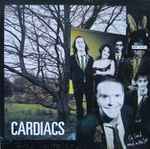

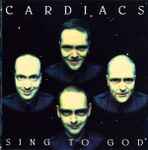
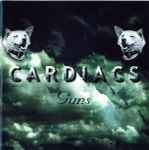

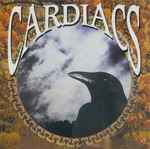
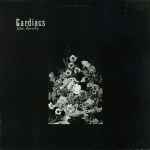
En la onda de Cardiacs
Otros artistas afines, con vinilo.