The Firesign Theatre
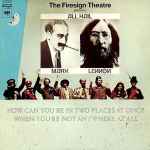
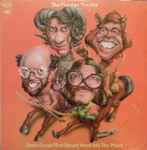
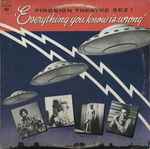
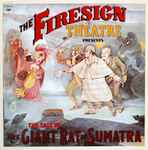
The Firesign Theatre (also known as the Firesigns) was an American surreal comedy troupe who first appeared on November 17, 1966, in a live performance on the Los Angeles radio program Radio Free Oz on station KPFK FM. They continued appearing on Radio Free Oz, which later moved to KRLA 1110 AM and then KMET FM, through February 1969. They produced fifteen record albums and a 45 rpm single under contract to Columbia Records from 1967 through 1976, and had three nationally syndicated radio programs: The Firesign Theatre Radio Hour Hour [sic] in 1970 on KPPC-FM; and Dear Friends (1970–1971) and Let's Eat! (1971–1972) on KPFK. They also appeared in front of live audiences, and continued to write, perform, and record on other labels, occasionally taking sabbaticals during which they wrote or performed solo or in smaller groups. The Firesign Theatre was the brainchild of Peter Bergman, and all of its material was conceived, written, and performed by its members: Bergman, Philip Proctor, Phil Austin, and David Ossman. The group's name stems from astrology, because all four were born under the three "fire signs": Aries (Austin), Leo (Proctor), and Sagittarius (Bergman and Ossman). Their popularity peaked in the early 1970s and ebbed in the Reagan era. They experienced a revival and second wave of popularity in the 1990s and continued to write, record and perform until Bergman's death in 2012. In 1997, Entertainment Weekly ranked the Firesign Theatre among the "Thirty Greatest Comedy Acts of All Time". Their 1970 album Don't Crush That Dwarf, Hand Me the Pliers was nominated in 1971 for the Hugo Award for Best Dramatic Presentation by the World Science Fiction Society, and their next album I Think We're All Bozos on This Bus received the same nomination in 1972. Later, they received nominations for the Grammy Award for Best Comedy Album for three of their albums: The Three Faces of Al (1984), Give Me Immortality or Give Me Death (1998), and Bride of Firesign (2001). In 2005, the US Library of Congress added Don't Crush That Dwarf to the National Recording Registry and called the group "the Beatles of comedy." Peter Bergman and Philip Proctor met while attending Yale University in the late 1950s, where Proctor studied acting and Bergman edited the Yale comedy magazine. Bergman studied playwriting and collaborated as lyricist with Austin Pendleton in 1958 on two Yale Dramat musicals in which Proctor starred: Tom Jones, and Booth Is Back In Town. In 1965, Bergman spent a year working in England on the BBC television program Not So Much a Programme, More a Way of Life and went to see surrealist comedian Spike Milligan in a play. Bergman went backstage and struck up a friendship with Milligan. Also that year, he saw the Beatles in concert, which gave him the inspiration to form a four-man comedy group. On returning to the US, Bergman started a late-night listener-participation talk show, Radio Free Oz, on July 24, 1966, on listener-sponsored KPFK FM in Los Angeles, working with producers Phil Austin and David Ossman. According to Austin, the show "featured everybody who was anybody in the artistic world who passed through LA." Guests included the band Buffalo Springfield and Andy Warhol. In November, Proctor was in Los Angeles looking for acting work and watching the Sunset Strip curfew riots. When he discovered he was sitting on a newspaper photo of Bergman, he called his college buddy, who recruited him as the fourth man for his comedy group. Bergman originally named the group the "Oz Firesign Theatre" because all four were born under the three astrological fire signs (Aries, Leo, and Sagittarius), and the group debuted on his November 17, 1966 show. Bergman had to drop "Oz" from the name after legal threats from Disney and MGM, who owned movie rights to The Wizard of Oz and other associated works. The Firesigns initially chose an improvisational style and carried it to a level which revolutionized radio comedy. According to Proctor: We each independently created our own material and characters and brought them together, not knowing what the others were going to pull. And it was all based on put-ons; that is, we were assuming characters that were assumed to be real by the listeners. No matter how far out we would carry a premise, if we were tied to the phones we discovered the audience would go far ahead of us. We could be as outrageous as we wanted to be and they believed us—which was astonishingly funny and interesting and terrifying to us, because it showed the power of the medium and the gullibility and vulnerability of most people. On nights when he had no guests, Bergman would have the Firesigns come on the air and pretend (including himself) to be outrageously interesting guests. On their November 17, 1966 debut, they pretended to be the panel of an imaginary "Oz Film Festival": Bergman was film critic Peter Volta, "writing a history of world cinema one frame at a time"; Ossman was Raul Saez, maker of “thrown camera” films, who had just won a grant to roll a 70 mm film camera down the Andes Mountains; Austin was Jack Love, making "Living Room Theatre" porn films like The Nun and Blondie Pays the Rent; and Proctor was Jean-Claude Jean-Claude, creator of the "Nouvelle Nouvelle Vague Vague movement" and director of a documentary Two Weeks With Fred, which lasts a full two weeks. By 1967, Bergman had the Firesign Theatre appear regularly on Radio Free Oz. The Firesigns were strongly influenced by the British Goon Show; Proctor, Austin, and Ossman were big fans since the NBC program Monitor broadcast Goon Show episodes in the late 1950s, and Bergman became a fan after forming the Firesigns. According to Ossman: We all listened to The Goon Show, Peter Sellers, Spike Milligan and Harry Secombe, at various times in our lives. We heard a lot of those shows. They impressed us when we started doing radio ourselves, because they sustained characters in a really surreal and weird kind of situation for a long period of time. They were doing that show for 10 years, all the way through the 1950s. So we were just listening to them at the end. It was that madness and the ability to go anywhere and do anything and yet sustain those funny characters. So when we first did written radio, where we would sit down and write half hour skits and do them once a week, which we did in the fall of 1967, we did things that were imitative of The Goon Show and learned a lot of voices from them and such. In the fall of 1967, the Firesign Theatre was broadcasting Sunday nights from The Magic Mushroom, in Studio City, formerly a Bob Eubanks's Cinnamon Cinder. In September 1967, they performed an adaptation of Jorge Luis Borges's short story "La Muerte y La Brujula" ("Death and the Compass") on Radio Free Oz. In 1969, they created improvised television commercials for Jack Poet Volkswagen in Highland Park, California, with the characters of Christian Cyborg (Bergman), Coco Lewis (Proctor), Bob Chicken (Austin), and Tony Gomez (Ossman). Bergman coined the term "love-in" in 1967, and he promoted the first Los Angeles Love-In, attended by 40,000 in Elysian Park, on his program. The Firesigns performed there, which led to Radio Free Oz moving to KRLA 1110 AM, which had a much wider audience than KPFK FM. This event also caught the attention of Columbia Records staff producer Gary Usher, who sensed commercial potential for the Firesign Theatre and proposed to Bergman they make a "love-In album" for Columbia. Bergman countered with a proposal for a Firesign Theatre album, and this led to a five-year recording contract with the label. Usher also used the Firesigns' audio collages on songs by The Byrds ("Draft Morning") and Sagittarius (the 45 RPM version of "Hotel Indiscreet") in 1967 and 1968. The album was given the non sequitur title Waiting for the Electrician or Someone Like Him, from Bergman's undeveloped 1965 idea for a comic film. The Firesigns changed their improvisational style,
Discografía en vinilo
Ordenada por relevancia (lo más escuchado primero).



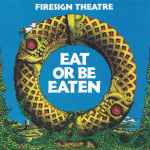

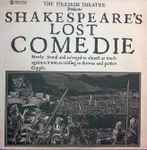
En la onda de The Firesign Theatre
Otros artistas afines, con vinilo.