
Claude Léveillée
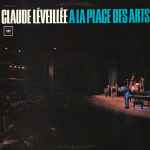
Claude Léveillée (16 October 1932 – 9 June 2011) was a Canadian actor, pianist, and singer-songwriter who composed more than 400 songs, instrumental pieces, and musicals. In 1959, Léveillée co-founded Les Bozos, an informal collective of Quebec chansonniers. He notably collaborated with Édith Piaf, writing several songs for her, including "Les Vieux Pianos," "Ouragan," and "Boulevard du Crime." He also composed for a number of Quebec artists, including Julie Arel—"Merci à toi" (1976)—and Nicole Martin, with songs such as "Il est en nous l'amour" (1985), "Mon père et ma mère," and "On s’aimera" (both 1987). Léveillée performed widely, with appearances in France, the Soviet Union, Belgium, Switzerland, and Japan. His acting credits include roles in the film Line of Demarcation (1966) and the television series Scoop (1991–1994). Joseph Gérard Adolphe Claude Léveillée was born on 16 October 1932 in Montreal. His parents were Pierre Léveillée (1901–1992) and Laurette Lalande (1901–1995). Léveillée's mother was a pianist and his father was a tenor. In addition to the piano, Claude also played the accordion and harmonica. He began performing with the accordion on the streets of Montreal. Claude Léveillée enrolled at the Collège André-Grasset in 1947, then at the Collège de Montréal in 1951. During school, he sometimes played a Contessa accordion. In 1954, at 21 and with a Bachelor of Arts degree from the classical course, he enrolled at the Université de Montréal in economics, politics, and social sciences. Here he discovered an old piano at the university, whose music led him to meet the actress Élizabeth Chouvalidzé. In October 1955, Léveillée and Élizabeth Chouvalidzé appeared on stage at the Université de Montréal in the magazine Bleu et Or, to perform a number by Gilbert Bécaud and Liberace. He was noticed by Noël Gauvin, director of the TV show Music-hall. Gauvin later approached Léveillée to compose the song Montréal for the singer Andrée D'Amour. In late 1954, Claude Léveillée started combining his poetry with his music. In 1955, he created his first song, "Tes Rêves". It was entered in the Chœur Bleu et Or competition at the Université de Montréal. He appeared in Music-Hall, where he performed some of his songs. At the university's cantina, Élizabeth and Claude auditioned for extra roles at Société Radio-Canada. They met Claude Caron, who remembered Léveillée's accordion performances. Caron offered him the role of Bozo in Père Ambroise Lafortune's television series La Rivière perdue. After two years, he dropped out of university and the social sciences. In 1956, he played in "Le Secret de la rivière perdue" on Radio-Canada Television; he also created a character for children, Clo-Clo (sets, script, text, and music) on the "Domino" program (1957–59, 1961–62). In 1956, Léveillée met Paul Buissonneau at the École des beaux-arts de Montréal, where he was in charge of the musical score for the 1956 revival of Orion le tueur at the Centre Saint-André-Apôtre. Boissonneau offered Léveillée the opportunity to open the next play he staged, La Tour Eiffel qui tue, presented from 4 to 9 March 1957 at the Salles du Gesù in Montreal and on 25 May in Edmonton. In 1957, Claude Léveillée created the soundtrack for La Belle Rombière by Guillaume Hanoteau and Jean Clevers. In 1958, he played the lead role in Marcel Aymé's play Les Oiseaux de lune. In 1959, he co-founded Les Bozos with six other young Quebec chansonniers. That same year, he entered one of his songs ("Les vieux pianos") in the third edition of the Canadian Song Contest. This song, selected as one of the twelve finalists, was recorded shortly afterwards by Micheline Manseau to a honky-tonk piano rhythm ("[...] vous n'êtes plus de notre temps [...]") and was Léveillée's first recording. On 12 June 1959, Édith Piaf went to the cabaret Chez Bozo where she met Léveillée. She then invited him to come and compose songs for her in Paris in August 1959. Later that year, Léveillée collaborated with Piaf in the documentary 67 bis boulevard Lannes, directed by Jean-Claude Labrecque. He returned to Quebec in 1960. Édith Piaf recorded several of the songs he had written for her (including "Boulevard du crime", "Ouragan", and "Le Vieux piano", a version of Les Vieux pianos featuring a third person), then died in 1963. In 1961, Léveillée became the artistic director of the small boîte à chansons, Le Chat Noir, in Montreal, where he hired Gilles Vigneault. Léveillée obtained several of Vigneault's texts (some of them written in his presence) to set to music and composed some thirty of them, including "Le bout du monde", "Le chemin de prairie", "Il en est passé", "Avec nos yeux", and "L'hiver", which was sung by Monique Leyrac. In France, Claude Léveillée won the Grand Prix du disque canadien de la radio de CKAC in 1962. In 1963, he played the musical role in Paul Buissonneau's show Les Éphémères, with Yvon Deschamps and Jean-Louis Millette, among others. The show was cancelled, but Léveillée still recorded the music he had composed for it. Later, for Louis-Georges Carrier, director of the Théâtre de la Marjolaine, Léveillée wrote the music for several musicals, including "Doux temps des amours". On 23 April 1963, with Paul Buissonneau, Yvon Deschamps, and Jean-Louis Millette, he co-founded the Théâtre de Quat'Sous. Léveillée was the first Quebec singer to perform alone at Place des Arts (in 1964). He won the Grand Prix du Disque in 1966. On 21 May 1967, he performed the song "Le rendez-vous" on the American Ed Sullivan Show, broadcast live from Montreal on the occasion of the World's Fair held there at the time. In 1968, accompanied by André Gagnon, Léveillée performed 26 recitals in the USSR. In the 1960s, he produced The Old Pianos, Frédéric, The Legend of the White Horse, "Le Rendez-vous" (lyrics by Gilles Vigneault), The Scene, Emmène-moi au bout du monde, and Soir d'hiver (poem by Émile Nelligan). In the early 1970s, he produced songs such as "L'étoile d'Amérique", "Cheval de bois", "Si jamais" and "Marie Rose". In 1972, he represented Canada at the Sopot Song Festival in Poland. The same year, he returned on tour to the USSR. In 1976, he gave a series of concerts at Place des Arts, participated in the "5 grands sur la montagne" show (Une fois cinq), and presented a few concerts with Félix Leclerc on Île d'Orléans (Le temps d'une saison). That same year, he gave Julie Arel the song Merci à toi. In 1978 and 1979, he gave way to instrumental music with Black Sun and Escale 80. In 1980, he lost his only child, Pascal, who died at the age of 20. Léveillée embarked on a tour in 1980, beginning at the Théâtre de Quat'Sous in the fall. In 1982, he released a new album of songs featuring "Le coyote", "La grande vie", and "Les fils de la liberté". He toured Switzerland from 1981 to 1984. Accompanied by Claude Gauthier and Pierre Létourneau, Léveillée took part in the Trois fois chantera tour in Quebec in 1984. In 1985, he presented the commemorative show Tu t'rappelles Frédéric with his friend André Gagnon. In the same year, he took part in the Fondation Québec-Afrique, singing in the collective project "Les Yeux de la faim". He also composed the song "Il est en nous l'amour" for Nicole Martin, with a text by Pierre Létourneau. The song was nominated at the ADISQ gala the following year. In August 1986, he married Hélène LeTendre LeBlond in Lutry, Switzerland. She was a journalist, columnist, and Quebec TV host. They remained married until Claude's death in 2011. In 1986, Léveillée began a series of instrumental concerts titled Un homme, un piano. In 1987, he shared the stage with Renée Claude for a few concerts under the title Partenaires dans le crime, then wrote the songs "On s'aimera" and "Mon père et ma mère" for which Nicole Martin joined as a backing vocalist. In 1988, McDonald's restaurants used his song, Frédéric, for the Quebec adaptation of the advertising campaign around the character Mac Tonight, renamed
Discografía en vinilo
Ordenada por relevancia (lo más escuchado primero).







En la onda de Claude Léveillée
Otros artistas afines, con vinilo.