Muslimgauze
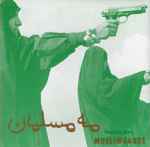
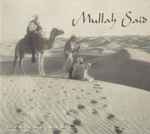
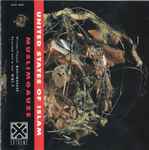
Muslimgauze was the main musical project of Bryn Jones (17 June 1961 – 14 January 1999), a British experimental musician who was influenced by conflicts and history in the Muslim world, often with an emphasis on the Israeli–Palestinian conflict. With dozens of albums released under the Muslimgauze name, Jones was prolific, but he never achieved mainstream success. His music, categorized as an example of ethnic electronica, has been described by one critic as "among the most startling and unique in the noise underground". Despite his project name, Jones was not a Muslim. The name Muslimgauze is a play on the word muslin (a type of gauze) combined with Muslim, referring to Jones' preoccupation with conflicts throughout the Muslim world. Jones first released music in 1982 as E.g Oblique Graph on Kinematograph, his own imprint, and the independent co-op label Recloose, run by Simon Crab. E.g Oblique Graph came from the do-it-yourself (DIY) ethos of the time and was musically composed of electronic/experimental drone with occasional synth-melodic hooks and use of radio broadcast samples. Releases at the time were occasionally on cassette, more often vinyl EPs and LPs; the longest-running of Jones' label monikers, Limited Editions, started with Hunting Out with an Aerial Eye (1984) followed by Buddhist on Fire, put out by Recloose the same year. Since then, Jones roughly released an album a year, given scarce financial resources until 1988, when he began making inroads with then-emerging labels Staalplaat, Soleilmoon, and Extreme Records. By the late 1980s, Jones ran out of funding to self-release, and other labels that did put out Muslimgauze releases such as Recloose and Permis De Construire (which put out Coup d'Etat) did not pay promised royalties. Recloose head Simon Crab cited lack of sales and damaged records from firebombing as his reason. The neighbouring Thomas A Becket pub run by East End gangsters—common-or-garden low-level vicious thugs (years before the species was romanticized by Lock Stock and Mona Lisa)—unable to control our unlicensed trade in alcohol and other illicits, firebombed the building one night and attacked the crew on a regular basis. (Many of the new pressings of Muslimgauze's Buddhist on Fire stored in the Recloose offices were destroyed during this attack). — Stalker blog post The deal with Recloose was that we paid 50 percent of the profits to the artist and 50 percent went to the label, which was a pretty good deal, especially since we didn't sell that much. We put a lot of energy into marketing, and most of the artists signed to the label sold off the back of Bourbonese Qualk anyway. He assumed we sold loads of albums but we didn't even cover the costs. — Simon Crab At this time, distributors Soleilmoon, Staalplaat, and Extreme Records transitioned to becoming labels with the advent of the compact disc format, which became less expensive to produce and ship than vinyl over time and gradually became a physical staple of the Muslimgauze catalogue. It was with the release of United States of Islam (1991) a formalised agreement was reached with Extreme Records, which helped fund professional studio recordings, designed attractive packaging, and used a more extensive distribution network. Though pleased at first, Jones was frustrated with Extreme's one-release-a-year policy and in 1993 signed with then-sibling labels Soleilmoon and Staalplaat, which offered a more frequent release schedule. 1993 saw the release of Vote Hezbollah, Veiled Sisters and a re-release of Iran on Soleilmoon and Hamas Arc, Satyajit Eye and Betrayal on Staalplaat. His 1998 record Mullah Said on the label has been critically acclaimed. Jones additionally released material on nearly any small label that approached him. A drawback with releasing on so many labels was gratuitous editing by producers and, through design or circumstance, no royalties. Extreme cited betrayal by distribution networks that were unscrupulous or filed for bankruptcy and could not pay—though they also claimed to have eventually remunerated Jones. Lack of due royalties was a source of ongoing stress throughout Jones's career. Jones once stated that he never had time to listen to other people's music, although in a 1992 interview with Impulse Magazine, he mentioned that he enjoyed traditional music of Japan, the Middle East, and India, as well as the works of artists such as Can, Throbbing Gristle, Wire, and Faust. On 30 December 1998, Jones was rushed to A&E in Manchester with a rare fungal infection in his bloodstream, for which he had to be heavily sedated. He contracted pneumonia and died on 14 January 1999. Since Bryn Jones's death in 1999 at the age of 37, his music under Muslimgauze has continued to be released. He often inundated labels and collaborators with music, and consequently the latter had to be selective of what was eventually put out. Labels, including Soleilmoon and Staalplaat, continue to publish unreleased albums, as well as releases of demos, his own reworked tracks, and abandoned full-length tapes. Jones' posthumous discography is known for including many studio variations of nearly all his music. In April 2014, Vinyl On Demand released Chasing the Shadow of Bryn Jones 1983–1988, a 10 LP box set reissuing early albums originally released by Product Kinematograph, Recloose Organisation, and Jones' own Limited Editions. Each LP includes bonus tracks taken from period compilation albums. The release was also accompanied by biography written by Ibrahim Khider titled Muslimgauze: Chasing the Shadow of Bryn Jones. Muslimgauze's music is often difficult to describe due to sheer volume, content diversity, and often singular stylings: Jones never produced any hit albums or songs. However, it is possible to describe common features of his music as he tended to use many of the same strategies, modified from album to album to give each release a distinct feel or concept. The music is often heavily electronic and strongly rhythmic (sometimes including live studio percussion), though tempos can vary from very fast to slowly driving and almost ambient, making frequent use of gradually changing structures or melodic motifs. Critic Ned Raggett reviewed a number of Muslimgauze albums for Allmusic.com, noting the diverse styles of Jones's recordings: United States of Islam (1991) featured layered percussion and "a muted techno pulse", Hamas Arc (1993) touched on a menacing "ambience that is not so far removed from the likes of [industrial metal acts] Godflesh or Scorn", and Gun Aramaic (1996) blended atmospheric sounds and vocal samples that "almost turns the album into a soundtrack for a non-existent film." I would never go to an occupied land, others shouldn't. Zionists living off Arab land and water is not a tourist attraction. To have been in a place is not important. So you can't be against apartheid unless you have been in South Africa? You cannot be against the Serbs killing Muslims in Bosnia unless you have been there? I think not. — Bryn Jones Chain D.L.K. interview Jones originally claimed Muslimgauze was formed in response to Operation Peace of the Galilee, Israel's 1982 invasion of Lebanon. This event inspired Jones to research the conflict's origins, which grew into a lifelong artistic focal point, and he became a staunch supporter of the Palestinian cause, and often dedicated recordings to the Palestinian Liberation Organization or a free Palestine. Jones's research further grew to encompass other conflict-ridden, predominantly Muslim countries including Afghanistan, Pakistan, Chechnya, Iran, and Iraq. He concluded that Western interests for natural resources and strategic-political gain were root causes for many of these conflicts and should Western meddling halt, said regions would stabilise. Jones frequently netted criticism for never having visited the Middle East. He said in a 1994 interview, "I don't think you can visit an occupied land. It's the principle.
Discografía en vinilo
Ordenada por relevancia (lo más escuchado primero).









En la onda de Muslimgauze
Otros artistas afines, con vinilo.