Dwight Twilley
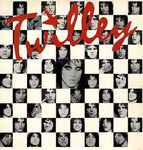
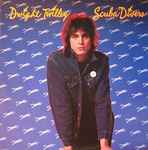
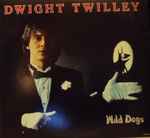
Dwight Twilley (June 6, 1951 – October 18, 2023) was an American pop/rock singer and songwriter, best known for the top 20 hit singles "I'm on Fire" (1975) and "Girls" (1984). His music is associated with the power pop style. Twilley and Phil Seymour performed as the Dwight Twilley Band through 1978, and Twilley performed as a solo act afterwards. His last album, Always, was released in November 2014 through Twilley's own label, Big Oak Records. Twilley was born in Tulsa, Oklahoma, United States. He attended Edison High School and went to Northeastern Oklahoma A&M College from 1971 to 1973. Twilley and Phil Seymour met in Tulsa in 1967 at a theater where they had gone to see The Beatles' A Hard Day's Night, and soon began writing songs and recording together. They continued their partnership over the next several years under the band name Oister. Twilley wrote all the songs and played guitar and piano, Seymour played drums and bass, and both sang leads and harmonies. Later, guitarist Bill Pitcock IV played lead guitar on most of their tracks. Twilley and Seymour eventually decided to leave Tulsa and try to be discovered in Memphis, Tennessee. By sheer chance, the first recording studio that they wandered into was Sun Studio, where they met, according to Twilley, "some guy named Phillips." After listening to a cassette of their folk/pop/country blend, Jerry Phillips (son of Sun founder Sam Phillips) referred them to the Tupelo, Mississippi studio of former Sun artist Ray Harris, whom both Twilley and Seymour credited for introducing them to rockabilly and adding a harder edge to their sound. Ultimately, Twilley and Seymour left Tulsa and went to Los Angeles in 1974 to find a label, where they signed with Shelter Records, a label with offices in Los Angeles and Tulsa that was co-owned by Denny Cordell and Tulsa's Leon Russell. Cordell promptly changed the group's name from Oister to the Dwight Twilley Band, which sowed the seeds for future problems arising from Seymour's anonymity in the partnership. Because of Shelter's Tulsa headquarters, they were able to self-produce many songs in their hometown, recording at The Church Studio. They recorded "I'm on Fire" in one night at the historic studio. That song became their debut single and reached No. 16 on the Billboard charts in 1975 with relatively little promotion, largely because the band was in England recording its first album, tentatively called Fire, with producer Robin Cable at Trident Studios. The photos used on the single's picture sleeve were low-quality from a photo booth, even less professional than the band's first promotional picture. The unexpected success of the self-produced "I'm On Fire" caused most of the English tracks recorded with Cable to be relegated to a second album, thereafter known as The B Album. Leon Russell then permitted the band to record new tracks at his 40-track home studio, where one of the engineers was Roger Linn, who also contributed lead guitars and bass to some of their recordings. During an appearance on American Bandstand, the band played what was to be its follow-up single, "Shark (in the Dark)", produced by Twilley, Seymour and Russell. The success of the film Jaws, however, caused Cordell and Shelter to reject the single, apparently to keep the group from being perceived as a cash-in novelty act. The eventual follow-up single, "You Were So Warm" backed with "Sincerely", failed due to distribution problems; just after the single was released, Shelter Records collapsed in the midst of a lawsuit between Russell and Cordell. The Dwight Twilley Band's completed album went unreleased for 10 months due to Shelter's switch from MCA Records to ABC Records for distribution, and The B Album was left unreleased. When the album Sincerely was finally released in 1976, it failed as well, peaking at No. 138. During this time, Seymour and Twilley befriended labelmate Tom Petty and Phil sang backing vocals on "Breakdown" and "American Girl", creating a long-lasting friendship.[citation needed] In 1977, the Dwight Twilley Band performed on the short-lived CBS Saturday morning kids show Wacko!. Shelter then switched distribution again to Arista Records. ABC elected to keep Petty and J. J. Cale, leaving Twilley alone on the Shelter/Arista label. Pitcock became a credited member of the Dwight Twilley Band during touring and recording of the second album. However, that album, Twilley Don't Mind, proved to be another commercial disappointment in 1977. Seymour left the band the following year, pursuing a solo career with some success until he developed what proved to be terminal cancer. He died of lymphoma in 1993, and as of 2007 Twilley still did not perform Dwight Twilley Band songs that featured lead vocals by Seymour. The Dwight Twilley Band albums were reissued in CD form with bonus tracks by the audiophile DCC Compact Classics label in 1989 and 1990. In 1993, shortly before Phil Seymour's death, the Dwight Twilley Band released The Great Lost Twilley Album, which collected a fraction of the "hundreds" of early unreleased songs Twilley and Seymour had recorded for Shelter, including several songs from The B Album and Blueprint (a Twilley solo album discussed below), as well as a few alternate versions of released songs. However, once again the Dwight Twilley Band fell victim to some label politics, as EMI bought the rights to Shelter just weeks after the release, and all three of the DCC Dwight Twilley Band albums went out of print again. In 1997, The Right Stuff, a reissue label owned by EMI, reissued Sincerely and Twilley Don't Mind with somewhat different bonus tracks from the DCC versions. They both went out of print the following year, when EMI discontinued the label. The Dwight Twilley Band albums Sincerely and Twilley Don't Mind were reissued in a two-disk compilations by Australia's Raven Records in 2007 with still different bonus tracks. Finally, in 2009, a tape of the Dwight Twilley Band's October 1976 concert at the Agora Theatre and Ballroom in Cleveland, Ohio, which had been recorded for broadcast on Cleveland radio station WMMS, was remastered and released as a live album entitled Live From Agora. After the demise of the Dwight Twilley Band, Twilley continued as a solo act, keeping Pitcock on lead guitar and adding Susan Cowsill on harmony vocals. This lineup released the album Twilley for Shelter/Arista in 1979, although the album's most successful song, "Darlin'", featured backing vocals by Seymour. Twilley's next album, Blueprint, co-produced by Jack Nitzsche, was rejected by Arista after the failure of the 1979 single "Somebody to Love" although it was assigned an Arista release number. Blueprint ultimately was never released, keeping Twilley out of circulation until his Shelter contract expired at the end of 1981. Twilley then moved to EMI America for Scuba Divers (1982), a combination of rejected Blueprint tracks and new material. His follow-up album, Jungle (1984), produced his second national hit single, "Girls", featuring a counterpoint vocal by Petty, which also reached No. 16 on the Billboard Hot 100 and No. 2 on the Billboard Top Tracks chart. His follow-up single, "Little Bit of Love", reached No. 77. Twilley left EMI America at that point, which once again dissipated his momentum from the hit. Twilley's 1986 album Wild Dogs was recorded for Private I Records, a custom label run by independent radio promoter Joe Isgro that was distributed by Epic Records; however, when Isgro was implicated in a 1986 radio promotion scandal, Private I Records collapsed. Instead, the album was quietly released by Epic's CBS Associated label, where it went largely unnoticed, despite the appearance of the last Twilley/Seymour song, "Shooting Stars". After the failure of Wild Dogs, Twilley found himself without a label (or a lead guitarist, as Bill Pitcock IV had quit). Twilley wrote a parenting book based on his long-distance relationship with his daughter Dionne,
Discografía en vinilo
Ordenada por relevancia (lo más escuchado primero).

En la onda de Dwight Twilley
Otros artistas afines, con vinilo.